What You Can Still See of 1990s Berlin, the City the Wall Left Behind
The Wall is gone but its fragments and the 1990s squats, clubs, and wastelands that followed are scattered across Berlin's eastern districts. Here is what you can still see.
- Flag
-

- ISO code
- DE
- Population
- 3,426,354
- Currency
- EUR
- Timezone
- Europe/Berlin
The Berlin Wall ran through the middle of a city, not around its edge. That single fact shapes everything a visitor finds, or fails to find, when looking for what you can still see of 1990s Berlin. The 155 km of concrete and death strip that enclosed West Berlin sliced through streets, cemeteries, canals and apartment blocks. When demolition began on 13 June 1990 and ended on 30 November 1994, the wall did not vanish. It scattered. Its fragments now sit across four eastern districts, Mitte, Prenzlauer Berg, Friedrichshain and Treptow, plus the western edge of Kreuzberg and Tiergarten. You cannot walk a continuous route. You will lose time on transit between sites. This inventory covers what physically survives from that decade: the raw walls, squatted tenements, club shells, rubble hills and the wasteland parks that grew where no-man's-land once ran.
- Wall Fall Date: 9 November 1989
- Demolition Period: 13 June 1990-30 November 1994
- Inner-City Wall Length: 43 km
- East Berlin Boroughs Merged: Mitte, Prenzlauer Berg, Friedrichshain, Treptow, Köpenick, Lichtenberg, Weißensee, Pankow, Marzahn, Hellersdorf, Hohenschönhausen
- 2023 Berlin Population: 3.78 million
- Loveparade 1999 Attendance: 1.5 million
- Mauerweg Trail Length: 160 km (completed 2006)
- Remaining Inner-City Watchtowers: 3
Berlin 1990s Club Legacy Sites
Tresor
Techno clubs did not invent Berlin's empty buildings. The city's 1990s club culture occupied spaces left behind by war, division and de-industrialisation. Tresor opened on 13 March 1991 inside the vaults of a former Wertheim department store at Leipziger Straße 126 in Mitte. The original site was demolished in 2005. The relocated Tresor now operates in a former heating plant at Köpenicker Straße 70, Mitte, where it reopened on 24 May 2007. You cannot enter the original vaults. They are gone. The current building carries the same raw concrete aesthetic. The exterior is free to view; interior access requires a club ticket on nights of operation.
E-Werk and Bunker
E-Werk at Wilhelmstraße 43, Mitte, ran from 1993 to 24 July 1997 inside a former electrical substation. The building still stands, now used for offices and events. No public access. The Bunker at Albrechtstraße 24, Mitte, operated as a club from 1992 to 1996 inside a massive Reichsbahnbunker. That bunker now houses the Sammlung Boros, a private art collection. Tours are available but you must book weeks ahead. Book the guided tour only. No walk-ins.
RAW-Gelände
For the most intact 1990s club shell, head to RAW-Gelände at Revaler Straße, Friedrichshain. The former Reichsbahn repair works closed in 1994. By the mid-1990s its industrial halls became club and bar spaces. Cassiopaia opened on the site in 2001. The complex remains partially redeveloped and open daily. You walk the same courtyards where 1990s ravers queued. The club shell is still breathing, though much of the original interior has been rebuilt. Arrive by U-Bahn to Warschauer Straße.

Post-Wall Berlin Architecture
Potsdamer Platz
Post-Wall Berlin architecture is a story of absence built over. The clearest example is Potsdamer Platz. Before 1989 the site was a cleared death strip with no buildings. Construction started in 1994, making it Europe's largest building site of the 1990s. Phase 1 ended in 1998. The Sony Center, designed by Helmut Jahn, was completed in 2000. DB Tower, 103 m tall, also finished in 2000. You can walk the plaza freely, but what you see is corporate canyon, not ruin. The 1990s construction pit is long gone.
Tacheles
For the opposite trajectory, architecture that stayed empty, visit the former Tacheles at Oranienburger Straße 54-56a, Mitte. Built 1907-1908 as a shopping passage, it was squatted on 13 February 1990 by the Künstlerinitiative Tacheles and operated as an art house until eviction on 4 September 2012. The original building now houses Fotografiska museum and offices, which opened in 2023. The exterior preserves some street art remnant, but the interior is completely redeveloped. Free to view from the street. Museum entry costs from around €14 to €16; check Fotografiska's site for current pricing.
| Site Name | Original Address | 1990s Use | Current Status | Public Access |
|---|---|---|---|---|
| Tresor (original) | Leipziger Str. 126, Mitte | Club in vaults | Demolished 2005 | None |
| Tresor (current) | Köpenicker Str. 70, Mitte | Club in reheating plant | Operating since 2007 | Club ticket (nights only) |
| E-Werk | Wilhelmstr. 43, Mitte | Club | Offices/events | None |
| Bunker (Boros) | Albrechtstr. 24, Mitte | Club 1992–1996 | Art museum since 2008 | Guided tour only, book weeks ahead |
| RAW-Gelände | Revaler Str., Friedrichshain | Club/bar complex | Partially redeveloped | Open daily, free |
| Tacheles | Oranienburger Str. 54–56a, Mitte | Squat art house | Fotografiska museum since 2023 | Street view free; museum entry from around €14 |
Berlin Cold War Fragments Trail
Bernauer Straße and Liesenstraße
The Berlin Cold War fragments trail is not a single walk but a four-district transit puzzle. Start at the Berlin Wall Memorial on Bernauer Straße, Mitte/Gesundbrunnen. It preserves 200 m of the wall and a 60 m wide death strip. The documentation centre opened in 1998. Free. Arrive before 10:00 to avoid the school groups. From there, walk 10 minutes north to Liesenstraße, where 180 m of wall remnant survives along a cemetery boundary. Unmarked, free, and usually empty.
Niederkirchnerstraße and Parliament of Trees
Take the U-Bahn to Niederkirchnerstraße in Mitte, where 200 m of wall stands between the Martin-Gropius-Bau and the Abgeordnetenhaus. This is the most accessible fragment in the city centre. It is also the most photographed. Continue to the Parliament of Trees at Schiffbauerdamm, opposite the Reichstag. Installed in 1990, it is a memorial of wooden poles and a wall segment. Free, outdoor, always open.
Mauerweg and Mauerpark
For the full 160 km circumference, use the Mauerweg, completed in 2006. You do not need to walk all of it. The most revealing section runs from Bornholmer Straße, the first crossing opened on 9 November 1989 at 23:30, to Mauerpark. Mauerpark opened in 1994 on the death strip between Prenzlauer Berg and Gesundbrunnen. On Sundays it hosts a flea market and a karaoke pit. The death strip is now grass and gravel. Free.
Berlin Urban Exploration 1990s
Urban exploration in 1990s Berlin meant entering squats, abandoned factories and empty U-Bahn tunnels. Most of that infrastructure is now private or demolished. What remains requires a plan.
Teufelsberg
Teufelsberg is a rubble hill built on Nazi military school ruins. On top sits a Cold War listening station. Entry costs around €8 to €10; check the official site for current pricing. Take S-Bahn to Heerstrasse, then walk 20 minutes up the hill. The site is a standalone trip. Budget half a day. The station is a ruin of concrete towers and faded spy equipment. You can walk the rooftops and the radar dome. The 1990s layer here is minimal. The station was abandoned in the early 1990s and has decayed since. The view over the former death strip corridor is unmatched.
Spreepark
Spreepark is an abandoned GDR amusement park in Treptow. The ferris wheel still stands. You cannot enter without a guided tour, and you must book ahead. Tours sell out weeks in advance in summer. The park closed in 2002, but its 1990s rave period, when the abandoned rides became party backdrops, is the layer visitors chase. Book via the official Spreepark website. No walk-ups.
Insel der Jugend
Insel der Jugend in Treptow was a GDR youth club that became a 1990s rave spot. Today it is a riverside beer garden. Free to enter. Take S-Bahn to Treptower Park and walk 15 minutes. The buildings are renovated. The raves are gone. The location on the river, once no-man's-land between East and West, is the draw.
Where the Berlin Wall Was Removed
Total Erasure
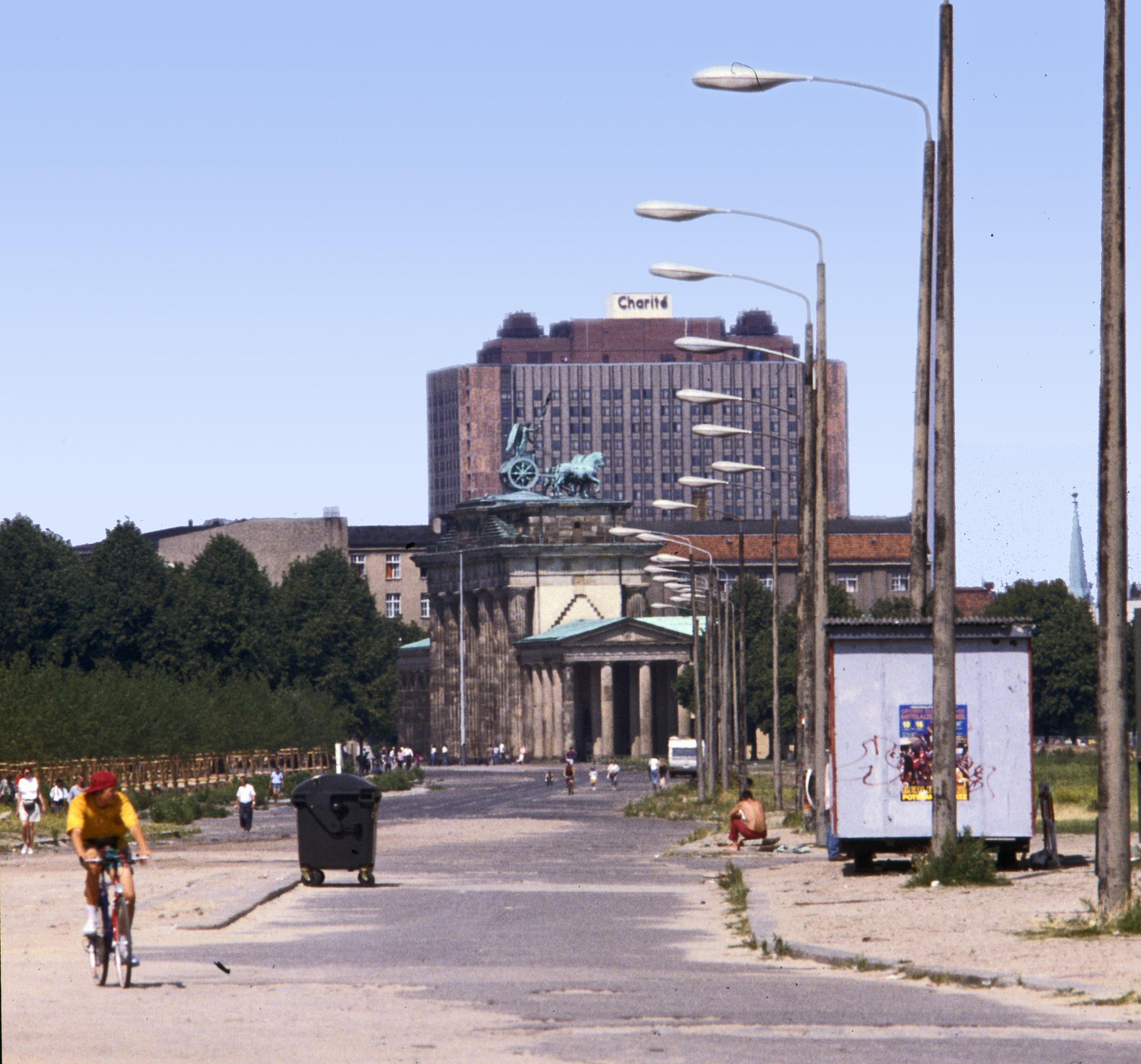
The question of where the Berlin Wall was removed is answered by walking the streets where it once ran and finding nothing. The most dramatic removal site is Potsdamer Platz. The entire 1990s construction pit that replaced the death strip is now a shopping centre. You cannot see a trace of the wall there. Second is the Brandenburg Gate area: Pariser Platz was redeveloped by 2000 and pedestrianised in 2002. No wall remnant survives at the gate itself.
Visible Scars
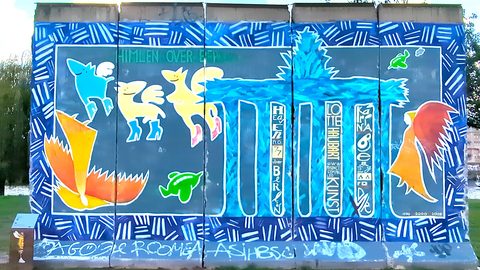
For removal that left a visible scar, go to Mauerpark. The death strip became a park in 1994, and the transition is legible in the ground. The strip is lower than the surrounding streets, a long depression of gravel and grass. Similarly, the East Side Gallery at Mühlenstraße, Friedrichshain, is 1,316 m of painted wall that survived demolition. It stood on the East Berlin side, and artists painted 106 murals between February and September 1990. After the 2009 restoration, 101 murals remain. Free, open-air. The wall segment itself is the original 'Grenzmauer 75' form, 3.6 m tall. Arrive before 09:00 to avoid the tour bus crowds.
Replicas and Real Borders
Checkpoint Charlie, by contrast, is a replica guardhouse installed in 2000. The original crossing booth is in a museum. The site is free to view but is a tourist trap. Skip it if you want authenticity. The real border experience is at Tränenpalast, the former border crossing hall on the West Berlin side of Friedrichstraße station. Now a free museum on the grief of departure. Open daily, free entry.

Post-Industrial Decay Sites Worth the Trip
RAW-Gelände
Post-industrial decay defines the 1990s Berlin aesthetic, but much of it has been curated. RAW-Gelände remains the best site. The railway repair works courtyards are open, free and still covered in street art. The club Cassiopaia operates inside one hall. The bars and event spaces that line the courtyards are mostly 2000s builds. The atmosphere, raw concrete, peeling paint and graffiti, is the 1990s layer carried forward. Arrive in the afternoon. The site empties midweek. BVG U-Bahn to Warschauer Straße.
Schöneweide
Schöneweide, in the far southeast, is off-radar. Former AEG factories have been repurposed into bars and event spaces. The industrial ruin aesthetic is less polished than Friedrichshain. Take S-Bahn S8 or S9 to Schöneweide, then walk 10 minutes to the riverside. Opening hours vary. Check individual bar social media, not general tourism sites.
Wedding
Wedding, in the northwest, has silent factory courtyards that never became club hubs. Post-Wall cheap rents brought artists and squatters. Most courtyards are now residential, but the walk along Tegeler Straße and Osloer Straße passes several factory gates with street art and abandoned loading bays. Free to view from the street. Do not enter private property.
Squatted Tenements and Their Afterlives
Prenzlauer Berg
The 1990s squatted tenement is the most transformed layer of 1990s Berlin. Prenzlauer Berg had a vacancy rate of 20-30% in 1990. Wilhelmine-era tenements built in the Gründerzeit period sat empty. Artists, activists and students occupied them. The renovation wave ran from 1993 to 2005. Today the median cold rent per m² in Prenzlauer Berg sits around €14-17, according to the Berliner Mieterverein's 2024 figures. The buildings look polished. The 1990s has been painted over.
One exception: the Wasserturm at Prenzlauer Berg. This water tower was the site of a Nazi-era concentration camp in 1933, later a squat, and is now residential flats. You can walk the grounds free. The interior is private. The building is a memorial fragment, not a party space.
Friedrichshain
Friedrichshain's Mainzer Straße was the site of 12 squatted buildings. Eviction came on 14 November 1990, with 3,000 police officers and violent clashes. The buildings are now renovated flats. No public access. A memorial plaque on the street wall marks the event. The Köpenicker Straße 137 squat, known as Köpi, was occupied on 23 February 1990 and remains occupied as of 2026. You can view the exterior from the street. Interior access is by invitation only at events. The street art on the façade changes regularly.
Who Should Visit 1990s Berlin’s Fragments
These sites suit Cold War history completists, 1990s techno and club-culture pilgrims, urban-exploration and architecture nerds, second-time Berlin visitors digging past the greatest hits, and photographers chasing post-industrial decay. They do not suit first-time Germany visitors wanting a fairy-tale old town. Berlin's 1990s layer is deliberately broken, sprawling and emotionally heavy. Skip it if you need a walkable, pretty historic core. The Wall's ghost is scattered across four districts you cannot walk in one go. Much of what you find is a plaque or a replacement building. Go if you are willing to lose time on transit, pay cash in holdover bars, and look at a street where something was.
Neighbourhoods in Berlin
What to See in Berlin
More on Berlin
-
 Berlin 1990s Films Run Lola Run Sun Alley and Berlin Babylon What They Captured
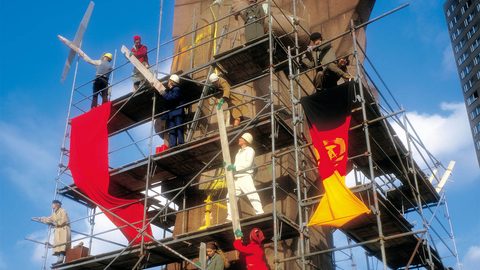
Run Lola Run, Sun Alley, and Berlin Babylon each captured a different Berlin of the 1990s — the first a sprint through the post-Wall city, the last a techno-scored documentary of its construction.
Berlin 1990s Films Run Lola Run Sun Alley and Berlin Babylon What They Captured
Run Lola Run, Sun Alley, and Berlin Babylon each captured a different Berlin of the 1990s — the first a sprint through the post-Wall city, the last a techno-scored documentary of its construction.
-
 Hertha and Union Berlin the East West Football Split That Still Defines the City
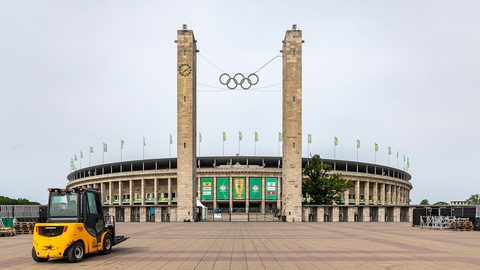
Hertha Berlin and Union Berlin carry the city's east-west division into football, with Hertha's Olympiastadion in Charlottenburg and Union's Alte Försterei in Köpenick defining two different Berlins.
Hertha and Union Berlin the East West Football Split That Still Defines the City
Hertha Berlin and Union Berlin carry the city's east-west division into football, with Hertha's Olympiastadion in Charlottenburg and Union's Alte Försterei in Köpenick defining two different Berlins.
-
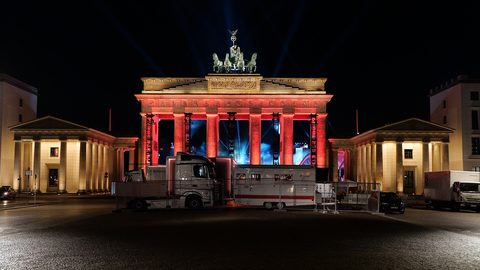 Berlin New Year at the Brandenburg Gate How It Became Europes Largest Party
How Berlin's New Year at the Brandenburg Gate grew from a spontaneous 1990 gathering into a fenced, broadcast-ready party mile drawing over a million people.
Berlin New Year at the Brandenburg Gate How It Became Europes Largest Party
How Berlin's New Year at the Brandenburg Gate grew from a spontaneous 1990 gathering into a fenced, broadcast-ready party mile drawing over a million people.
-
 East or West Berlin Which Half to Spend Your Time In
East or West Berlin: the Wall ran through the middle, so the former East is now the central, expensive, club-heavy half. Here's how to choose.
East or West Berlin Which Half to Spend Your Time In
East or West Berlin: the Wall ran through the middle, so the former East is now the central, expensive, club-heavy half. Here's how to choose.
-
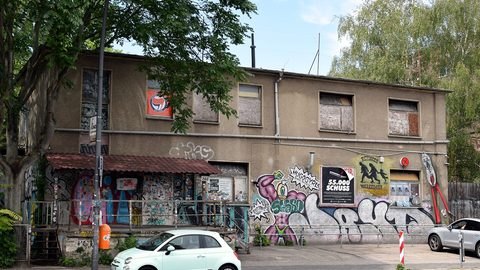 Tresor E-Werk and Bunker Which Berlin Club Was Which
Tresor, E-Werk, and the Bunker: a then-and-now guide to Berlin's three foundational 1990s techno clubs, what made each distinct, and what stands at each site today.
Tresor E-Werk and Bunker Which Berlin Club Was Which
Tresor, E-Werk, and the Bunker: a then-and-now guide to Berlin's three foundational 1990s techno clubs, what made each distinct, and what stands at each site today.
-
 E-Werk and the Bunker Two Berlin Techno Clubs That No Longer Exist and Where They Stood
-
 Hard Wax and the Labels Where the Berlin Techno Sound Came From and Where to Find It Now
-
 Berlin 1990s DJs Who Built Techno From Dr Motte to Paul van Dyk
The five DJs who built Berlin's 1990s techno scene: Dr. Motte, Westbam, Tanith, Marusha, and Paul van Dyk, from Tresor's vault to the Loveparade's Tiergarten trucks.
Berlin 1990s DJs Who Built Techno From Dr Motte to Paul van Dyk
The five DJs who built Berlin's 1990s techno scene: Dr. Motte, Westbam, Tanith, Marusha, and Paul van Dyk, from Tresor's vault to the Loveparade's Tiergarten trucks.
-
 Mayday and Tekknozid Berlin Raves That Ran Beside the Loveparade
-
 Berlin Reunification 3 October 1990 What Actually Changed in the City
-
 Berlin Capital Vote 20 June 1991 The Bundestag Decision That Rebuilt the City
-
 Berlin Government Arrives 1999 The Move From Bonn and the Buildings Built for It
-
 The Treuhand Who Owned Berlin After 1990 and What It Sold
-
 Palast der Republik Berlin Closed 1990 Gone 2008 Replaced 2020
-
 Berlin Stasi Files The Citizen Occupation That Saved the Records
-
 Christo Wrapped the Reichstag Berlin 1995 and What the Building Became After
In June 1995 Christo wrapped the Berlin Reichstag in silvery fabric, drawing five million people to a building that still bore Soviet graffiti and had no clear future.
Christo Wrapped the Reichstag Berlin 1995 and What the Building Became After
In June 1995 Christo wrapped the Berlin Reichstag in silvery fabric, drawing five million people to a building that still bore Soviet graffiti and had no clear future.
-
 Hackesche Höfe Berlin from Derelict GDR Courtyards to Mitte Showpiece
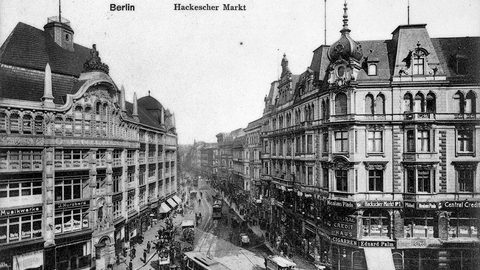
The Hackesche Höfe on Rosenthaler Strasse in Berlin Mitte transformed from rotting GDR tenements into the city's most visited Jugendstil courtyard complex after reunification.
Hackesche Höfe Berlin from Derelict GDR Courtyards to Mitte Showpiece
The Hackesche Höfe on Rosenthaler Strasse in Berlin Mitte transformed from rotting GDR tenements into the city's most visited Jugendstil courtyard complex after reunification.
-
 Friedrichstrasse Berlin the 1990s Attempt to Build a Luxury Shopping Street
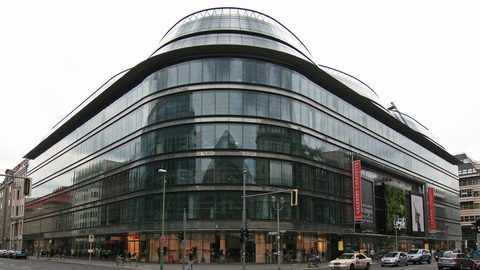
Friedrichstrasse in Berlin was meant to become a luxury shopping mile after reunification, but the 1990s retail boom left behind half-empty passages and a cautionary tale.
Friedrichstrasse Berlin the 1990s Attempt to Build a Luxury Shopping Street
Friedrichstrasse in Berlin was meant to become a luxury shopping mile after reunification, but the 1990s retail boom left behind half-empty passages and a cautionary tale.
-
 Pariser Platz Berlin Rebuilt from Nothing After the Wall and the Hotel Adlon
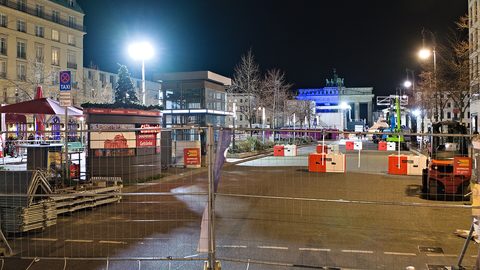
Pariser Platz in Berlin was a mined death strip east of the Brandenburger Tor until the 1990s, when it was painstakingly rebuilt plot by plot under strict Senate design rules.
Pariser Platz Berlin Rebuilt from Nothing After the Wall and the Hotel Adlon
Pariser Platz in Berlin was a mined death strip east of the Brandenburger Tor until the 1990s, when it was painstakingly rebuilt plot by plot under strict Senate design rules.
-
 The Day the D-Mark Arrived in East Berlin 1 July 1990 and What It Cost
On 1 July 1990 East Berliners swapped Ostmarks for D-Marks overnight in a currency union that euphorically dismantled the GDR economy three months before political reunification.
The Day the D-Mark Arrived in East Berlin 1 July 1990 and What It Cost
On 1 July 1990 East Berliners swapped Ostmarks for D-Marks overnight in a currency union that euphorically dismantled the GDR economy three months before political reunification.
-
 Ostalgie Berlin the Ampelmaennchen Trabant and What Is Actually Genuine
Berlin's Ostalgie industry sells Ampelmaennchen lamps and Trabant safaris, but separating genuine GDR memory from commodified kitsch requires knowing what was actually made in the East.
Ostalgie Berlin the Ampelmaennchen Trabant and What Is Actually Genuine
Berlin's Ostalgie industry sells Ampelmaennchen lamps and Trabant safaris, but separating genuine GDR memory from commodified kitsch requires knowing what was actually made in the East.
-
 The Night the Berlin Wall Fell 9 November 1989 Press Conference Mistake That Opened a City
-
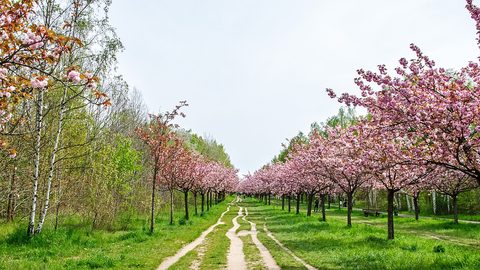 The Berlin Wall Trail 160 km in Sections You Can Actually Walk or Cycle in a Day
-
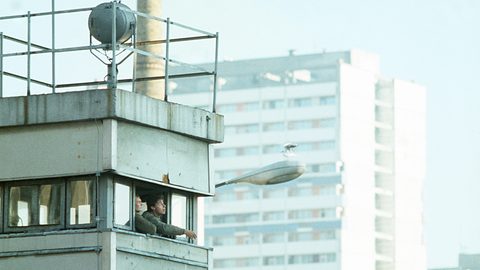 The Last Berlin Wall Watchtowers Four Left Standing and Where to Find Each One
-
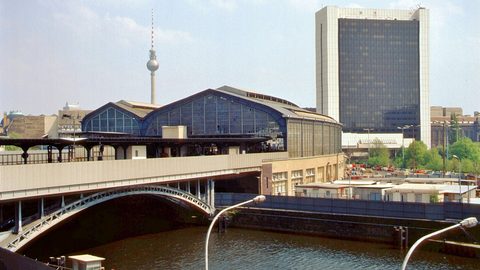 Berlin Ghost Stations the U-Bahn Platforms West Berlin Trains Rolled Past for 28 Years
-
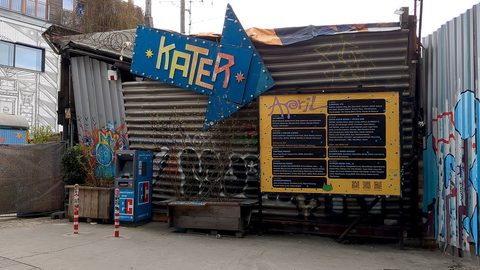 Ostgut the Club Before Berghain and Why That Matters to Berlin Techno History
-
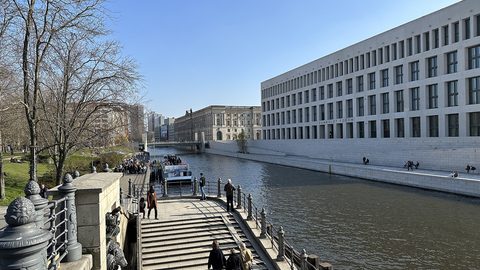 Berlin 1990s on Foot Three Walking Routes Through the Post-Wall City
Three walkable Berlin routes stitch the post-Wall 1990s together across Friedrichshain, Mitte, and Kreuzberg, with noted transit hops where the fragments are too far apart for a single walk.
Berlin 1990s on Foot Three Walking Routes Through the Post-Wall City
Three walkable Berlin routes stitch the post-Wall 1990s together across Friedrichshain, Mitte, and Kreuzberg, with noted transit hops where the fragments are too far apart for a single walk.
-
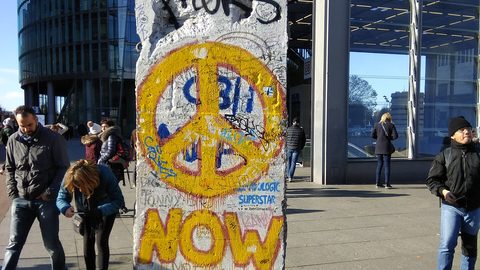 Berlin Wall Remains Today Address by Address What Is Still Standing
An address-by-address guide to original Berlin Wall fragments still standing in place today, from Bernauer Strasse to Mühlenstrasse, with what is authentic and what is replica.
Berlin Wall Remains Today Address by Address What Is Still Standing
An address-by-address guide to original Berlin Wall fragments still standing in place today, from Bernauer Strasse to Mühlenstrasse, with what is authentic and what is replica.
-
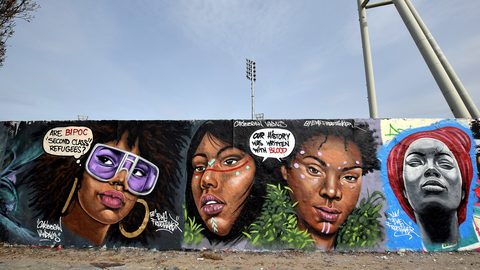 Mauerpark Berlin Death Strip Wasteland Turned Flea Market and Karaoke
Mauerpark began as a Wall death strip between Wedding and Prenzlauer Berg, became a 1990s wasteland, and is now Berlin's Sunday flea market and open-air karaoke pit.
Mauerpark Berlin Death Strip Wasteland Turned Flea Market and Karaoke
Mauerpark began as a Wall death strip between Wedding and Prenzlauer Berg, became a 1990s wasteland, and is now Berlin's Sunday flea market and open-air karaoke pit.
-
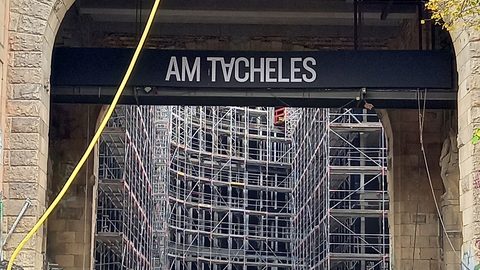 Tacheles Berlin What Happened to the Most Famous Squat Art House
Kunsthaus Tacheles on Oranienburger Strasse was Berlin's most famous squat. After the 2013 eviction and partial demolition, only a street art remnant and a small gallery remain.
Tacheles Berlin What Happened to the Most Famous Squat Art House
Kunsthaus Tacheles on Oranienburger Strasse was Berlin's most famous squat. After the 2013 eviction and partial demolition, only a street art remnant and a small gallery remain.
-
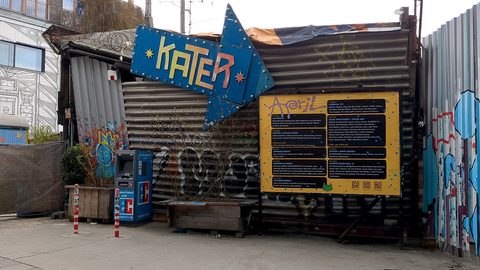 Tresor E-Werk Bunker Where Berlin Techno Actually Started in the 1990s
Berlin techno started in three specific physical spaces: the Tresor vault on Leipziger Strasse, the E-Werk power station on Wilhelmstrasse, and the Bunker on Albrechtstrasse—all opened in 1990–1992.
Tresor E-Werk Bunker Where Berlin Techno Actually Started in the 1990s
Berlin techno started in three specific physical spaces: the Tresor vault on Leipziger Strasse, the E-Werk power station on Wilhelmstrasse, and the Bunker on Albrechtstrasse—all opened in 1990–1992.
-
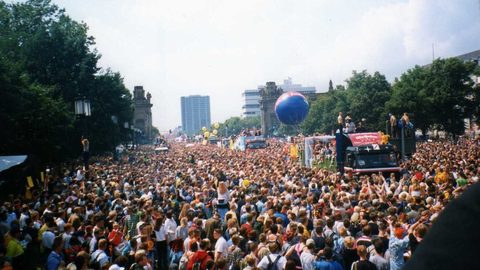 Loveparade Berlin Route Then and What Is There Now at Each Stop
The Berlin Loveparade route ran from Kurfürstendamm through Ernst-Reuter-Platz to the Tiergarten. Here is what occupies that exact parade path now at each stop.
Loveparade Berlin Route Then and What Is There Now at Each Stop
The Berlin Loveparade route ran from Kurfürstendamm through Ernst-Reuter-Platz to the Tiergarten. Here is what occupies that exact parade path now at each stop.
-
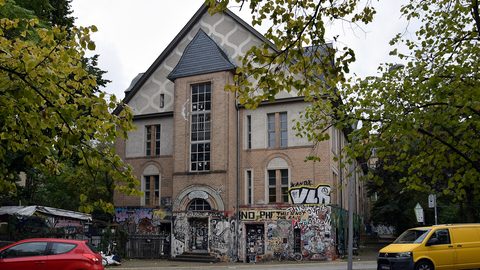 Berlin Squats Mainzer Strasse 1990 and What Came After the Evictions
The November 1990 eviction on Mainzer Strasse in Friedrichshain was the violent peak of Berlin's squatting era. Only a few occupied houses survived legalisation or remain contested today.
Berlin Squats Mainzer Strasse 1990 and What Came After the Evictions
The November 1990 eviction on Mainzer Strasse in Friedrichshain was the violent peak of Berlin's squatting era. Only a few occupied houses survived legalisation or remain contested today.
-
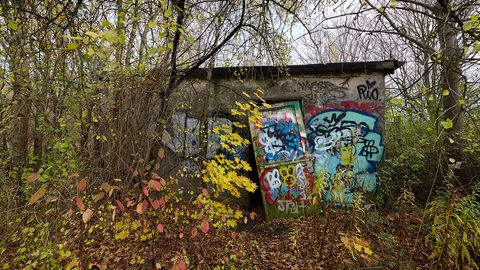 Berlin Lost Places What Is Left of the 1990s Wasteland Abandoned Sites
Berlin's 1990s wasteland left behind Teufelsberg's listening station dome, the abandoned Spreepark ferris wheel, and Schöneweide industrial ruins. Here is what remains accessible today.
Berlin Lost Places What Is Left of the 1990s Wasteland Abandoned Sites
Berlin's 1990s wasteland left behind Teufelsberg's listening station dome, the abandoned Spreepark ferris wheel, and Schöneweide industrial ruins. Here is what remains accessible today.
-
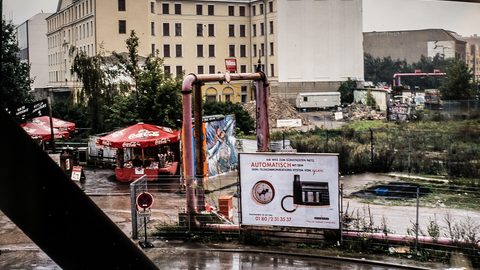 Potsdamer Platz 1990s Europe Biggest Building Site and the Sony Center Result
Potsdamer Platz was a Wall death strip, then Europe's largest 1990s building site with a skyline of cranes, and is now the Sony Center and Daimler corporate canyon with only Weinhaus Huth surviving.
Potsdamer Platz 1990s Europe Biggest Building Site and the Sony Center Result
Potsdamer Platz was a Wall death strip, then Europe's largest 1990s building site with a skyline of cranes, and is now the Sony Center and Daimler corporate canyon with only Weinhaus Huth surviving.
-
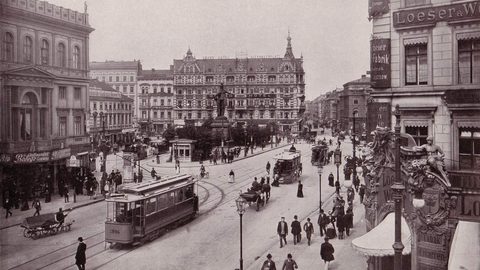 The Nineties Berlin Exhibition What It Was and What to See Instead
The Nineties Berlin exhibition at Alte Münze is gone, but the streets, squats, clubs, and Wall fragments it documented are still scattered across the eastern districts for direct visiting.
The Nineties Berlin Exhibition What It Was and What to See Instead
The Nineties Berlin exhibition at Alte Münze is gone, but the streets, squats, clubs, and Wall fragments it documented are still scattered across the eastern districts for direct visiting.
Common Questions
Can you still see the Berlin Wall today?
Yes, but in fragments. The most visible segments are the East Side Gallery (1,316 m), the Berlin Wall Memorial on Bernauer Straße (200 m), the Niederkirchnerstraße remnant (200 m), and the Liesenstraße remnant (180 m). Three watchtowers survive: at Potsdamer Platz, Kieler Straße and Hennigsdorf.
What happened to the original Tresor club?
The original location at Leipziger Straße 126 was demolished in 2005. The current Tresor at Köpenicker Straße 70 opened in 2007 in a former heating plant. You can visit the club on nights of operation with a ticket.
Is Tacheles still open as an art space?
No. Tacheles was evicted in 2012. The building now houses Fotografiska museum and offices, opened 2023. The exterior preserves street art; the interior is fully redeveloped. Museum entry costs from around €14 to €16; check Fotografiska's site for current pricing.
How long does the Mauerweg take to walk?
The full 160 km trail takes 6-8 days. Most visitors walk the inner-city section from Bornholmer Straße to Mauerpark, which takes 45 minutes. The Mauerweg was completed in 2006.
What was the death strip?
The death strip was the 60 m wide cleared area between the inner and outer walls, patrolled by guards, dogs and tripwires. The best-preserved example is at the Berlin Wall Memorial on Bernauer Straße, where 60 m of the strip is intact.
Can you visit Spreepark without a tour?
No. Spreepark requires a guided tour only, booked ahead online. Tours sell out weeks in advance in summer. The ferris wheel is visible from outside the fence but you cannot enter the park grounds.
Where did the Loveparade happen?
The first Loveparade on 1 July 1989 was on Kurfürstendamm, West Berlin, with about 150 participants. From 1996 it moved to Straße des 17. Juni in Tiergarten, drawing 1 million by 1997 and 1.5 million by 1999. It relocated to Essen in 2007 and ended in Duisburg in 2010.
Read next
-
 East Side Gallery
-
 Checkpoint Charlie
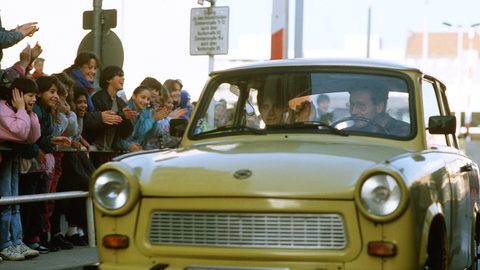
The guardhouse at Checkpoint Charlie is a replica from 2000. Here is what is original Cold War fabric, what is a set, and where the real booth ended up.
Checkpoint Charlie
The guardhouse at Checkpoint Charlie is a replica from 2000. Here is what is original Cold War fabric, what is a set, and where the real booth ended up.
-
 Charlottenburg
-
 Mitte
Mitte
-
 Prenzlauer Berg
-
 Friedrichshain
-
 Neukölln
-
 Kreuzberg
-
Berlin 1990s Films Run Lola Run Sun Alley and Berlin Babylon What They Captured
Run Lola Run, Sun Alley, and Berlin Babylon each captured a different Berlin of the 1990s — the first a sprint through the post-Wall city, the last a techno-scored documentary of its construction.