The Berlin 1990s Films: Run Lola Run, Sun Alley, and Berlin Babylon and What They Captured of the City
Run Lola Run, Sun Alley, and Berlin Babylon each captured a different Berlin of the 1990s — the first a sprint through the post-Wall city, the last a techno-scored documentary of its construction.
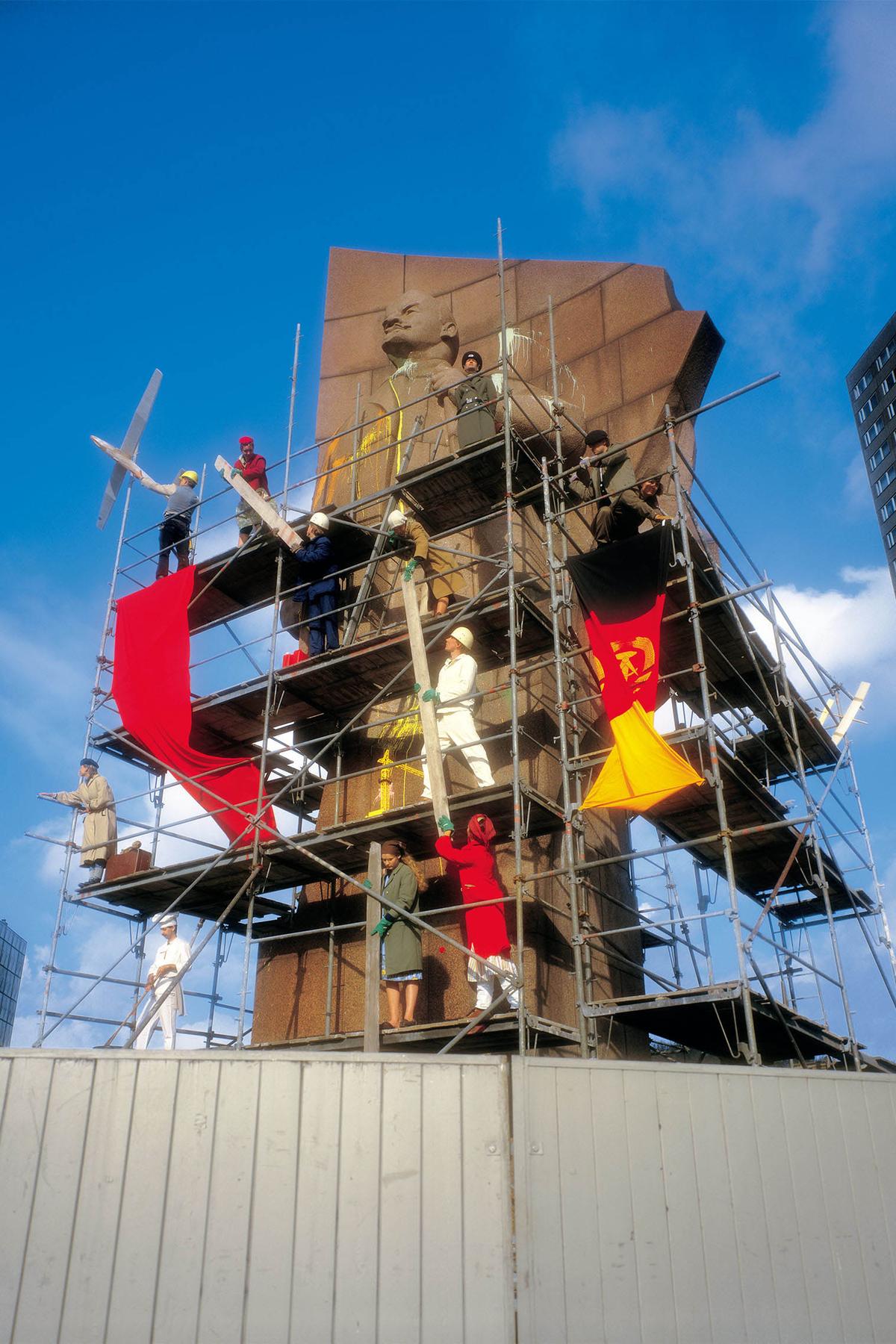

Most guidebooks map the geography of Berlin but miss its spirit. Three 1990s films capture what the maps cannot: a city in raw, fractured transformation. Run Lola Run (1998), Sun Alley (1999), and Berlin Babylon (2001). Watching all three is faster and more accurate than any bus tour.
Run Lola Run Berlin Locations: Sprinting Through Post-Wall Mitte
Lola's Route Across a City Under Construction
Tom Tykwer directed Run Lola Run (1998) as a 20-minute sprint repeated three times. The protagonist, Lola, races against time to save her boyfriend Manni. Her route across Berlin maps the city's 1990s geography: a void where the Wall stood, now a corridor of undeveloped lots and half-built projects.
Most of the key Run Lola Run Berlin locations still stand today. The Oberbaumbrücke, where Lola and Manni meet above the Spree River connecting Friedrichshain and Kreuzberg, is a functioning U-Bahn bridge. The Deutsche Oper U-Bahn station at Bismarckstraße remains unchanged. Gendarmenmarkt and the exterior steps of the Alte Nationalgalerie are intact. Lola's apartment on Tauroggener Straße in Mitte is still a residential building.
One location has vanished. The Cuvrystraße wasteland where Manni's phone booth stood is now buried under the Cuvry Campus, an office block built between 2018 and 2021. If you stand at the corner of Cuvrystraße today, you see glass and steel where the film saw rubble. That disappearance is itself the 1990s Berlin story: the empty lots filled in.
Walk the Route Yourself
Take the U-Bahn to Friedrichstrasse station to begin your own route. From there, walk south toward the Spree. You will cross the Oberbaumbrücke in about 25 minutes. The film's running scenes along Unter den Linden are walkable in another 20 minutes. Budget a morning to hit all six surviving locations; you cannot do it faster than Lola anyway.
Buy a day ticket for the BVG network before you start. The ticket covers all U-Bahn and S-Bahn rides. Stamp it in the small red box on the platform before boarding or the €60 fine is immediate and non-negotiable.
Sun Alley Film Berlin: GDR Teen Life on the Death Strip
The Street That Still Stands
Leander Haußmann's Sun Alley (1999) is a comedy set on Sonnenallee, a real street in East Berlin during the 1970s. The film asks whether the DDR can be laughed at. Its answer is yes, but only from the specific perspective of east Berlin teen life, where the death strip is a daily backdrop rather than a symbol.
The Sun Alley film Berlin location is a street that still exists. Sonnenallee runs for over six kilometres through Neukölln and Treptow. The film's interior scenes were shot on a reconstructed set, but the street itself is still standing. What you cannot find are the original border crossing structures. The former border crossing point on Sonnenallee was demolished after the Wall fell; no original structures remain.
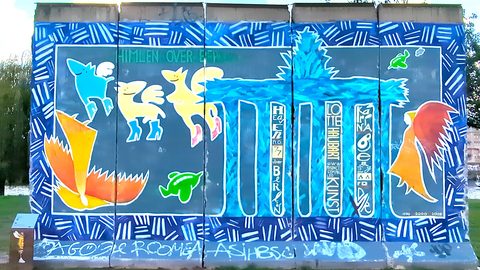
The film's opening scene shows the East Side Gallery wall adjacent to Sonnenallee. That 1.3km painted segment is still standing and heavily touristed. Arrive before 09:00 to see the murals without the crowds. The section closest to the Oberbaumbrücke is the most photographed and the most crowded by 10:30.
How to Walk It
Walk Sonnenallee at a slow pace. The street is authentic east Berlin: Plattenbau housing, Turkish supermarkets, and low-rise 1970s blocks. The contrast between the film's GDR comedy and the street's current reality as a multicultural Neukölln artery is the point. You have lived the first 15 minutes of the film just by standing there.
Berlin Babylon Documentary: Watching a City Rebuild
Potsdamer Platz Then and Now
Hubertus Siegert's Berlin Babylon (2001) is a wordless documentary of Berlin's rebuilding from 1990 to 2000. Its subject is the construction pit, not the finished building. The film's techno soundtrack and building site montage capture the scale of the transformation that guidebooks reduce to paragraphs.
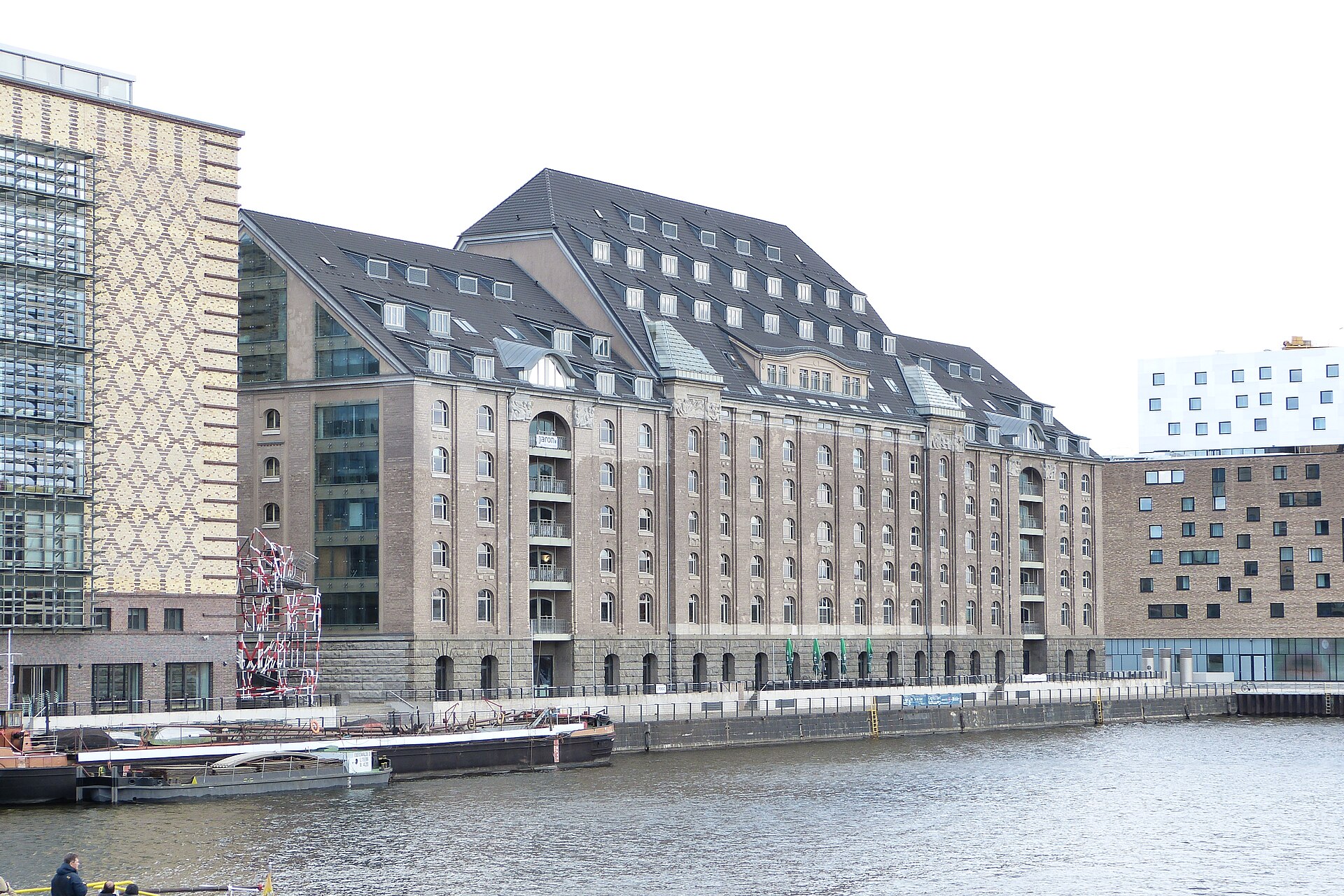
The Berlin Babylon documentary centers on Potsdamer Platz, Europe's largest construction pit in the 1990s. That site is now built over and fully completed between 1998 and 2004. The glass Sony Center and the Daimler complex stand where the film shows excavators in mud. Walk from the Potsdamer Platz S-Bahn station exit and face the train station. The Info Box, the red container on stilts where visitors watched the construction, is gone. Its site is now the north entrance to the station.
The film also shows the Lehrter Bahnhof becoming Berlin Hauptbahnhof, completed in 2006 and still standing. The Reichstag dome construction, completed in 1999, is still open to visitors. Alexanderplatz appears as undeveloped wasteland segments in the film. Some of those lots remain vacant today, though most have been built over. The World Time Clock at Alexanderplatz, featured in the film, still stands.
When to Visit
Visit Potsdamer Platz on a weekday morning to compare the finished city to what the documentary shows. The contrast is the lesson. Failure case: if you arrive after 16:00 on a Saturday, the square is full of tourists and the scale of the original construction is impossible to imagine.
Watch Berlin Babylon the night before you go. It is available on DVD at the Babylon Mitte cinema gift shop, a 1998 release venue that still operates at Rosa-Luxemburg-Straße. They show it on request for groups of 10 or more. For a single traveller, stream it through the Deutsche Kinemathek's online archive before you leave home.
Berlin Cinema 1990s: a Viewing Order for Orientation
Start with Run Lola Run (1998) for the geography. The film moves through Friedrichshain, Mitte, and Kreuzberg at sprint pace. It shows you the distances. Then watch Sun Alley (1999) for the attitude. The Berlin cinema 1990s production captures the east Berlin perspective that western guidebooks erase. Finally, watch Berlin Babylon (2001) for the scale. It explains what happened to the physical city while the other films were being made.
Three films, three Berlins. Run Lola Run shows a post-Wall void still open for sprinting. Sun Alley shows the GDR past that the built-over city tries to forget. Berlin Babylon shows the machinery that did the burying. Together they give you a city no guidebook can: the 1990s Berlin that no longer exists but shaped everything you see.
Book a day ticket at the Babylon Mitte cinema. The building at Rosa-Luxemburg-Platz dates to the late 1920s and survived the war. A ticket costs about €12. The failure case is weekend evening screenings, which sell out by Friday afternoon.
After the screening, walk south to the Oberbaumbrücke. The walk takes 35 minutes through what was the death strip in Tykwer's establishing shots and is now a bike lane. The bridge is the single place where all three films meet: Run Lola Run's opening, Sun Alley's border crossing memory, and Berlin Babylon's rebuilt riverbank.

| Film | Location | Status | Address Area |
|---|---|---|---|
| Run Lola Run (1998) | Oberbaumbrücke | Still standing, functioning U-Bahn bridge | Spree River, Friedrichshain/Kreuzberg |
| Run Lola Run | Deutsche Oper U-Bahn station | Still standing | Bismarckstraße, Charlottenburg |
| Run Lola Run | Gendarmenmarkt | Still standing | Mitte |
| Run Lola Run | Alte Nationalgalerie exterior steps | Still standing | Museum Island |
| Run Lola Run | Tauroggener Straße apartment | Still standing | Mitte |
| Run Lola Run | Cuvrystraße wasteland | Built over 2018–2021 (Cuvry Campus) | Friedrichshain |
| Sun Alley (1999) | Sonnenallee street | Still standing | Neukölln |
| Sun Alley | Sonnenallee border crossing | Demolished; no original structures | Sonnenallee/Neukölln |
| Sun Alley | East Side Gallery adjacent wall | Still standing | Mühlenstraße |
| Berlin Babylon (2001) | Potsdamer Platz construction site | Built over completed 1998–2004 | Mitte/Tiergarten |
| Berlin Babylon | Lehrter Bahnhof (Hauptbahnhof) | Completed 2006, still standing | Moabit |
| Berlin Babylon | Reichstag dome | Completed 1999, still standing | Tiergarten |
| Berlin Babylon | Alexanderplatz wasteland segments | Partially built over; some vacant lots remain | Mitte |
Read next
-
 East Side Gallery
-
 Checkpoint Charlie
The guardhouse at Checkpoint Charlie is a replica from 2000. Here is what is original Cold War fabric, what is a set, and where the real booth ended up.
Checkpoint Charlie
The guardhouse at Checkpoint Charlie is a replica from 2000. Here is what is original Cold War fabric, what is a set, and where the real booth ended up.
-
 Charlottenburg
-
 Mitte
Mitte
-
 Prenzlauer Berg
-
 Friedrichshain
-
 Neukölln
-
 Kreuzberg
-
 Hertha and Union Berlin the East West Football Split That Still Defines the City
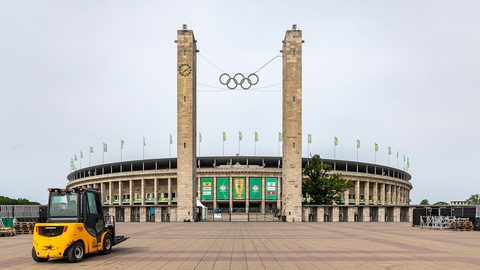
Hertha Berlin and Union Berlin carry the city's east-west division into football, with Hertha's Olympiastadion in Charlottenburg and Union's Alte Försterei in Köpenick defining two different Berlins.
Hertha and Union Berlin the East West Football Split That Still Defines the City
Hertha Berlin and Union Berlin carry the city's east-west division into football, with Hertha's Olympiastadion in Charlottenburg and Union's Alte Försterei in Köpenick defining two different Berlins.