East Side Gallery: 1,316 Metres of Berlin Wall Painted Twice Over

East Side Gallery: 1,316 Metres of Berlin Wall Painted Twice Over
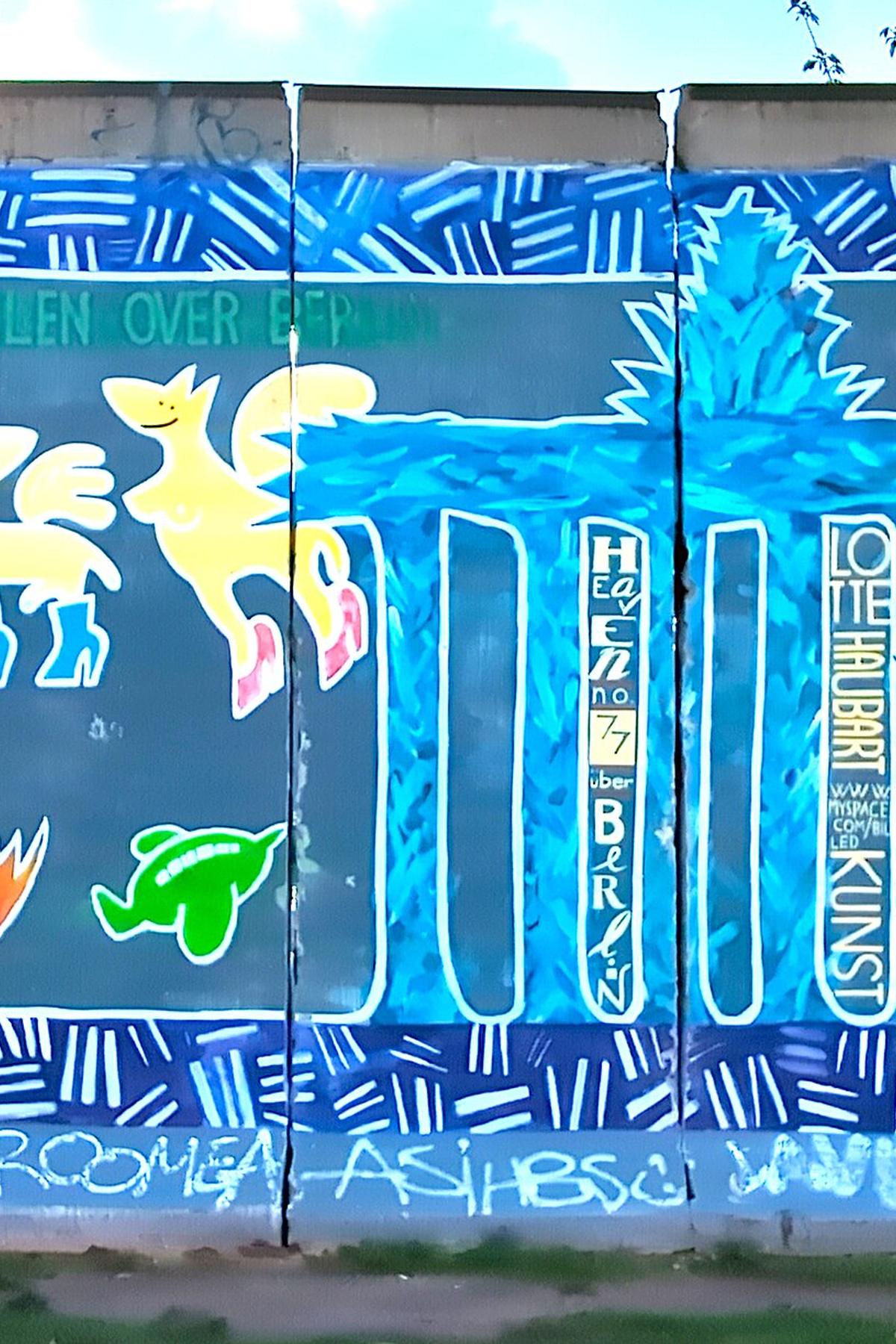
Know this before you walk the Mühlenstrasse riverbank: the East Side Gallery is 1,316 metres long and it has been painted twice. That length makes it the longest surviving piece of the border fortification still standing where it was built, a stretch of the Hinterlandmauer along the Spree. In 1990, 118 painters from 21 countries covered it in murals. In 2009, the whole thing was done again, and the controversy has never settled. What stands now is a second generation of the same idea, not the same paint. You need to know which murals survived, which were erased, and which were repainted by their creators before you decide this is the Wall site for you.
- Length: 1,316 m
- Location: Mühlenstrasse, between Oberbaumbrücke and Ostbahnhof, Berlin-Friedrichshain
- Original Wall Segment: Hinterlandmauer (inner wall) along the Spree
- Year First Painted: 1990
- Original Artists: 118 from 21 countries
- Heritage Protection Listing: November 1991
- Major Restorations: 2000 (33 artists repainted); 2009 (entire wall stripped to bare concrete)
- 2009 Restoration Cost: €2.2 million
- Murals After 2009 Restoration: 101
- Admission: Free (open air public monument)
- Nearest Transit: S-Bahn Ostbahnhof (S3, S5, S7, S9); U-Bahn Warschauer Strasse (U1, U3); Bus 347 to East Side Gallery stop
East Side Gallery Berlin Wall Art: What Survived and What Did Not
The East Side Gallery Berlin Wall art you see today is a restoration, not the first version. In 2009, the Berlin Senate spent €2.2 million to strip the entire 1.3 km concrete segment down to bare concrete and invite the original painters back. Of the 118, 33 had participated in the first restoration in 2000. By 2009, eight had died and could not repaint. Eight more, including Bodo Sperling who sued, refused the invitation. Their works were painted over by others or replaced entirely. The result is 101 murals. The wall now reads as a 2009 interpretation of 1990, not a 1990 document.
Fraternal Kiss: The Image Everyone Photographs
Dmitri Vrubel's "Mein Gott, hilf mir, diese tödliche Liebe zu überleben" (known as the Fraternal Kiss or Bruderkuss) is the most photographed mural on the East Side Gallery. It depicts Soviet leader Leonid Brezhnev kissing East German leader Erich Honecker, based on a 1979 photograph. Vrubel painted it in 1990 and returned to repaint it in 2009. Find it near the middle of the wall, east of the gap cut for the Mercedes Benz Arena access. The repainted version is sharper and more saturated than the first, which had suffered severe weather erosion and graffiti overlay over 19 years.
Test The Best: The Trabant Breaking Through
Birgit Kinder's "Test the Best" shows a Trabant, the GDR's mass-produced car, bursting through the Wall. It is one of the most recognisable images on the eastern section, closer to Ostbahnhof. Kinder painted it in 1990 and repainted it in 2009. The Trabant is rendered in vivid red and white, the Wall fragments flying outward. The image captures the absurdity of East German life as much as the escape narrative. Kinder's first version was already fading when she returned to restore it.
Other Surviving Murals And Their Positions
Gabriel Heimler's "Der Mauerspringer" (The Wall Jumper) is on the eastern section, showing a man mid leap over the barrier. Günther Schaefer's "Vaterland" uses a flag with a Star of David cutout and sits on the western section nearer Oberbaumbrücke. Mary Mackey's "Curriculum Vitae" with its faces and handprints occupies the central section. Each of these was painted in 1990 and repainted by the same hand in 2009. The murals that were lost include works by the eight deceased painters and those by the eight who refused the 2009 invitation. The wall now has 101 murals, and no public list of which were permanently removed is maintained by any single authority.
Mühlenstrasse Wall Segment History: from Hinterlandmauer to Open Air Gallery
The Mühlenstrasse Wall segment began with a single function. This was the Hinterlandmauer, the inner wall on the East Berlin side of the border strip. It faced inward, not outward, designed to prevent East Berliners from reaching the death strip and the outer wall. When the Wall fell in November 1989, this section remained standing because it was on the eastern bank of the Spree, away from the most aggressive demolition. By 1990, painters from around the world had turned it into the world's longest open air gallery. The East Side Gallery received heritage protection listing in November 1991, which saved it from the demolition that erased most of the Wall's circuit.
The 2000 Restoration: A Warning Ignored
The first major restoration happened in 2000. Only 33 of the 118 original painters were invited back. The method was whitewashing the first murals and letting the artists repaint on top. This destroyed the 1990 paint layers, but the controversy was local. The real damage came from the materials: the whitewash and new paint did not bond properly to the concrete. By 2008, weather erosion, graffiti overlay, and peeling paint had left large sections illegible.
The 2009 Restoration: Controversy And Erasure
The East Side Gallery restoration of 2009 ran from March to October. The decision to strip the wall to bare concrete and start again was not universally supported. Eight painters refused the invitation, arguing that the first work had historic value that could not be reproduced. Bodo Sperling sued the city. The eight deceased painters could not be consulted. What you see is a 2009 painting on a 1960s wall. The concrete segment itself dates from the early 1960s. The paint does not. The debate continues among art conservators and Cold War historians about whether the restoration preserved the spirit or erased the evidence.
East Side Gallery Free Open Air Visit: How to Walk it and What to Skip
Visiting the East Side Gallery is straightforward: arrive, walk, look. No ticket. No queue. No opening hours. The wall runs along Mühlenstrasse on the Spree riverbank between Oberbaumbrücke and Ostbahnhof.
Which Route To Take
Walk from Warschauer Strasse station to Ostbahnhof. This puts the sun behind you in the morning and lets you end at the S-Bahn. Start at the U-Bahn Warschauer Strasse (U1, U3), cross the Spree on the Warschauer Brücke, and turn left onto Mühlenstrasse. The wall begins immediately. Head west toward Oberbaumbrücke. The full 1.3 km walk takes 20 to 30 minutes at a steady pace. Budget 90 minutes if you stop for photographs and to read the plaques.
When To Go
Arrive before 09:00 CET on a weekday between November and March. Tuesday or Wednesday is the quietest. You will have sections of the wall to yourself. Avoid weekends from May to September between 11:00 and 16:00. On a Saturday afternoon in July, the walk becomes a slow shuffle through crowds. The wall is floodlit at night, but the lighting is uneven and the path is not always well maintained. Do not visit alone after dark in winter.
What The Walk Reveals
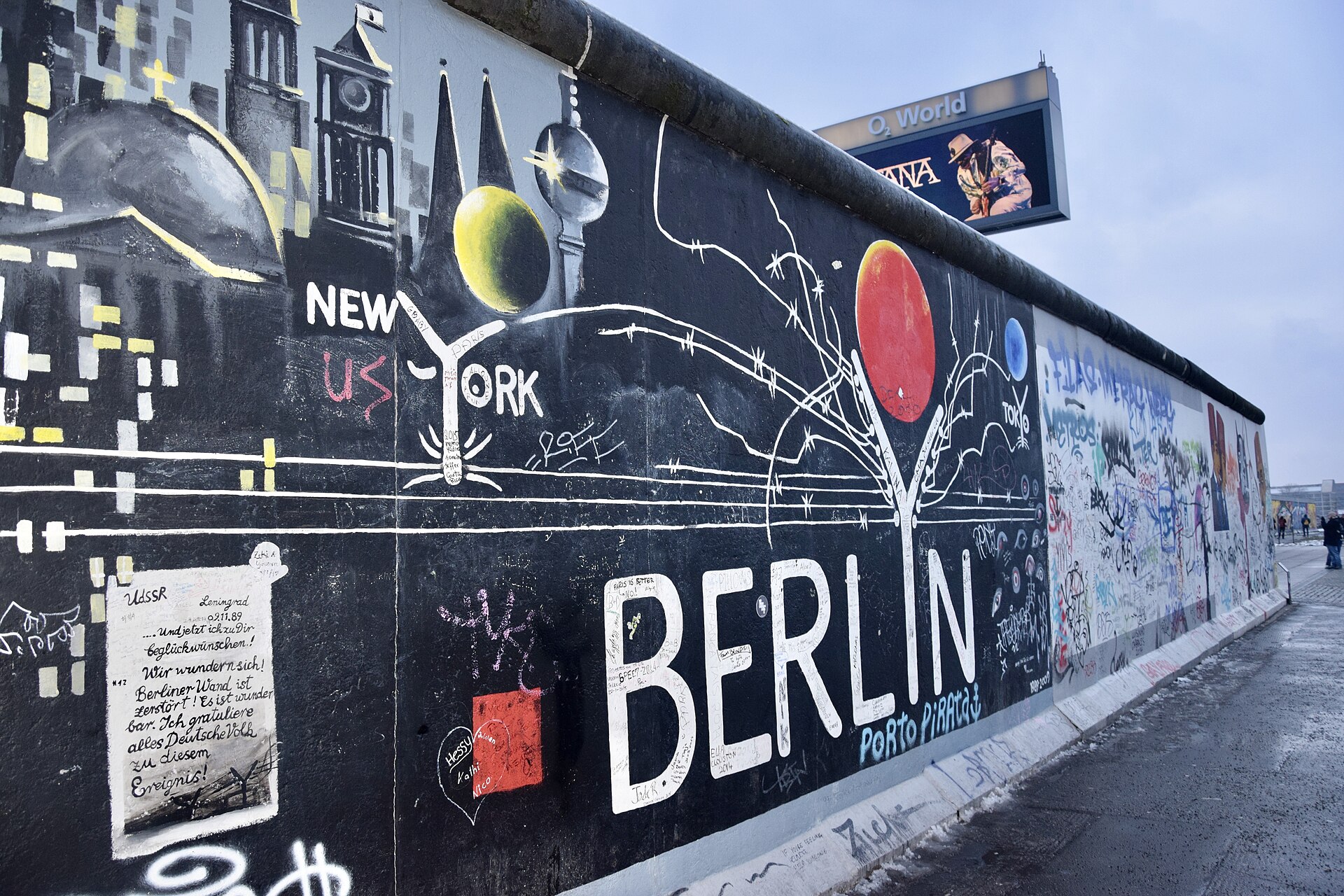
Walking from Warschauer Strasse to Oberbaumbrücke, you pass the Mercedes Benz Arena access gap cut in March 2013. That gap, approximately 40 metres, was removed for construction access to the "Living Levels" luxury apartment development on the Spree side. Around 6,000 people protested the removal on 1 March 2013. The protest failed. The gap is now a permanent interruption in the wall. East of the gap, near Ostbahnhof, the wall is at its most intact with the original concrete surface. West of the gap, toward Oberbaumbrücke, the paint is newer and the graffiti overlay from visitors is thicker. Walk the riverfront path on the Spree side. It runs parallel to the gallery and gives you a view of the wall from the water side, the perspective the Hinterlandmauer was designed to prevent.
_07.jpg)
Berlin Wall Longest Surviving Piece: Why This Segment Stands Alone
The East Side Gallery is the longest surviving piece of the Wall in its original location. That qualifier matters. Longer sections exist in museums and storage. The Wall ran around West Berlin. The East Side Gallery's 1,316 metres represent less than 1 percent of that total. What makes it significant is that it was never relocated. It stands on the same ground where it was built in the 1960s, on the same Mühlenstrasse where it divided the city until 1989. The rest of the Wall was demolished so quickly that by 1992, only scattered fragments remained. The Berlin Wall Memorial on Bernauer Strasse preserves a 60 metre section of the death strip. Mauerpark uses a former death strip as a park. Neither has the continuous painted surface of the East Side Gallery.
Thierry Noir And The First Paintings
Thierry Noir, a French painter, was among the first to paint the Wall in 1990. His bold, cartoonish heads and figures in primary colours are among the earliest surviving examples of Berlin Wall art. Noir's first works were among those whitewashed in the 2000 restoration. He returned in 2009 to repaint. His current murals on the East Side Gallery are 2009 versions of 1990 pieces, which were themselves 1990 versions of his 1980s graffiti on the Wall when it was still standing. The layering of time is the point. You are not looking at a single moment. You are looking at a palimpsest of the 1980s, 1990, 2000, and 2009.
Common Questions
Is the East Side Gallery really free to visit?
Yes. It is an open air public monument on Mühlenstrasse with no ticket booth, no gate, and no admission fee. You can walk the full 1.3 km any time of day or night.
Which paintings are original from 1990?
None. The entire wall was stripped to bare concrete in the 2009 restoration. Every mural you see was painted in 2009. Some were painted by the same artists who created the 1990 originals. Others were painted by different artists after the original artists died or refused the invitation.
How long does it take to walk the East Side Gallery?
20 to 30 minutes if you walk without stopping. Budget 90 minutes if you stop to photograph the Fraternal Kiss, Test the Best, and the other major murals. The wall is 1,316 metres long, which is roughly 1.3 km.
What happened to the section removed for luxury apartments?
Approximately 40 metres of the wall were cut out in March 2013 to provide construction access to the Living Levels development. Around 6,000 people protested the removal. The gap remains. You will see it near the Mercedes Benz Arena.
Which station should I use to start the walk?
U-Bahn Warschauer Strasse (U1, U3) puts you at the eastern end. Walk across the Warschauer Brücke bridge, turn left, and the wall starts immediately. S-Bahn Ostbahnhof (S3, S5, S7, S9) puts you at the western end. Walking from east to west puts the morning sun behind you.
Read next
-
 Checkpoint Charlie
The guardhouse at Checkpoint Charlie is a replica from 2000. Here is what is original Cold War fabric, what is a set, and where the real booth ended up.
Checkpoint Charlie
The guardhouse at Checkpoint Charlie is a replica from 2000. Here is what is original Cold War fabric, what is a set, and where the real booth ended up.
-
 Charlottenburg
-
 Mitte
Mitte
-
 Prenzlauer Berg
-
 Friedrichshain
-
 Neukölln
-
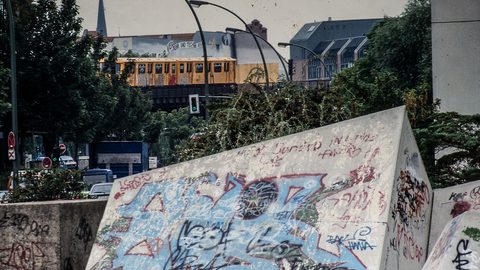 Kreuzberg
-
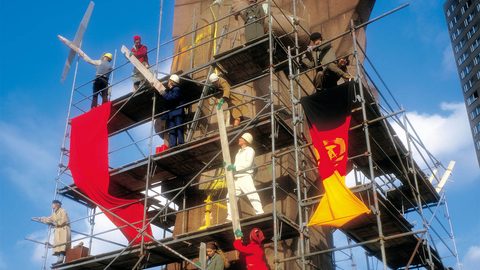 Berlin 1990s Films Run Lola Run Sun Alley and Berlin Babylon What They Captured
Run Lola Run, Sun Alley, and Berlin Babylon each captured a different Berlin of the 1990s — the first a sprint through the post-Wall city, the last a techno-scored documentary of its construction.
Berlin 1990s Films Run Lola Run Sun Alley and Berlin Babylon What They Captured
Run Lola Run, Sun Alley, and Berlin Babylon each captured a different Berlin of the 1990s — the first a sprint through the post-Wall city, the last a techno-scored documentary of its construction.
-
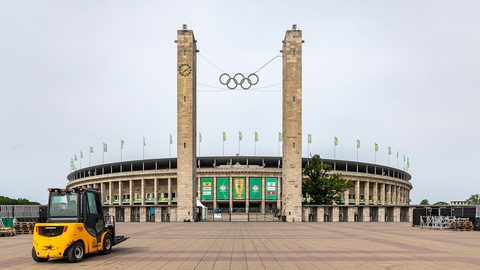 Hertha and Union Berlin the East West Football Split That Still Defines the City
Hertha Berlin and Union Berlin carry the city's east-west division into football, with Hertha's Olympiastadion in Charlottenburg and Union's Alte Försterei in Köpenick defining two different Berlins.
Hertha and Union Berlin the East West Football Split That Still Defines the City
Hertha Berlin and Union Berlin carry the city's east-west division into football, with Hertha's Olympiastadion in Charlottenburg and Union's Alte Försterei in Köpenick defining two different Berlins.