Friedrichshain: Squats, the East Side Gallery, and the Berlin Street That Was Cleared
- Flag
-

- ISO code
- DE
- Currency
- EUR
- Timezone
- Europe/Berlin
Friedrichshain: Squats, the East Side Gallery, and the Berlin Street That Was Cleared
You can walk Friedrichshain’s three signature 1990s sites in a single afternoon. But you need to understand what you are looking at. The 1.3 km painted Wall segment along Mühlenstrasse is the obvious draw. Two hundred metres north, behind Revaler Strasse, the RAW compound still breathes the early club air. And ten blocks east, on Mainzer Strasse, the street that was forcibly cleared on 14 November 1990 now runs as quiet residential flats. No visible trace remains of the police operation that evicted eleven occupied buildings. The district wears its scars visibly, but the edge is curated now, not desperate. Arrive by U-Bahn Warschauer Strasse and walk south along the Spree. That is the spine.
East Side Gallery Painted Wall: the 1.3 Km Open Air Gallery
The East Side Gallery is the longest surviving segment of the Berlin Wall. It sits exactly where it fell: on the Spree side of Mühlenstrasse, between Ostbahnhof and Oberbaumbrücke. The Wall was painted twice. The first set of murals went up in 1990, between February and September, by 118 artists from 21 countries. A restoration in 2000 freshened the paint, but by 2009 the weather and graffiti had eaten through again, so a second full restoration was carried out. What you see today is the 2009 layer. The section is original Wall, the outer ring on the East Berlin side. It runs 1,316 metres without interruption. Entry is free. It is always open. You walk the entire length in about twenty minutes if you do not stop. But you will stop.
Where To Start And What To Skip
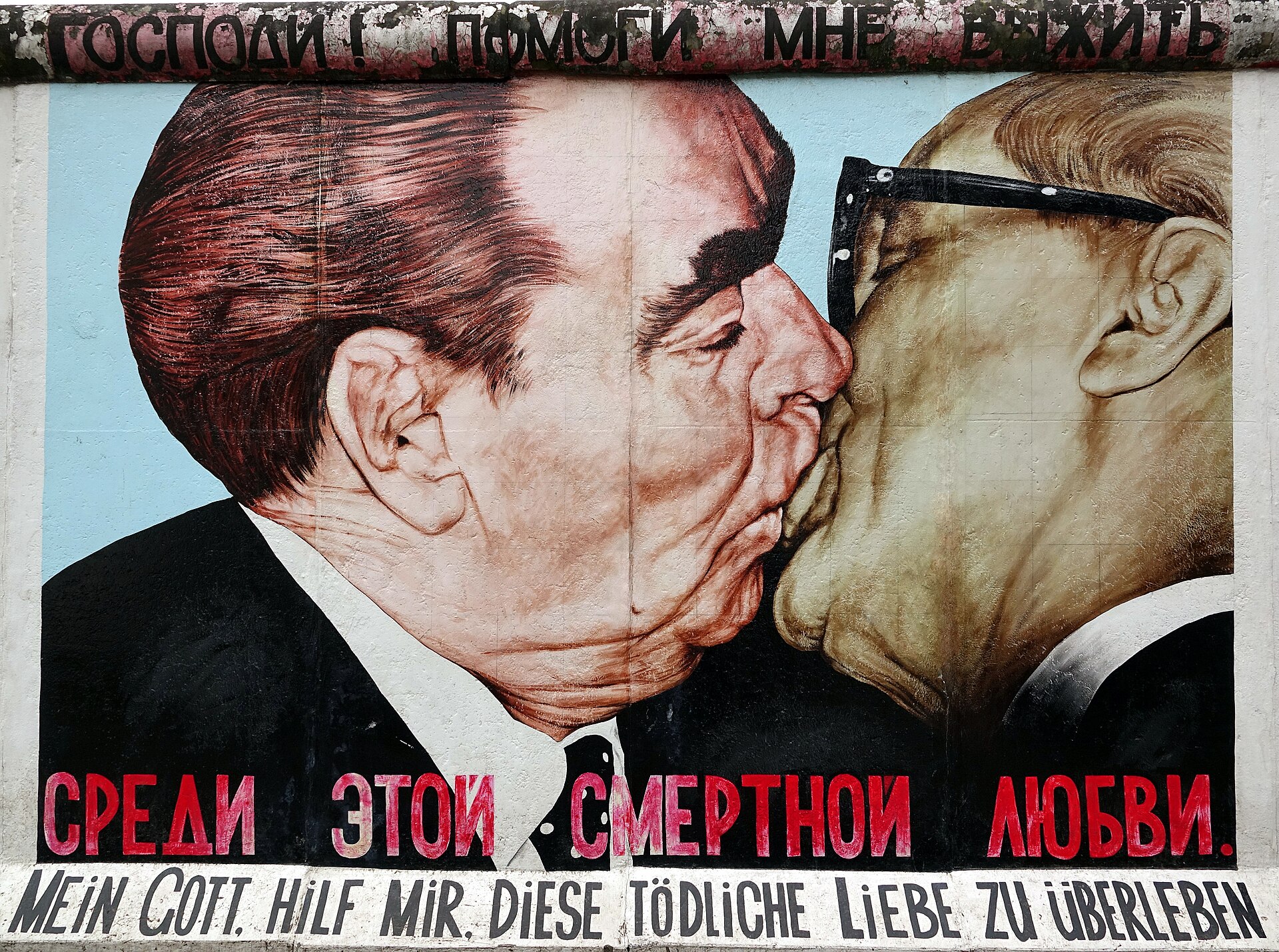
Start at the Ostbahnhof end, near the S-Bahn exit. Walk south toward Oberbaumbrücke. The most photographed panels are the socialist fraternal kiss (Dmitri Vrubel’s “My God, Help Me to Survive This Deadly Love”) and Birgit Kinder’s Trabant breaking through the wall. Both are near the middle. Do not stop at the souvenir stalls at the north end. The serious painting is south of the mid-point. The river side of the path is unguarded; you can touch the concrete. Graffiti artists still paint over the bottom metre of the Wall overnight, and the city paints it back in the original colours every few months. That tension is the point.
What The East Side Gallery Is Not
It is not a museum. There are no labels, no audio guides, no entrance fee, and no guards telling you not to touch. It is not a continuous memorial. The Wall fragments at Bernauer Strasse or the Documentation Centre are better for understanding the death strip. This is a painted Wall. Its meaning is as much about the 1990s as about the 1960s. Second-time Berlin visitors who want to dig past the greatest hits will find it useful as a walk between Ostbahnhof and the Oberbaumbrücke, not as a destination in itself. First-time Germany visitors expecting a fairy-tale old town will find the Spree side industrial and the path crowded. Skip it if you need a pretty historic core.
.jpg)
RAW Compound 1990s Club Birthplace: What Still Runs Inside the Former Repair Works
The Reichsbahnausbesserungswerk, a railway repair yard that closed in 1994, was occupied by cultural projects almost immediately. By the mid 1990s, RAW Tempel was running early techno nights inside the shell of the old engine shed. The compound, at Revaler Strasse 99, is still partially legalised and still rough-edged. The following venues operate inside the yard as of the most recent survey. Names and statuses change annually; check each venue’s own site before heading out.
- Suicide Circus, Techno club in the main hall, open Friday to Sunday, cash only at the bar.
- Renate, Apartment-style club in a converted flat, known for house and disco, Thursday through Sunday.
- About Blank, Queer techno club, runs Friday to Monday, door policy is strict and selective.
- ://about blank, Same collective, different room. Check their calendar; they are not open every week.
- Urban Spree, Art gallery, concert space and beer garden. Open daily, free entry to the gallery.
- Cassandra, Cocktail bar and event space, open Wednesday to Sunday.
- Badehaus, Dance hall and bar, runs Thursday to Sunday, entry varies by event.
- Jägerklause, German pub with outdoor seating, open daily, cash only.
- Club der Visionäre, Small canalside club on the Spree side of the compound, open daily in summer, cash only.
Getting There From Ostkreuz
Ostkreuz S-Bahn club access is the preferred route for clubbers landing today. Exit Ostkreuz on the ring side (S41, S42, S8, S85 platforms). Walk south on Revaler Strasse for seven minutes. The compound entrance is on your left, just past the Pfannkuchen bakery that stays open 24 hours and takes cash only. The walk from Ostkreuz is faster than from Warschauer Strasse, and it avoids the bottleneck at the U-Bahn exit. If you are arriving after midnight, the S-Bahn runs every ten minutes on the ring. U-Bahn Warschauer Strasse is a ten-minute walk from the compound but the U1 stops running around 01:00 on weeknights.
Main Street Berlin Cleared Squats: Mainzer Strasse and the 1990 Eviction
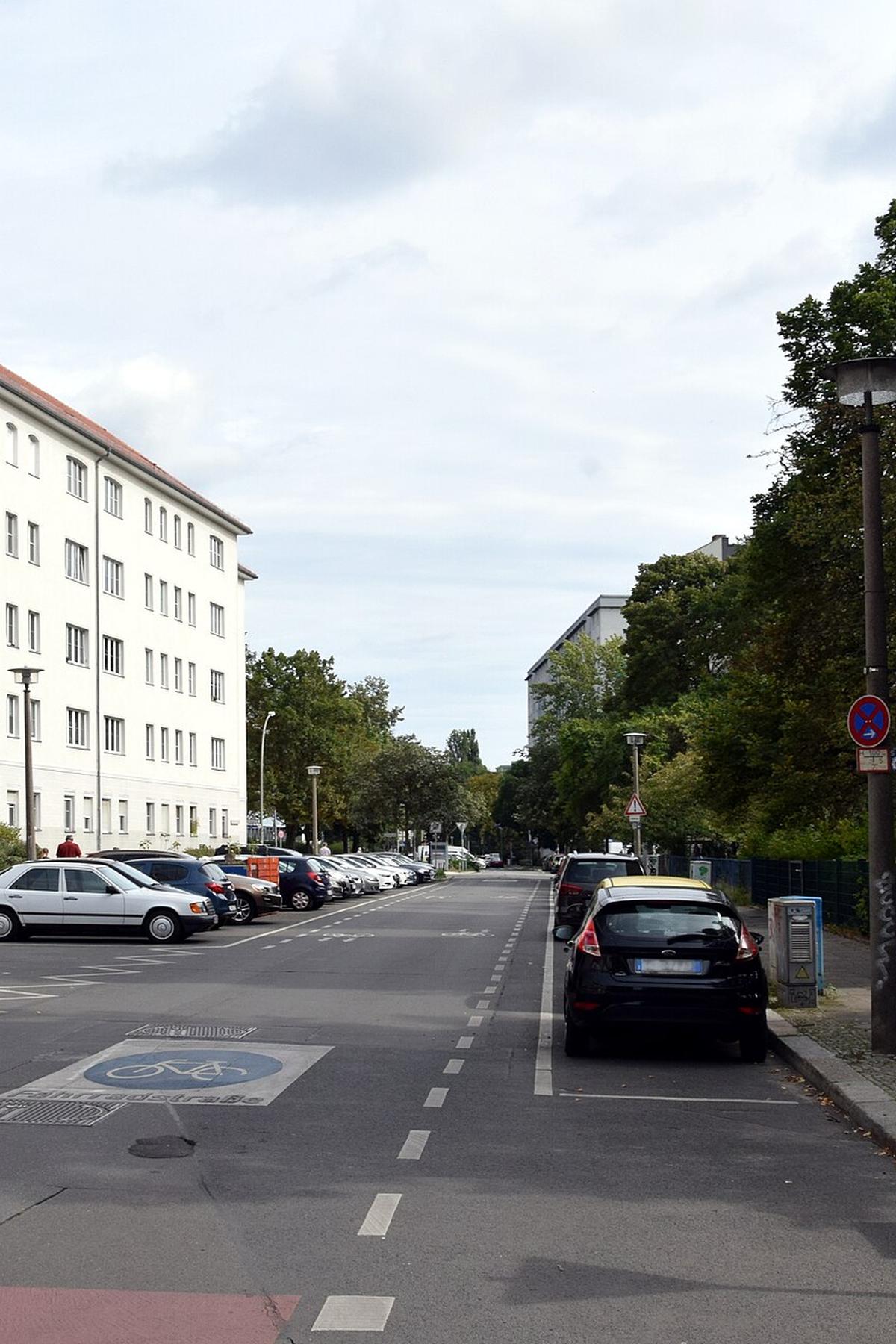
Mainzer Strasse is the street that was cleared. On 14 November 1990, 3,000 police officers evicted eleven occupied buildings: Mainzer Strasse 2 through 11, plus 22 and 23. The eviction was the largest police operation in Berlin since the war. The buildings were emptied, the squatters were removed, and the street was returned to legal use. Today, Mainzer Strasse is fully legalised residential and commercial. No squats remain. The buildings have been renovated, the facades are clean. There is no plaque, no memorial, no painted mural marking what happened. The street looks like any other residential block in Friedrichshain. The cleared street is not a tourist site. It is a place to stand and understand what the 1990s cost.
What Still Stands: Rigaer Strasse And The Köpi
Not every squat in Friedrichshain was evicted. Rigaer Strasse 94 was occupied in 1990 and remains occupied, though its legal status changes every few years and should be verified before visiting. Rigaer Strasse 77, known as the Köpi, was also occupied in 1990 and is still occupied, legalised under a long-term lease. Rigaer Strasse 95 through 99 were partially legalised; some buildings now operate under rental contracts. Rigaer Strasse 78 through 80, called the Kadterschmiede, were demolished in 2021. The street is still heavily policed. Taking photographs of the buildings can draw attention from both residents and police. Treat it as a living neighbourhood, not a museum.
Berlin Friedrichshain District Guide: Walking the 1990s Layer
Friedrichshain is bad at being a single destination. It has no old town, no pedestrianised historic core, and no single sight that sums it up. What it has is a geography of the 1990s that you walk in fragments. Start at Ostbahnhof. Walk the East Side Gallery south to Oberbaumbrücke. Cross the bridge into Kreuzberg for a Döner kebab (post-Wall Turkish immigrant staple, €4 to €6, still the 3am food). Come back across the bridge and walk north on Revaler Strasse to the RAW yard. From there, cut east on Boxhagener Strasse to Boxhagener Platz. The square was surrounded by occupied buildings in the 1990s; today it is fully gentrified, with a weekend farmers market and families on the grass. Simon-Dach-Strasse, which runs between Boxhagener Platz and Revaler Strasse, was a 1990s squat bar strip. It is now a fully commercialised restaurant and bar street. The 1990s are gone from the street level. You find them in the RAW club shells, the painted Wall, and the quiet residential blocks of Mainzer Strasse.
What To Eat And Where Cash Is Mandatory
Currywurst at Konnopke’s Imbiss, under the U2 tracks at Schönhauser Allee, is a 1990s survivor. The prefab kiosk has been open since 1960 and survived the decade unchanged. In Friedrichshain itself, the Pfannkuchen bakery near the RAW yard is open 24 hours and takes cash only. The late-night soup kitchen at a former squat (Volksküche-style lentil or solyanka, donation-based) still runs irregularly at a few addresses; ask at Urban Spree for the current location. Club Mate, the caffeinated yerba mate soda that fuelled 1990s hackers and ravers, is sold at every Imbiss and bar. Cash is mandatory at Suicide Circus, Jägerklause, Club der Visionäre, and the Pfannkuchen bakery. The BVG ticket validation system also trips visitors up: plainclothes inspectors issue €60 fines on the spot, no excuses accepted. Validate your ticket before boarding the U-Bahn or S-Bahn.

Ostkreuz S-Bahn Club Access: the Better Route for the RAW Yard
Ostkreuz is the S-Bahn ring station that serves Friedrichshain’s eastern edge. It is also the best entry point for the RAW compound. Exit the station on the ring side (S41, S42, S8, S85 platforms). Walk south on Revaler Strasse for seven minutes. The compound entrance is on your left. The walk is straightforward, well lit at night, and passes the 24-hour Pfannkuchen bakery. U-Bahn Warschauer Strasse is closer to the East Side Gallery but adds a ten-minute walk to the yard and the U1 stops running earlier than the S-Bahn ring. If you are coming from Ostbahnhof, take the S3, S5, S7 or S9 one stop to Warschauer Strasse and transfer to the S75 or S85 one stop to Ostkreuz. The transfer at Warschauer Strasse is a long walk across the platform. Build five minutes into your journey.
Why Not Warschauer Strasse
Warschauer Strasse station was a ghost station in the 1990s, reopened in 1995. It is now a major U-Bahn and S-Bahn interchange. The area around the station has been built over: the wasteland strip along the Spree from Ostbahnhof to Elsenbrücke, which hosted informal beach bars and occasional raves in the 1990s, is now the Mercedes-Benz Arena (opened 2008), the East Side Mall, and office blocks. YAAM, the Young African Art Market beach bar that opened in 1994 near Ostbahnhof, moved to Schillingbrücke in 2009 and is still running. The 1990s wasteland is gone. The 1990s club shell at the RAW yard is not.
Who Friedrichshain Suits and Who Should Skip it
Friedrichshain suits Cold War history completists who want to stand next to the Wall rather than read about it. It suits 1990s techno and club culture pilgrims who want to see where RAW Tempel and Ostgut ran before Berghain opened in 2004. It suits urban exploration and architecture nerds who can read the 1990s in the concrete shells and the rebuilt facades. It suits second-time Berlin visitors digging past the greatest hits. It suits photographers chasing post-industrial decay, provided they shoot the RAW yard before the next legalisation round cleans it up. Friedrichshain is not for first-time Germany visitors wanting a fairy-tale old town. The 1990s layer is deliberately broken, sprawling, and emotionally heavy. Skip it if you need a walkable, pretty historic core. Skip it if you want a single monument that sums up the city. Friedrichshain does not summarise. It disperses.
Common Questions
Where exactly is the East Side Gallery located?
Mühlenstrasse, between Ostbahnhof and Oberbaumbrücke. The Wall runs along the Spree riverbank. The nearest public transport is U-Bahn Warschauer Strasse or S-Bahn Ostbahnhof.
Is the East Side Gallery free to visit?
Yes. It is an open-air gallery with no entrance fee and no opening hours. You can walk it at any time.
What was Mainzer Strasse in the 1990s?
A street of squatted buildings. On 14 November 1990, 3,000 police officers evicted eleven occupied buildings. The street is now fully legalised residential and commercial. No squats remain.
Which clubs are still running inside the RAW yard?
Suicide Circus, Renate, About Blank, Urban Spree, Cassandra, Badehaus, Jägerklause, and Club der Visionäre. Statuses change annually; verify each venue before heading out.
What is the best way to reach the RAW yard from Ostkreuz?
Exit Ostkreuz on the S-Bahn ring side (S41, S42, S8, S85 platforms). Walk south on Revaler Strasse for seven minutes. The compound entrance is on your left.
Can I still visit a squatted building in Friedrichshain?
Rigaer Strasse 94 and Rigaer Strasse 77 (the Köpi) are still occupied. Their legal status changes frequently. Treat them as living residential buildings, not tourist sites.
Is Friedrichshain walkable as a single area?
No. The East Side Gallery, the RAW yard, and Mainzer Strasse are spread across the district. You need the U-Bahn or S-Bahn to connect them efficiently.