How New Year at the Brandenburg Gate Became Europe's Largest Party
How Berlin's New Year at the Brandenburg Gate grew from a spontaneous 1990 gathering into a fenced, broadcast-ready party mile drawing over a million people.
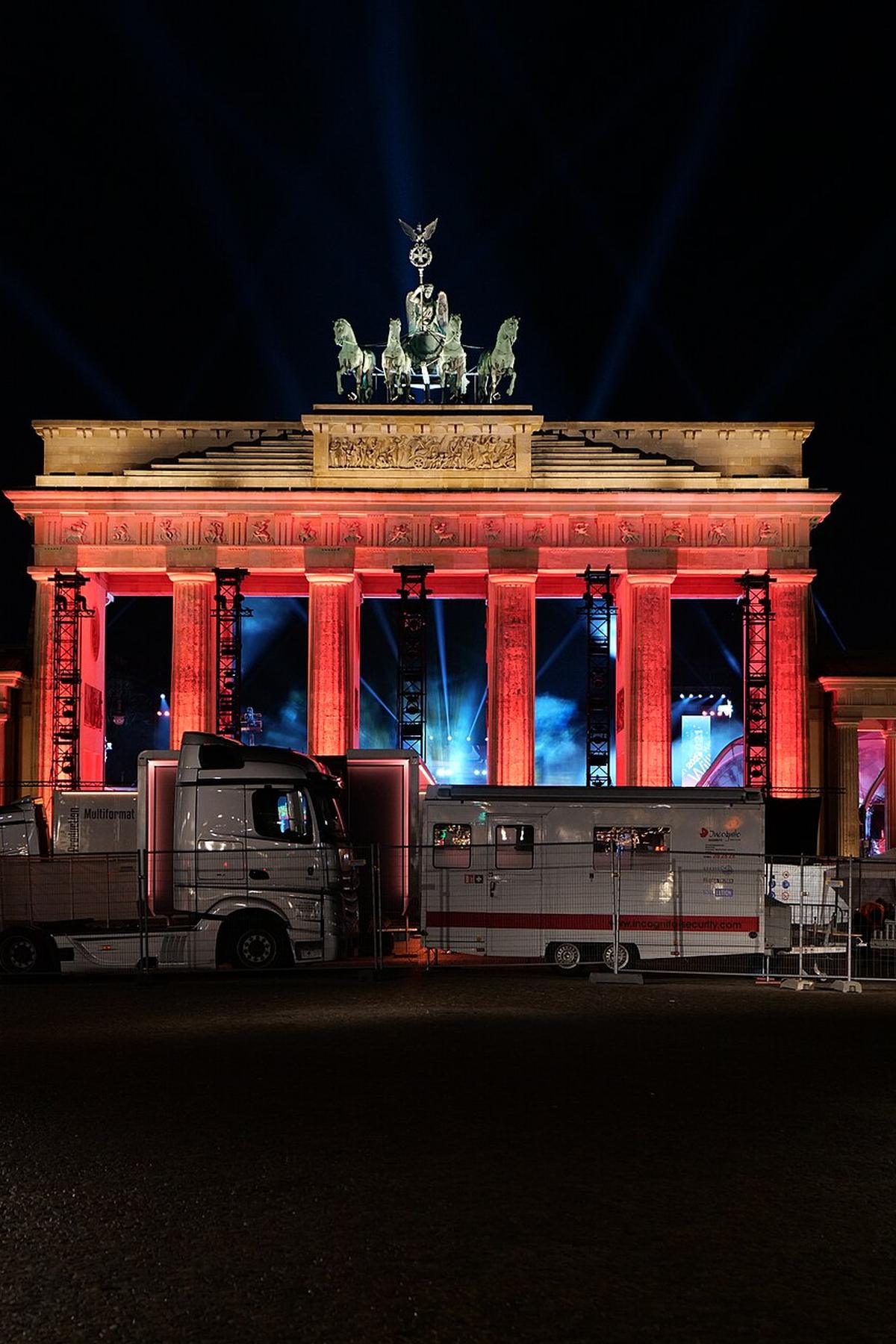

You Want to Know How the Brandenburg Gate Party Got This Big
The Berlin New Year at the Brandenburg Gate now draws 65,000 ticketed guests into a fenced, bag-checked, glass-free zone on Strasse des 17. Juni. That is the number. The question is how a spontaneous street gathering on 31 December 1989 turned into Europe's largest paid-admission open-air New Year event, and what you need to know before you book a ticket.
Silvester Am Brandenburger Tor History: from Spontaneous Celebration to Fenced Spectacle
The Night the Wall Stopped Dividing the Crowd
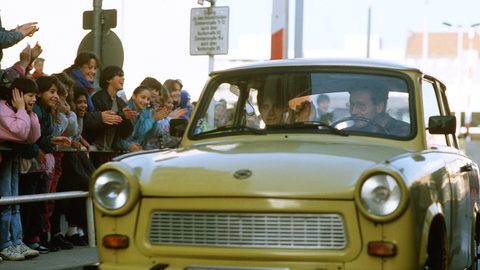
The first large-scale event happened on the night of 31 December 1989 into 1 January 1990. The Wall had fallen seven weeks earlier. The Brandenburg Gate, a Cold War dead zone since 1961, stood open again. Tens of thousands of people gathered at Pariser Platz without barriers, ticketing, or organisers. There were no official fireworks. The crowd itself was the event.
That free-access model held for nearly two decades. The event grew each year into what locals called the Silvesterparty am Brandenburger Tor. By the mid-2000s the informal gathering on Strasse des 17. Juni regularly exceeded half a million people, far beyond what the space could safely hold. The turning point came on 24 July 2010, when a mass panic during the Loveparade in Duisburg killed 21 people and injured more than 500. Berlin authorities recognised the same risk profile at any uncontrolled crowd event in a narrow corridor. For the following season, the first fenced perimeter appeared. The shift from open to secured ground was direct policy after Duisburg.
Brandenburg Gate NYE Party Size: the Capacity and the Crowd Reality
What the Fence Contains
The official maximum capacity for the fenced event zone is 65,000 people. Entry gates number between four and six each year, opening at 18:00 and closing at 22:00. There is no re-entry. The 2024 ticket price was €10 to €20, set annually by the Berlin event authority. Tickets go on sale in November for the same year's party. The zone runs from the Großer Stern in the west to the Brandenburg Gate in the east, spanning roughly 2.5 kilometres of Strasse des 17. Juni through the northern edge of Tiergarten.
Why You See Bigger Numbers Elsewhere
A note on crowd numbers you will see elsewhere: the free era (pre-2010) often reported 500,000 to one million revellers. Those numbers came from police estimates, not turnstile counts. The ticketed era allows a precise 65,000 figure. Do not confuse the two. If you read “one million people at the Brandenburg Gate,” that is a 1990s or 2000s number, not a current one.
Berlin Silvester Celebration Origins: Why 31 December 1989 Was Different
Berlin had always celebrated Silvester, but the Gate had been the city's most emphatic symbol of division since 13 August 1961. On the night of 31 December 1989, a crowd gathered at the newly reopened crossing. The location was not chosen by an organiser. It was the only place that made sense. The Tiergarten and the Siegessäule were nearby, but the Gate was the stage. No ZDF live broadcast covered it. No official midnight countdown was organised. People just stood there and watched history turn.
The ZDF live broadcast from Pariser Platz began in the mid-1990s and became the national reference point for Germany's New Year. The broadcast and the growing crowd size fed each other: national television exposure drew more people, and larger crowds justified more production. By the early 2000s the Party Mile along Strasse des 17. Juni was an established ritual, with portable toilets, beer stalls, and a ban on personal fireworks that nobody enforced until the fence went up.
Brandenburger Tor New Year Crowd Numbers: What 65,000 Actually Feels Like
Density Inside the Perimeter
Sixty-five thousand people inside a 2.5 kilometre corridor is not sparse. It is not crush density either, because the perimeter stretches into the Tiergarten on both sides, giving the crowd space to spread. The worst congestion is at the entry gates between 19:00 and 21:00, and at the eastern end nearest the Gate between 23:30 and midnight. The Siegessäule end of the zone is usually quieter if you want to watch the midnight countdown from a distance with room to breathe.
What to Carry and What to Leave
The practical takeaway: arrive by 18:30 to clear bag check before the queue builds. Enter through a western gate, not the eastern entries near Pariser Platz, which process the most foot traffic. Carry only what fits inside an A4-sized bag. Anything larger is turned away with no storage available. Glass bottles are prohibited. Fireworks and pyrotechnics of any category are prohibited. Alcohol brought from outside is prohibited. Professional camera equipment is prohibited. Drones are prohibited. Weapons and dangerous objects are prohibited. The bag check is thorough. Budget 10 to 15 minutes for it.
The Geography: Where the Party Actually Happens and Where it Does Not
The Real Layout of the Party Mile
The Party Mile is not around the Brandenburger Gate itself. The Gate is the eastern backdrop. The event zone runs due west along Strasse des 17. Juni, past the Siegessäule, into the Tiergarten. The Gate at Pariser Platz is the photo spot at midnight, but the music stages, food stalls, and portable toilets are strung along the road. The Großer Stern, the large traffic circle at the western end of Strasse des 17. Juni, marks the entry gate boundary.
How the Public Transport Shutdown Traps You
S Brandenburger Tor station, the U-Bahn stop directly under Pariser Platz, is closed from the afternoon of 31 December through the night. The same applies to large sections of the U-Bahn and S-Bahn network: many lines run limited service after 22:00 and the stations nearest the zone are shut entirely. The BVG publishes the specific shutdown map each year in mid-November. Check it before you leave. The failure case is ending up at Alexanderplatz at 01:30 with no S-Bahn and a taxi queue two hours long. The S-Bahn shutdown is the single most common logistical problem for atendees.
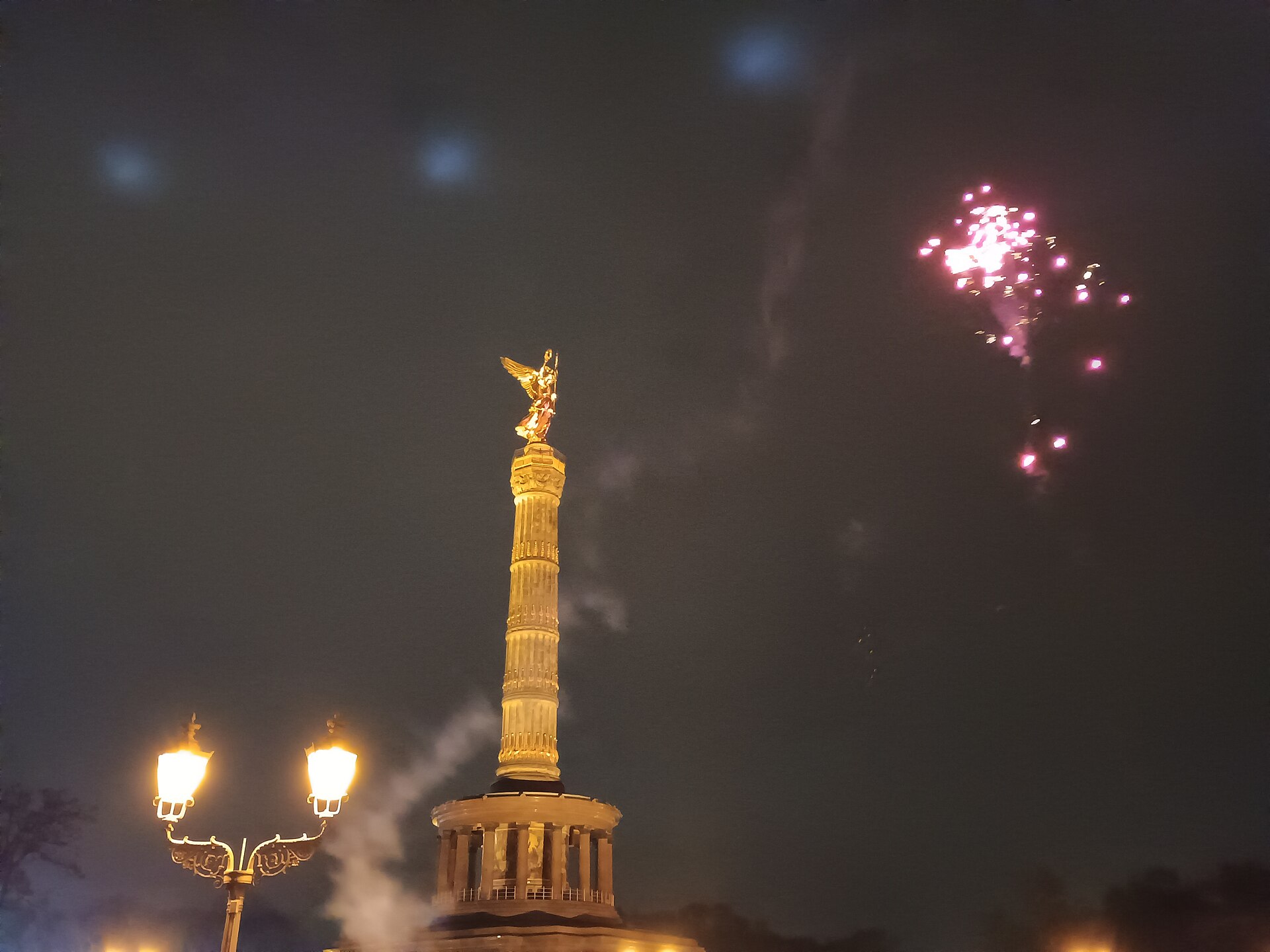
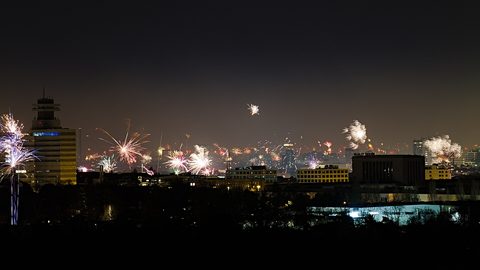
_Fireworks_around_Berlin_Victory_Column_07.jpg)
What to Do When the Normal Route Fails
You arrive at 19:30. The queue at the eastern gate stretches far back. The ticket is scanned, the bag is checked, the A4 limit catches you. You bought the ticket, you have it on your phone, but you cannot get in.
Walk west. Enter at the Großer Stern gate where the queue is shorter. Do not try to enter through the Tiergarten side; the fence runs the full boundary and only the designated gates work. If the zone has already hit its 65,000 capacity by 22:00, the gates close and you cannot enter at all. That happens most years by roughly 21:30. Your backup is one of the five local alternative gathering points: Kollwitzplatz, Warschauer Brücke, Tempelhofer Feld, Viktoriapark, or Oberbaumbrücke. None have a midnight countdown broadcast. None have a fence. None charge. They are where Berliners who skip the main event go.
The One Thing That Most Often Goes Wrong
People assume the Brandenburger Gate New Year party is still the free, meandering crowd they saw in 1990s television footage. It is not. The fence is real, the ticket check is real, the bag limit is enforced, and the S-Bahn shutdown will leave you walking 45 minutes back to a functioning station if you do not plan your exit route before you drink your first beer. Look up the S-Bahn closure map in November, buy your ticket in early December, arrive at 18:30 through a western gate, and treat the midnight countdown as the exit trigger, not the start of your night.
Read next
-
 East Side Gallery
-
 Checkpoint Charlie
The guardhouse at Checkpoint Charlie is a replica from 2000. Here is what is original Cold War fabric, what is a set, and where the real booth ended up.
Checkpoint Charlie
The guardhouse at Checkpoint Charlie is a replica from 2000. Here is what is original Cold War fabric, what is a set, and where the real booth ended up.
-
 Charlottenburg
-
 Mitte
Mitte
-
 Prenzlauer Berg
-
 Friedrichshain
-
 Neukölln
-
 Kreuzberg
-
 Berlin 1990s Films Run Lola Run Sun Alley and Berlin Babylon What They Captured
Run Lola Run, Sun Alley, and Berlin Babylon each captured a different Berlin of the 1990s — the first a sprint through the post-Wall city, the last a techno-scored documentary of its construction.
Berlin 1990s Films Run Lola Run Sun Alley and Berlin Babylon What They Captured
Run Lola Run, Sun Alley, and Berlin Babylon each captured a different Berlin of the 1990s — the first a sprint through the post-Wall city, the last a techno-scored documentary of its construction.