Hard Wax and the Labels: Where the Berlin Techno Sound Came From and Where to Find It Now

Where the Berlin Techno Sound Started
The Berlin techno sound was not invented in a recording studio or a record label boardroom. It grew from a single shop and the labels it launched. Hard Wax opened in a Kreuzberg basement at Wiener Strasse in 1989. That same shop still sells vinyl at Paul Lincke Ufer 44a today. Hard Wax was the retail outlet for Basic Channel and Chain Reaction, the labels founded by Mark Ernestus and Moritz von Oswald that defined the city's signature dub techno. That sound now draws visitors from across the world. They come to track down the original pressings and the places they came from.
Hard Wax Berlin Record Shop: the Origin Point
What to Expect at the Shop
Hard Wax opened in 1989, the year the Wall fell, in a Kreuzberg basement on Wiener Strasse. Founder Mark Ernestus started the shop as an importer and distributor of Detroit techno, bringing 12 inches from Underground Resistance, Jeff Mills and Robert Hood to European dance floors years before most clubs had heard them. In 2002 the shop moved to its current location at Paul Lincke Ufer 44a, 10999 Berlin Kreuzberg. It remains open to walk-in customers Monday through Saturday, 12:00 to 20:00.
The shop has no online store. It operates on cash only. Do not arrive expecting a credit card terminal or a website checkout. Calculate what you will spend and bring banknotes.
Basic Channel Label Berlin: the Sound Defined
Basic Channel released nine catalogue numbers between 1993 and 1996, numbered BC 01 to BC 09. Mark Ernestus and Moritz von Oswald produced each one at their own studio, stripping techno down to its minimal elements and layering it with the deep, delayed bass lines that became known as dub techno. No other Berlin label achieved that balance of restraint and power. The pressings were made in small batches and sold almost exclusively at Hard Wax.
Buying Basic Channel Today
Original copies of BC 01 and BC 02 now trade for EUR 80 or more on Discogs. You can still buy represses at the shop. The draw is flipping through the same racks that stocked the originals.
Chain Reaction Records: the Second Pillar
Chain Reaction launched in 1995, also founded by Ernestus and von Oswald. Its catalogue ran from CR 01 to roughly CR 50, though the final releases are difficult to verify because the label never maintained a public catalogue. Chain Reaction pushed the dub techno sound into darker, more ambient territory, with releases by artists such as Porter Ricks and Vainqueur. The label operated from the same Kreuzberg workspace as Basic Channel and distributed through the same shop. Neither label has an office to visit or a studio open to the public. Hard Wax is the only physical access point.
Mauritius Vinyl Berlin: the Distribution Hub
Mauritius Vinyl was the wholesale distribution arm that fed Hard Wax's inventory during the 1990s and early 2000s. Located on Revaler Strasse in Friedrichshain, directly on the RAW Gelände, Mauritius supplied vinyl to shops across Europe. The warehouse operated from the same industrial compound that later housed club spaces and artist studios. Mauritius closed as a physical storefront years ago. Its reach is visible in every crate sold at Hard Wax today. The RAW Gelände itself remains open as a courtyard complex of bars, clubs and event spaces, though the Mauritius name no longer appears on any door.

Berlin Techno Record Labels 1990s: the Wider Scene
Tresor Records and the Detroit Connection
Tresor Records launched in 1991 with Tresor 1, a 12 inch titled Sonic Destroyer by X-101, produced by Underground Resistance members Mike Banks, Jeff Mills and Robert Hood. That Detroit-Berlin connection was the spark: the first release was made by Detroit artists who performed at the Tresor club opening in March 1991. Tresor Records still operates. Its parent club now occupies the former heating plant at Köpenicker Strasse 70 in Mitte. Tresor releases are sold at the club shop during opening hours.
Ostgut Ton and Monolake
Ostgut Ton, the label attached to Berghain, began in 2005 but its sound traces directly to the 1990s dub techno lineage through artists like Marcel Dettmann. Monolake's Imbalance label, founded by Robert Henke, released the minimal techno and dub experiments that bridged the 1990s and 2000s. Monolake has no storefront.
Where to Buy Vinyl Now: Three Stops
Hard Wax
Hard Wax at Paul Lincke Ufer 44a remains the essential stop. Cash only, no online shop, Monday to Saturday 12:00 to 20:00. If you arrive on a Sunday, the shop is closed.
Space Hall
Walk around the corner to Space Hall at Paul Lincke Ufer 42. This smaller second-hand store stocks Berlin techno and dub from the 1990s at lower prices than Hard Wax charges for its new pressings. Space Hall accepts cards.
Mauerpark Flea Market
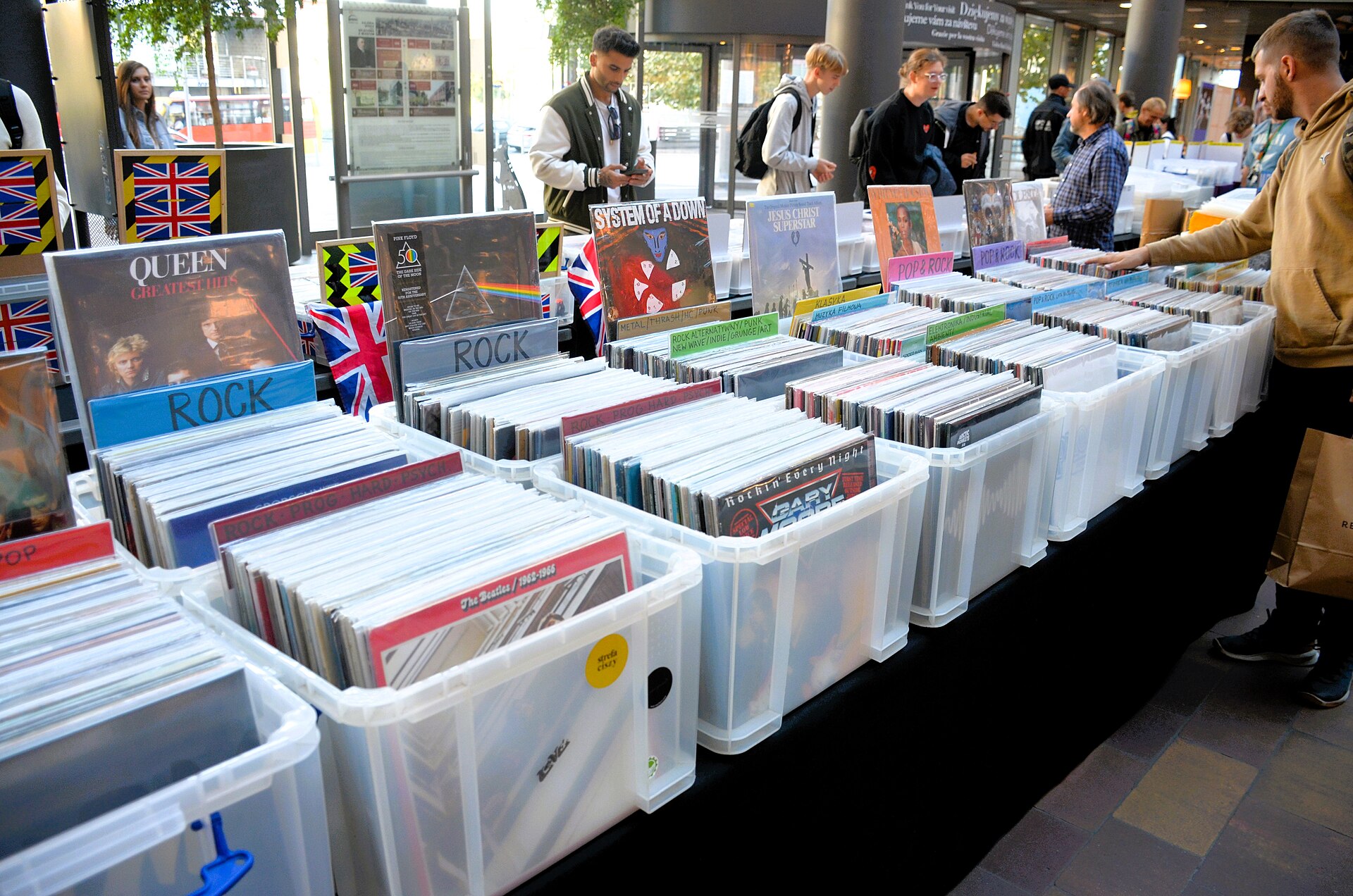
On Sundays, head to Mauerpark. Multiple stalls sell vinyl from the 1990s. Arrive by 10:00 for the best selection. Dealers and collectors pick through the crates before noon. Do not expect to find original Basic Channel or Chain Reaction pressings at bargain prices at any of these three stops. You will find the sounds those labels inspired.
Read next
-
 East Side Gallery
-
 Checkpoint Charlie
The guardhouse at Checkpoint Charlie is a replica from 2000. Here is what is original Cold War fabric, what is a set, and where the real booth ended up.
Checkpoint Charlie
The guardhouse at Checkpoint Charlie is a replica from 2000. Here is what is original Cold War fabric, what is a set, and where the real booth ended up.
-
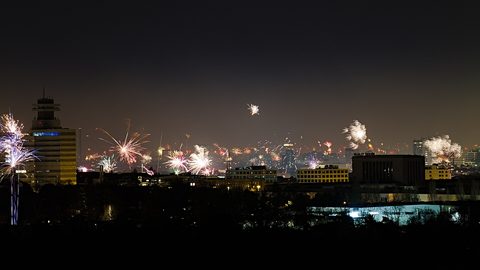 Charlottenburg
-
 Mitte
Mitte
-
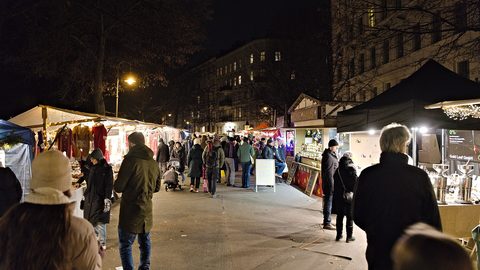 Prenzlauer Berg
-
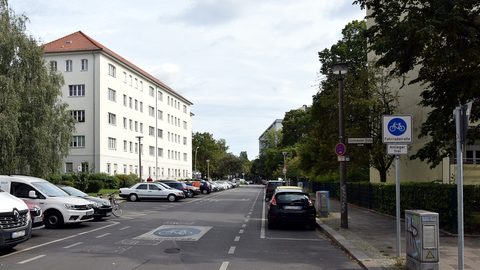 Friedrichshain
-
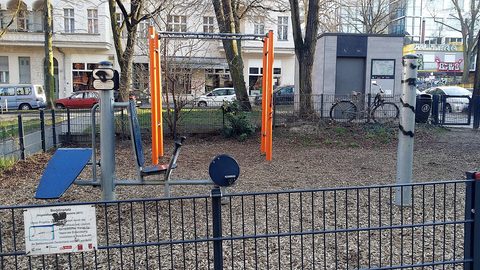 Neukölln
-
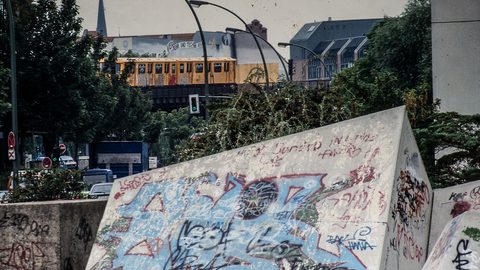 Kreuzberg
-
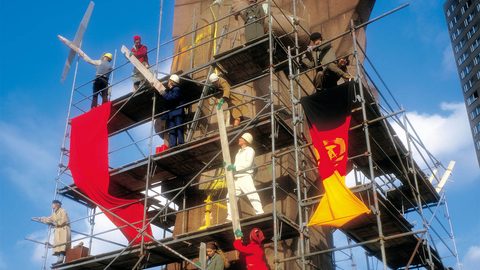 Berlin 1990s Films Run Lola Run Sun Alley and Berlin Babylon What They Captured
Run Lola Run, Sun Alley, and Berlin Babylon each captured a different Berlin of the 1990s — the first a sprint through the post-Wall city, the last a techno-scored documentary of its construction.
Berlin 1990s Films Run Lola Run Sun Alley and Berlin Babylon What They Captured
Run Lola Run, Sun Alley, and Berlin Babylon each captured a different Berlin of the 1990s — the first a sprint through the post-Wall city, the last a techno-scored documentary of its construction.