East or West Berlin: Which Half of the City Should You Spend Your Time In
East or West Berlin: the Wall ran through the middle, so the former East is now the central, expensive, club-heavy half. Here's how to choose.

East or West Berlin Which Half to Spend Your Time in
For a first time visitor with limited days, the question of East or West Berlin is not a history test. It is a practical choice between two very different hotel neighbourhoods, and the answer is counterintuitive. The Wall did not run around the edge of the city. It cut straight through the middle, which means the former East now holds the expensive, central, nightlife heavy real estate: Mitte, Prenzlauer Berg, Friedrichshain. The former West, centred on Charlottenburg and the Ku'damm, is quieter, more bourgeois, and better for sleep. This is a trade off between raw energy and polished comfort, not a Cold War loyalty test.
East Berlin vs West Berlin for Tourists
What Lives in the Former East
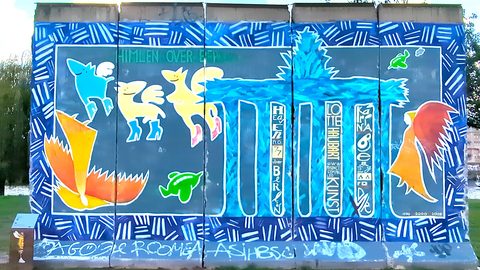
The tourist version of Berlin that appears on social media is almost entirely the former East. The East Side Gallery, the 1.3 kilometre long mural covered Wall segment on Mühlenstraße, pulls about 3 million visitors annually. The Fernsehturm at Alex, the World Time Clock, the Hackesche Höfe, the bars of Friedrichshain: all East. The raw, repurposed energy that defines the city for most visitors lives here.
What Lives in the Former West
The former West offers a different Berlin. The Ku'damm, at 3.5 kilometres long, is a broad commercial avenue lined with shops, hotels, and the KaDeWe department store, which opened in 1907. The area around Zoologischer Garten station, once West Berlin's main rail hub, is quieter now than its pre 1990 heyday. Schloss Charlottenburg sits in the West, a Baroque palace with a formal garden, a kind of attraction the East does not have. The Tiergarten, the city's vast central park, is West territory.
The tourist experience splits cleanly along the old border. East Berlin delivers density, late nights, and the landmarks that fill the postcards. West Berlin delivers space, green, and a less frantic pace. If you have three days, you will see both. The question is where you drop your bag.
Where to Stay East or West Berlin
Stay East for the Action
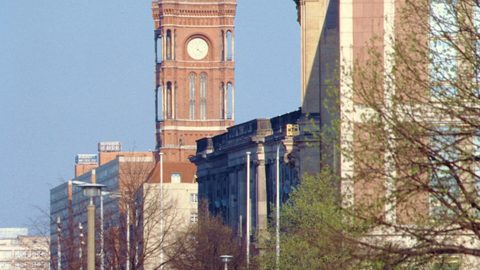
Book your hotel in the former East if your priority is walking out your door into the action. Mitte, the central district that was the death strip during the Wall era, is now the commercial heart of reunified Berlin. Hotel prices here are higher than in the West for equivalent space, but you save time and transport costs. You can walk from the Brandenburger Tor to the East Side Gallery along the S-Bahn Stadtbahn corridor in about 40 minutes, with stops at Hackescher Markt and Alexanderplatz on the way.
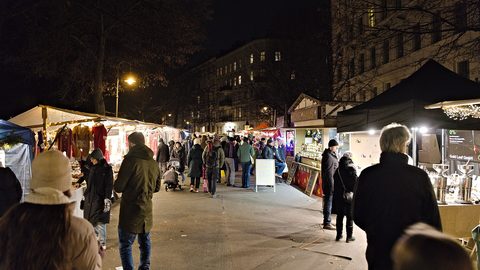
Prenzlauer Berg, north of Mitte, is the East's gentrified family zone. The Mauerpark flea market, which started in 2004, and the Bearpit Karaoke, running since 2009, are Sunday fixtures. The area is dense with cafés, small boutiques, and the U2 line that connects directly to the centre. Accommodation here tends toward Airbnb apartments rather than hotels, and prices reflect the premium on the former East's courtyard living.
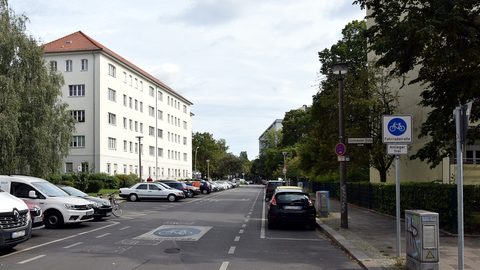
Friedrichshain, east of the Spree, is the nightlife district proper. The RAW-Gelände, a former Reichsbahn repair yard turned club compound, sits here. The East Side Gallery runs along the riverbank. The area around Warschauer Straße station is loud on weekends. If you value sleep over proximity to Berghain, stay elsewhere.
Stay West for Space and Sleep
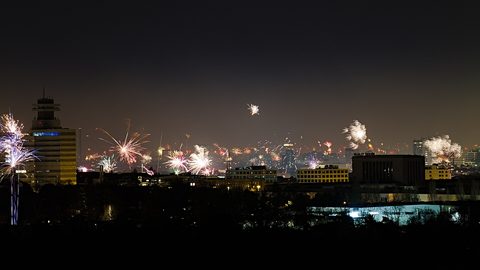
Book in the former West if you want quieter streets, larger hotel rooms, and easier access to the city's parks and palaces. Charlottenburg, anchored by the Ku'damm and Schloss Charlottenburg, has the most conventional hotel stock in Berlin: chain properties with proper lobbies, concierges, and breakfast buffets. The S-Bahn Ring line S41 and S42 runs through here, giving you a 60 minute loop around the entire city, and the S5 and S7 Stadtbahn lines get you to Alexanderplatz in about 18 minutes from Zoologischer Garten.
Schöneberg, south of the Tiergarten, is quieter still. It has fewer landmarks but more local life: neighbourhood bars, Turkish grocers, and the kind of smoky, cash only späti that serves Berliners rather than tourists. Hotel prices in the West run 15 to 20 percent below comparable East Mitte properties for the same star rating.
Berlin East West Differences Today
You Can See the Divide from the Train
The physical differences between East and West Berlin are visible from the U-Bahn. The East runs on broad, straight, 1960s GDR boulevards with socialist modernist blocks set back from the street. The West retains pre-war street patterns, narrower roads, older building stock, and a more organic layout. The S-Bahn Ring line, which traces the old West Berlin border, still marks a transition zone: stations inside the Ring are dense and expensive; stations outside it are quieter and cheaper.
Club History Sits in the East
The East has the 90s club history. Tresor opened in March 1991 in the vault of a former department store on Leipziger Straße. The original location closed in April 2005 and the building was razed later that year, but the club reopened at Kraftwerk Berlin in May 2007. Berghain opened in December 2004 in a former GDR heating plant. The KitKatClub has been running since March 1994. These venues define the city's global reputation, and they all sit on the East side of the old border.
Cold War Infrastructure Sits in the West
The West has the Cold War infrastructure. The Bunker at Reinhardtstraße, a 1942 air raid shelter, became a techno club in the early 1990s before Christian Boros turned it into an art collection that opened in 2008. The Tränenpalast at Friedrichstraße station, the border crossing where West Berliners said tearful goodbyes to East visitors, is now a museum that opened in 2011. The ghost stations of the Nord-Süd-Tunnel, five U-Bahn stops that trains passed through without stopping between 1961 and 1990, reopened on 1 July 1990. Potsdamer Platz, a 60 hectare wasteland between 1990 and 1994, is now a corporate district with the Sony Center, which opened in 2000.
Which Side of Berlin is Better
The East is better for a first time visitor with three days and a high tolerance for noise, crowds, and irregular hours. The density of sights within walking distance of Alexanderplatz is unmatched. You can hit the East Side Gallery, the Oberbaumbrücke, the RAW-Gelände, and the Mauerpark in a single day using only the U2 and U8 lines plus your feet. The street food is better. The bars stay open later. The energy is what the postcards sell.
The West is better if you are over 40, travelling with children, or booking a trip that includes the Reichstag dome, the Brandenburg Gate, and a day in Potsdam. The Tiergarten gives you a proper park. Schloss Charlottenburg gives you a proper palace. The hotel rooms are bigger and cheaper. The restaurants serve dinner at normal hours. The spätis sell beer but the streets are quiet by midnight.
Pick the East for nightlife. Pick the West for sleep. Do not try to split your stay between both unless you have at least five days. The move eats a half day in transit and leaves you with two unpackings for no real gain. The S-Bahn Stadtbahn connects Zoologischer Garten to the centre in 18 minutes. You can visit the other side easily from either base.
What the Research Says About the Split
The facts on the ground reinforce the East West divide. The Wall stood from 13 August 1961 to 9 November 1989. It enclosed West Berlin with 155 kilometres of barrier that reached 3.60 metres high in the 1980s. By 1989, only 7 road crossings, 4 rail crossings, and 1 water crossing connected the two halves within Berlin. Demolition started the night the Wall fell and official border troops finished on 30 November 1990.
Today, only five segments of the Wall remain in their original location with original fabric: the East Side Gallery at 1.3 kilometres, a 200 metre section at Niederkirchnerstraße, 60 metres at the Bernauer Straße memorial, 15 metres at Liesenstraße, and 10 metres at Bornholmer Straße. The rest is a fragmented scavenger hunt. The Wall's path is marked by a double cobblestone line that is easy to miss without a specific map. Most visitors expect a single continuous monument. What they get is a trail of fragments across a city that has been actively rebuilding on top of its border for 35 years.
.jpg)
How to Cover Both Sides in Three Days
Day One: East
Base yourself in the East. Use the S-Bahn to cross into the West when you need to. The S5 or S7 line runs the Stadtbahn viaduct, an 11.2 kilometre elevated railway that connects 7 stations between Ostbahnhof and Zoologischer Garten. The journey takes 18 minutes end to end. This is your primary East West corridor.
Start at Alexanderplatz. Walk west through the Scheunenviertel to the Hackesche Höfe, then north to the Mauerpark and the Bernauer Straße memorial. The memorial runs 1.4 kilometres along the old death strip, which was 100 metres wide at this point. The visitor centre opened in 2010. The Chapel of Reconciliation, consecrated in 2000, replaced the Versöhnungskirche that was dynamited in 1985. Finish at the East Side Gallery via the U2 and S-Bahn.
Day Two: West
Take the S5 from the centre to Zoologischer Garten. Walk the Ku'damm to the Kaiser Wilhelm Memorial Church. Cut through the Tiergarten to the Brandenburg Gate, which reopened to pedestrians on 22 December 1989. Pariser Platz was rebuilt by 2002. The Reichstag dome opened in 1999, five years after Christo and Jeanne-Claude wrapped the building in June 1995. Finish at Potsdamer Platz.
Day Three: The Periphery
Day three covers the peripheral sites. Teufelsberg, the US spy station on a rubble mountain, takes 30 minutes by S-Bahn plus a 20 minute walk. Budget a half day. Spreepark, the abandoned GDR amusement park, requires a guided tour booked ahead. The Glienicke Bridge in Potsdam, the Cold War spy swap bridge, is 40 minutes by S-Bahn. Do not try to do all three in one day. Pick one.
Practical Traps on Both Sides
Cash is mandatory in many bars, spätis, and restaurants, a legacy of the 1990s underground economy. The BVG ticket validation system is the single most common trap for visitors. You must stamp your ticket in the small red box on the platform before boarding. Forgetting results in a €60 on the spot fine. Buy a prepaid eSIM before you arrive. Free Wi Fi is patchy by European standards, and you will need the BVG app and Google Maps to navigate the obscure courtyard venues.
Public toilets are scarce and cost €1 with a stern attendant. The East Side Gallery is heavily touristed; arrive before 09:00 to avoid the crowds. The Mauerpark flea market is best on Sunday mornings. The RAW-Gelände clubs do not open until late. The Berghain door policy is a continuation of the Ostgut door policy that Sven Marquardt has enforced since the 1990s. Do not plan your trip around getting in. Plan around the venues that are open to everyone: the memorials, the parks, the galleries.
The Honest Caveat
The East West division is not a clean split any more. The Berlin of 2026 has been reunified for longer than it was divided. The old border is a tourist attraction, not a lived reality for the people who live here. The best restaurant you eat at may be in a former West district. The best club you visit may be in a former East factory. The Wall is a memory you have to assemble from fragments, not a monument you can stand in front of and understand. That is the point. Berlin wears its scars as attractions, but it does not make them easy to read.
Read next
-
 East Side Gallery
-
 Checkpoint Charlie
The guardhouse at Checkpoint Charlie is a replica from 2000. Here is what is original Cold War fabric, what is a set, and where the real booth ended up.
Checkpoint Charlie
The guardhouse at Checkpoint Charlie is a replica from 2000. Here is what is original Cold War fabric, what is a set, and where the real booth ended up.
-
 Charlottenburg
-
 Mitte
Mitte
-
 Prenzlauer Berg
-
 Friedrichshain
-
 Neukölln
-
 Kreuzberg
-
 Berlin 1990s Films Run Lola Run Sun Alley and Berlin Babylon What They Captured
Run Lola Run, Sun Alley, and Berlin Babylon each captured a different Berlin of the 1990s — the first a sprint through the post-Wall city, the last a techno-scored documentary of its construction.
Berlin 1990s Films Run Lola Run Sun Alley and Berlin Babylon What They Captured
Run Lola Run, Sun Alley, and Berlin Babylon each captured a different Berlin of the 1990s — the first a sprint through the post-Wall city, the last a techno-scored documentary of its construction.