Berlin Ghost Stations: the U-Bahn Platforms West Berlin Trains Rolled Past for 28 Years
_a.jpg)
The Trains Slowed, the Lights Stayed Off
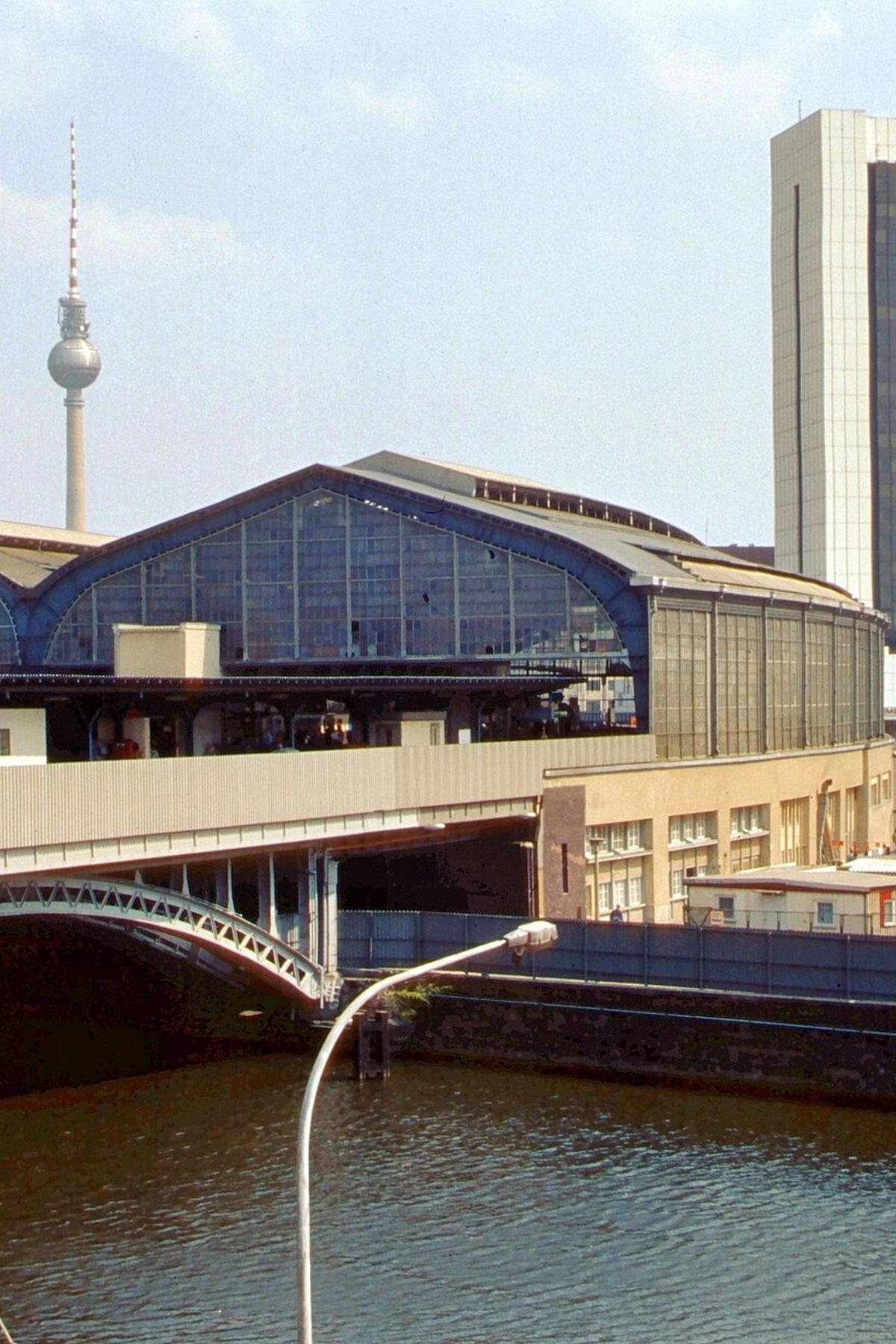
On the morning of 13 August 1961, West Berlin U-Bahn drivers entering the northern tunnel of the U6 line received a new standing order: slow to 25 km/h, do not stop, and do not open the doors. The platforms at Schwartzkopffstrasse, Oranienburger Strasse, Französische Strasse and Stadtmitte had become ghost stations. Trains rolled past in the dark, and they would stay that way for 28 years. Armed transport police from East Berlin worked 24-hour shifts on those sealed platforms, watching passengers who could not get off and East Berliners who could not get on. The same geography that made those four stops useful to the city's Cold War division also created a second set on the U8 line. Together they form the most concrete surviving evidence of how a subway system ran through a closed border without ever acknowledging it.
What Are Berlin Ghost Stations: the Geography That Created Them
The U6 and U8 lines both started in the northern districts of West Berlin, ran south through the central Mitte district that belonged to East Berlin, and re-emerged into the western half of the city a few stops later. East Berlin could not close the lines without also shutting West Berlin's own transit connections, so the BVG kept the trains running but walled up every entrance on its own territory. Staircases were bricked shut. Station entrances were concreted over at street level. The platforms themselves were lit by dim emergency lighting only. Border guards stood on those platforms from 1961 until 1989, and the trains passed through at a maximum of 25 km/h. No successful escape via a ghost station was ever recorded. The sealed platforms sat between two worlds: the trains belonged to West Berlin, but the ground above them was East Berlin.
Why the U2 Line Was Different
Unlike the U6 and U8, the U2 line did not run through East Berlin territory after the Wall went up. It was severed at the border, with the eastern section between Potsdamer Platz and Mohrenstrasse closed entirely until 13 November 1993. No through running meant no ghost stations on that stretch, which is why the U2 does not appear here.
Geisterbahnhöfe: the German Name and What it Means
The term Geisterbahnhöfe translates literally to ghost stations, but Berliners use it for a specific category: stops on lines that operated through East Berlin without halting. The word carries no supernatural meaning. It refers to the stations' limbo state between operation and abandonment. The BVG still maintained the tracks and the trains still ran, but the stations themselves were dead spaces. The German word is the one you will see on the permanent exhibition at Nordbahnhof and on BVG historical signage at the reopened stops. Type Geisterbahnhöfe into a search engine and you will find the same list of U6 and U8 locations.
Nordbahnhof: the Best Preserved Example
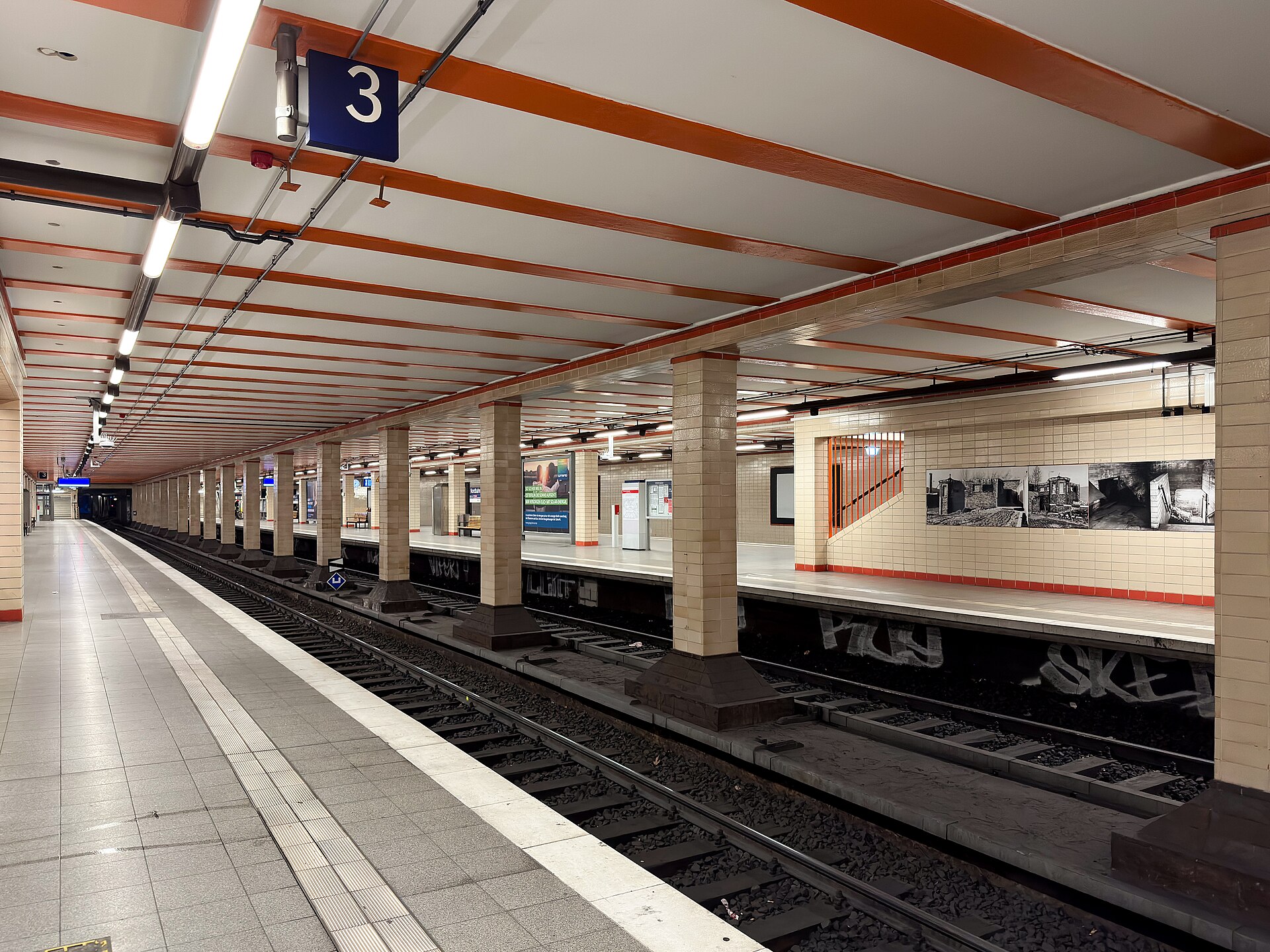
Nordbahnhof on the U6 is the most complete ghost station you can visit today. It was sealed from 13 August 1961 until 1 July 1990. The platform walls still carry the white and green ceramic tiles from the stop's 1936 construction, the enamel name signs in Fraktur typeface, and the empty 1930s enamel advertising frames that have held no ads since the closure. In 2006, the Berliner Unterwelten group installed the permanent exhibition Grenz und Geisterbahnhöfe directly on the U6 platform, behind glass. It contains border guard logbooks, sealed door mechanisms, and TraPo uniform items. Access is free during U-Bahn operating hours. Check the current Berliner Unterwelten website for opening times before you travel. The station's name history complicates navigation: it was Nordbahnhof from 1936 to 1950, then Zinnowitzer Strasse from 1990 to 2009, then reverted to Nordbahnhof in 2009. A traveller using a 1990s-era guidebook will find the old name on every page.
U6 Ghost Stations: Schwartzkopffstrasse, Oranienburger Strasse, Französische Strasse, Stadtmitte
The U6 line carried five ghost stops across East Berlin territory. Schwartzkopffstrasse sits at Schwartzkopffstrasse 1. The street-level entrance was bricked up and guarded by East German border police. Today it is a fully operational U-Bahn stop with no visible trace of its 28-year closure except a small commemorative plaque. Oranienburger Strasse at Oranienburger Strasse 83 still shows its 1923 platform tiling and original name panels behind perspex. The entrance above ground was concreted over and a border guard post was built directly outside. Today a BVG sign marks the entrance and the platform looks like any other U6 stop. Französische Strasse was permanently closed on 4 December 2020 and replaced by the new Unter den Linden interchange station. No trace of the ghost station era remains visible. Stadtmitte at Friedrichstrasse 2 reopened 1 July 1990. The U6 platform level shows no sign of its former sealed status, though the upper mezzanine retains some 1930s architectural details if you look above the modern shopfronts.
U8 Ghost Stations: Bernauer Strasse, Rosenthaler Platz, Weinmeiterstrasse
The U8 line had three stations that became ghost stops on the same day. Bernauer Strasse reopened first as a border crossing on 12 April 1990, with full U-Bahn service resuming on 1 July 1990. The street-level entrance was a fortified guardhouse with floodlights and barbed wire. Today the station functions as a normal U8 stop, but the Bernauer Strasse Wall Memorial directly above ground preserves a section of the death strip. Rosenthaler Platz has kept its 1930s platform wall tiles, partially restored. The entrance at street level was bricked up and painted to match the surrounding wall. Today an ordinary BVG sign marks the spot. Weinmeiterstrasse reopened 1 July 1990. It retains the 1930s green tile pattern on the mezzanine level and the kiosk structure that was sealed during the division. None of these three stops show obvious signs of their ghost status to a casual traveller, but each one has a metre-square BVG historical plaque on the platform explaining what happened there.

The S-Bahn Nord-Süd Tunnel: Berlin’s Second Ghost Line
The S-Bahn Nord-Süd Tunnel, which runs directly below the U6 line, had its own set of ghost stations: Nordbahnhof S-Bahn level, Oranienburger Strasse S-Bahn level, Unter den Linden, and Potsdamer Platz. These reopened on 1 March 1992, later than the U-Bahn stops because the tunnel itself had been sealed at both ends and the rolling stock had been removed. At the Nordbahnhof S-Bahn level you can still see the 1936 platform tiling and the sealed emergency exit doors that were bricked up on the East Berlin side. Potsdamer Platz S-Bahn station, an above-ground stop that trains passed without halting, reopened on the same day. Unter den Linden S-Bahn station was renamed Brandenburger Tor in 1990, before it even reopened, because the BVG anticipated the symbolic value of a station at the new unified city's central landmark.
What Remains Visible Today: a Practical Inventory
Every U-Bahn ghost station on the U6 and U8 lines is now an ordinary stop with no trace of its 28-year closure visible from a moving train. The evidence exists only at street level and on the platform if you stop and look for it. At Nordbahnhof U6, the entire exhibition area behind glass preserves the condition from the divided era. At Oranienburger Strasse U6, the platform tiles and name panels survived because the BVG never removed them. At Rosenthaler Platz and Weinmeiterstrasse U8, the platform wall tiles carry the same pattern they did in the 1930s. At every other station, a plaque is all that marks the ghost era. The single exception is Französische Strasse, which closed permanently in 2020 and is now a locked concrete shell that no BVG train serves. The street-level entrances that were bricked up in 1961 have been reopened, rebuilt, or replaced. No entrance from the 1961 era survives in its sealed state outside a museum context. The failure case for a traveller hoping to see ghost station fabric is arriving at Schwartzkopffstrasse expecting a Cold War relic and finding a clean, brightly lit modern platform with a plaque smaller than a sheet of paper. Go to Nordbahnhof first, and budget 40 minutes for the exhibition.
How to Visit the Ghost Stations: Routes, Tickets and Timing
The Nordbahnhof Exhibition
Start at Nordbahnhof U6, exit towards Brunnenstrasse, and enter the U-Bahn platform level to find the Grenz und Geisterbahnhöfe exhibition behind glass. It costs nothing to see and is open whenever the U-Bahn runs, which is 04:00 to 01:00 daily.
The Circuit: Four Stops in 90 Minutes
From Nordbahnhof, ride one stop south to Oranienburger Strasse U6 and look for the tiles on the platform behind perspex panels. Then ride another stop to Friedrichstrasse, cross to the U8 platform using the mezzanine, and ride north one stop to Rosenthaler Platz for the 1930s wall tiles. Three blocks east on foot is Weinmeiterstrasse U8, which has the kiosk. A single BVG day ticket at the 2024 rate of approximately 9.90 euros covers all of these trips. The BVG app validates your ticket. If you buy a paper ticket, stamp it in the red box on the platform before boarding or you face a 60-euro fine. The stops are spaced roughly five minutes apart by train; the full circuit takes about 90 minutes including the exhibition.
Read next
-
 East Side Gallery
-
 Checkpoint Charlie
The guardhouse at Checkpoint Charlie is a replica from 2000. Here is what is original Cold War fabric, what is a set, and where the real booth ended up.
Checkpoint Charlie
The guardhouse at Checkpoint Charlie is a replica from 2000. Here is what is original Cold War fabric, what is a set, and where the real booth ended up.
-
 Charlottenburg
-
 Mitte
Mitte
-
 Prenzlauer Berg
-
 Friedrichshain
-
 Neukölln
-
 Kreuzberg
-
 Berlin 1990s Films Run Lola Run Sun Alley and Berlin Babylon What They Captured
Run Lola Run, Sun Alley, and Berlin Babylon each captured a different Berlin of the 1990s — the first a sprint through the post-Wall city, the last a techno-scored documentary of its construction.
Berlin 1990s Films Run Lola Run Sun Alley and Berlin Babylon What They Captured
Run Lola Run, Sun Alley, and Berlin Babylon each captured a different Berlin of the 1990s — the first a sprint through the post-Wall city, the last a techno-scored documentary of its construction.