The Night the Berlin Wall Fell: 9 November 1989, the Press Conference, the Mistake, and the Border
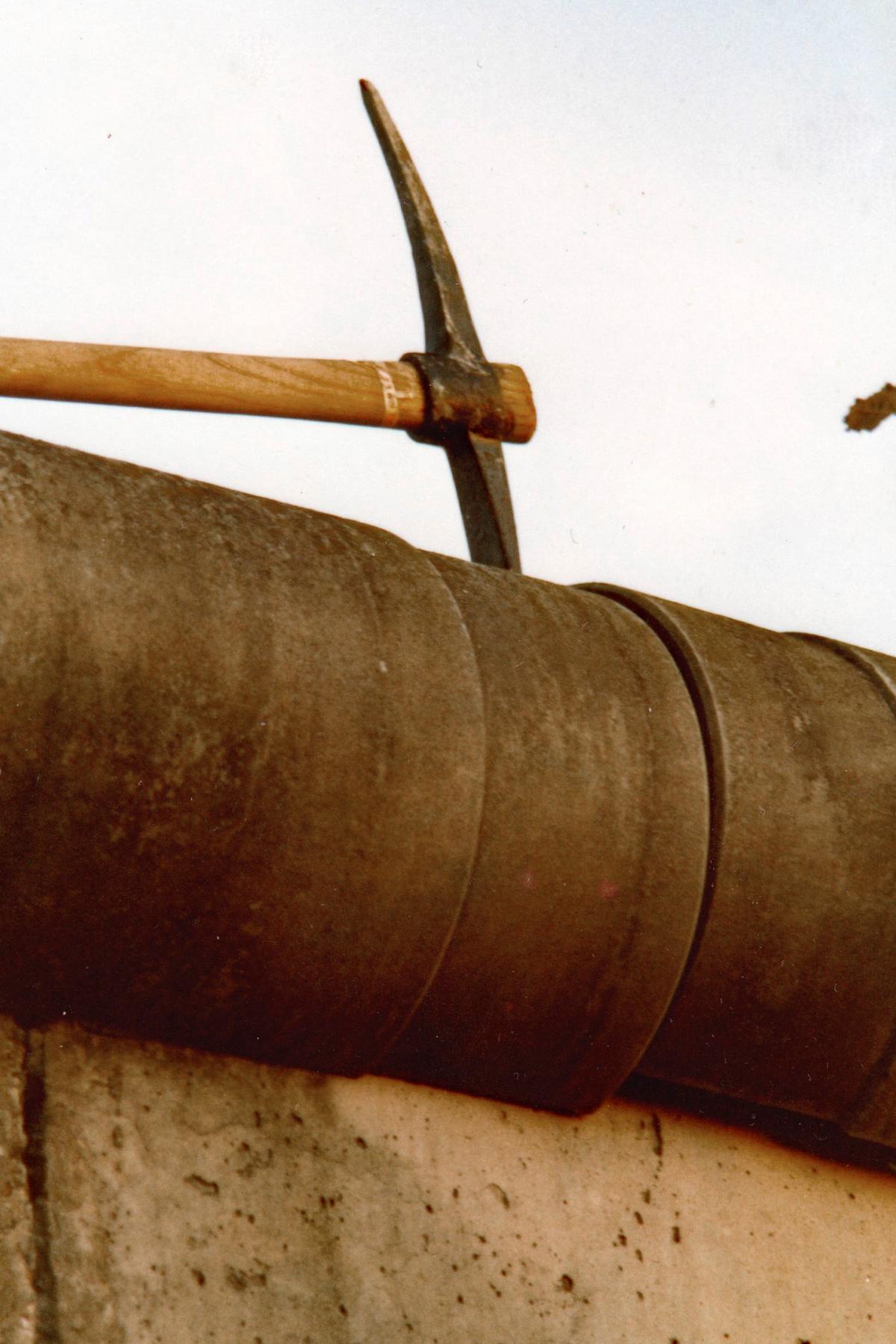

The Night the Berlin Wall Fell 9 November 1989: the Press Conference, the Mistake, and the Border
The Berlin Wall encircled West Berlin for 28 years. At Bornholmer Strasse, a bridge called the Bösebrücke connected the East Berlin district of Prenzlauer Berg to the Wedding district in the West. That bridge became the first crossing to open on the night the Berlin Wall fell 9 November 1989. Not because of a planned decree. Because of a fumbled press conference, a single journalist's question, and a border guard's unauthorised decision. Here is the hour-by-hour timeline of that night, from the Mohrenstrasse press room to the barrier going up at the Bösebrücke.
Günter Schabowski Press Conference: 18:57 at Mohrenstrasse
The press conference began at 18:57 CET at the East German Press Office on Mohrenstrasse. Günter Schabowski, a member of the SED Politburo, was handed an internal memo on provisional travel regulations moments before he went on camera. The memo described a new policy allowing East German citizens to apply for exit visas at police stations, with the change scheduled to take effect on 10 November 1989.
The Document Schabowski Was Given
The document Schabowski held was an internal SED memo, not a public announcement. Its language was bureaucratic and conditional. Schabowski had not been briefed on it before the conference. He read from it without preparation.
The Key Mistranslation Into Policy
When a journalist asked when the new travel regulations would come into force, Schabowski replied: "Nach meiner Kenntnis... sofort, unverzüglich", "As far as I know... immediately, without delay." The phrase "sofort, unverzüglich" was not part of the original memo. The actual planned start date was 10 November, and the actual planned procedure required citizens to obtain exit visas at local police stations. Schabowski's improvised phrase announced an immediate opening of the border that the Politburo had not authorised.
9 November 1989 Mistake: How a Verbal Blunder Opened the Border
The journalist who asked the decisive question was Riccardo Ehrman. He asked: "Wann tritt das in Kraft?", "When does this come into force?" Schabowski's answer, "sofort, unverzüglich", transformed a scheduled administrative change into an open-ended border opening. The 9 November 1989 mistake was not a deliberate act of policy. It was a press conference speaker answering a question with a word he had not read in his briefing notes.
Reuters Broadcasts The News At 19:05
At 19:05 CET, the Reuters news agency transmitted the first report that the border was open. Within minutes, West German television networks, including ZDF, broadcast the story. East Berliners watching ZDF heard that they could cross immediately. The information spread by telephone and word of mouth faster than any official bulletin could counter it.
The Crowd Masses At The Crossings
By 20:00, East Berliners began walking toward the seven inner-city border crossings. The largest concentration gathered at the Bösebrücke on Bornholmer Strasse, the northernmost checkpoint in the Mitte district. The crowd was not aggressive. It was insistent. People demanded passage based on the news report from ZDF. The border guards had received no orders to open the gates.
Berlin Wall Fall Timeline: from Confusion to Opened Gates
The timeline of the Berlin Wall fall on 9 November 1989 moved from policy confusion to physical opening in under five hours.
18:57-19:05: The Press Conference
Schabowski's announcement at the Mohrenstrasse press office and Reuters' wire report. No border guard received any command to let anyone through.
19:05-22:00: The Information Spreads
ZDF and other West German broadcasters repeated the story. East Berliners left their apartments and headed for the checkpoints. Border guards at Bösebrücke and the other six inner-city crossings called their superiors for instructions. No instructions came.
22:00-23:30: The Standoff At Bösebrücke
At Bornholmer Strasse, the crowd grew to several thousand. Lieutenant-Colonel Harald Jäger, the officer commanding the crossing, faced an impossible situation. He had no authorisation to raise the barrier. The crowd was not violent, but the pressure was untenable. Jäger made the decision alone.
23:30: The Barrier Goes Up
At approximately 23:30 CET, Jäger ordered his guards to lift the barrier at the Bösebrücke. He did not have higher authorisation. He opened the crossing because the crowd, and the news broadcast, had created a reality that the Politburo had not anticipated. Within minutes, East Berliners streamed across the bridge into Wedding. By the end of the night, all seven inner-city border crossings had opened. The Brandenburg Gate did not open to pedestrian traffic until 22 December 1989, when West German Chancellor Helmut Kohl and East German Prime Minister Hans Modrow presided over an official ceremony.
Bornholmer Strasse Border Opening: Harald Jäger’s Decision
The Bornholmer Strasse border opening was the first and most consequential breach of the night. Lieutenant-Colonel Harald Jäger was the border guard on duty at the Bösebrücke checkpoint. He had served at the crossing for years and knew the standard procedure: refuse passage without written orders from the Politburo.
Why Jäger Opened The Gate
Jäger later stated that he opened the barrier because the ZDF broadcast had already made the opening an established fact in the minds of the crowd. Denying passage risked a violent confrontation. Opening the gate without orders risked his career and potentially his freedom. He chose the latter, betting that the Politburo would not reverse a decision that had already been broadcast to the world.
The Crossing Itself
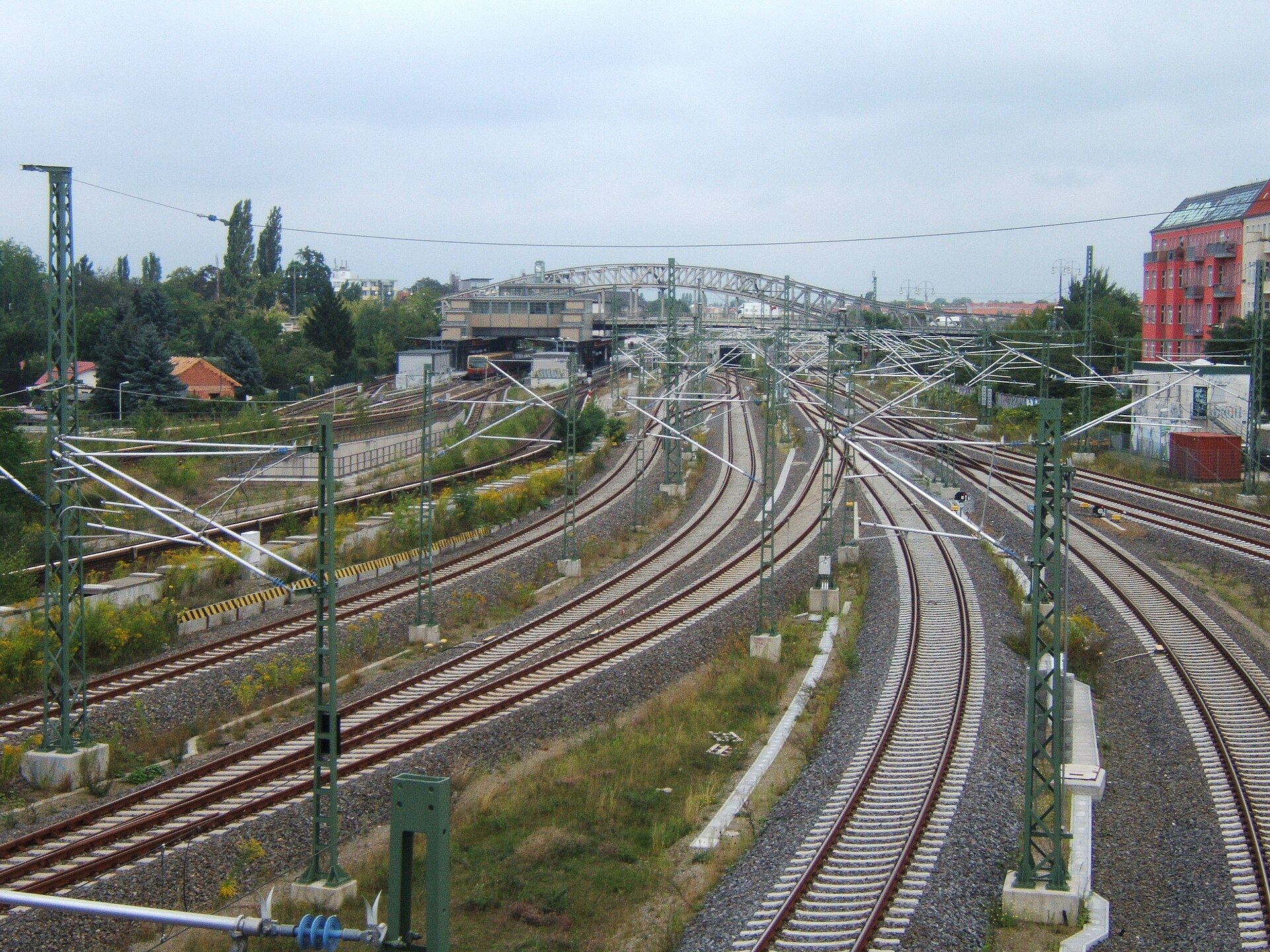
The Bösebrücke spanned the former death strip between Prenzlauer Berg and Wedding. It was a standard East German border checkpoint with guard towers, search booths, and concrete barriers. The area had been a restricted military zone for decades. On the night of 9 November, the Trabant cars of East Berliners streamed across the bridge into West Berlin, with family members running alongside them.
Bösebrücke First Checkpoint Opened: What Stands There Today
The Bösebrücke first checkpoint opened at 23:30 on 9 November 1989. Today, the bridge at Bornholmer Strasse is an unremarkable crossing you can walk across in under a minute. The commemorative site, inaugurated on 9 November 2014, is named "Platz des 9. November 1989". It is an open-air installation with information panels that reconstruct the evening's events. A section of the inner wall and the footprint of a watchtower are preserved on site. The annual commemoration ceremony on 9 November draws Berlin city officials and surviving witnesses, including, in some years, Harald Jäger himself.
How To Find Bösebrücke
The site is located at the intersection of Bornholmer Strasse and Bösebrücke, on the border between Prenzlauer Berg and Wedding. Take the U-Bahn to U2 station Eberswalder Strasse or the S-Bahn to S-Bornholmer Strasse. From there, walk south along the double cobblestone line that traces the former Wall path toward the Mauerpark flea market and the Bernauer Strasse Wall Memorial.

Other Traces of the Wall You Can Visit Today
The Wall's former path is a fragmented scavenger hunt. Most of it was demolished between 1990 and 1991. The Mauerradweg, a 160 km bicycle trail completed in 2006, traces the entire ring. A double row of cobblestones, installed between 2004 and 2006, marks approximately 5.7 km of the inner-city path through central Berlin. You will lose the line on many streets.
East Side Gallery: The Tourist Mile
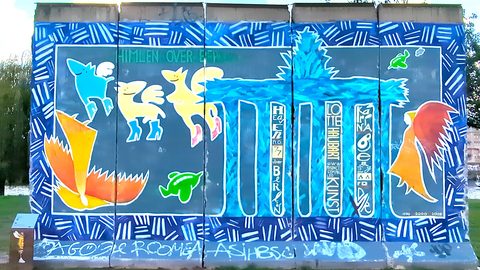
The East Side Gallery runs 1,316 metres along Mühlenstrasse between Ostbahnhof and Oberbaumbrücke. It is the longest surviving continuous section of the Berlin Wall. 118 artists from 21 countries painted the murals in 1990. Expect heavy crowds and selfie sticks from 10:00 to sunset. Arrive before 09:00 if you want to see the paintings without people in the frame.
Bernauer Strasse Wall Memorial: The Serious Site
The Berlin Wall Memorial at Bernauer Strasse preserves 60 metres of the death strip with a watchtower, a documentation centre, and a section of the outer wall. It runs 1.4 km along the former border. This is the site where the scale of the death strip is most legible. Entry is free.
Potsdamer Platz And Niederkirchnerstrasse
Several original Wall segments stand as a display at Potsdamer Platz, the site of Europe's largest 1990s construction pit from 1994. A 200-metre section of the outer wall survives at the Topography of Terror on Niederkirchnerstrasse. See both if you are in those central districts, but neither matches the atmosphere of the death strip at Bernauer Strasse.
What Goes Wrong: the Cobblestone Trap and the Missing Wall
The most common mistake travellers make is trying to find a single, continuous Wall to walk along. Most of it was demolished in 1990-91. The experience is a fragmented scavenger hunt between memorial sections, the double cobblestone line, and repurposed border crossings. The cobblestone line is easy to miss without a specific map on your phone. Download a PDF of the Berlin Wall Trail map before you arrive; the signage on the ground is inconsistent. Free Wi-Fi is patchy by European standards. Buy a prepaid eSIM before you land, because you will need data to use the BVG app and to locate obscure courtyard venues. Google Maps is reliable for transit, but resident-run sites like residentadvisor.net remain the authority on events descended from the 1990s scene. The single most common trap: forgetting to stamp your U-Bahn or S-Bahn ticket in the small red box on the platform before boarding. That gets you a €60 on-the-spot fine.
Read next
-
 East Side Gallery
-
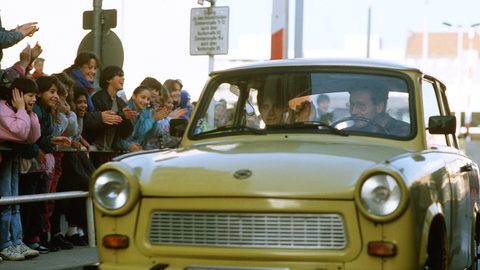 Checkpoint Charlie
The guardhouse at Checkpoint Charlie is a replica from 2000. Here is what is original Cold War fabric, what is a set, and where the real booth ended up.
Checkpoint Charlie
The guardhouse at Checkpoint Charlie is a replica from 2000. Here is what is original Cold War fabric, what is a set, and where the real booth ended up.
-
 Charlottenburg
-
 Mitte
Mitte
-
 Prenzlauer Berg
-
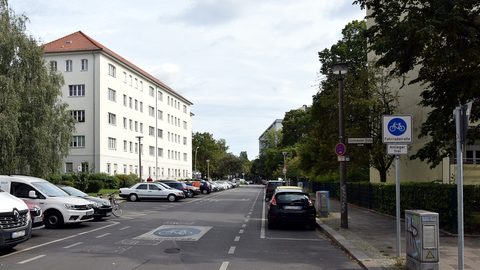 Friedrichshain
-
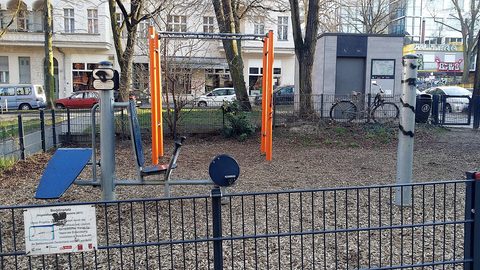 Neukölln
-
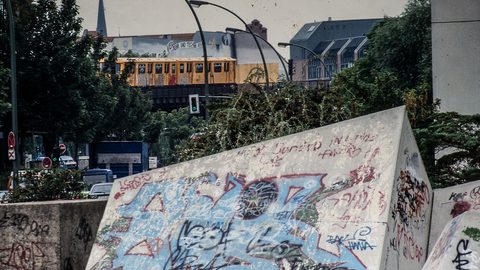 Kreuzberg
-
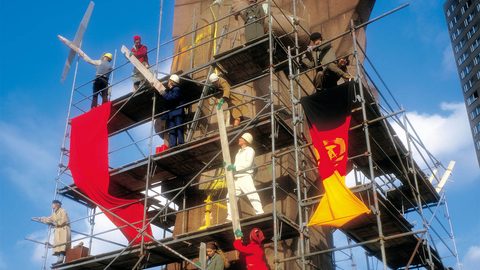 Berlin 1990s Films Run Lola Run Sun Alley and Berlin Babylon What They Captured
Run Lola Run, Sun Alley, and Berlin Babylon each captured a different Berlin of the 1990s — the first a sprint through the post-Wall city, the last a techno-scored documentary of its construction.
Berlin 1990s Films Run Lola Run Sun Alley and Berlin Babylon What They Captured
Run Lola Run, Sun Alley, and Berlin Babylon each captured a different Berlin of the 1990s — the first a sprint through the post-Wall city, the last a techno-scored documentary of its construction.