Ostalgie in Berlin: the Ampelmaennchen, the Trabant, and What Is Actually Genuine GDR Memory
Berlin's Ostalgie industry sells Ampelmaennchen lamps and Trabant safaris, but separating genuine GDR memory from commodified kitsch requires knowing what was actually made in the East.

Ostalgie Berlin Genuine GDR: What is Real and What is Souvenir Kitsch
Continuous Provenance Vs. Modern Revival
You walked past a shop selling Ampelmännchen keychains and a Trabi-Safari convoy rattling down Karl-Marx-Allee, and now you need to know which of this Ostalgie Berlin genuine GDR memory is real. The answer divides into two categories: objects and places that were actually made or used in the German Democratic Republic, and objects made now that simply borrow its visual language. The distinction matters. Buying the wrong thing means paying tourist prices for a factory product that has no historical connection to the GDR at all.
The term Ostalgie itself is a portmanteau of Ost and Nostalgie coined in the 1990s. It describes a specific late 1990s to early 2000s wave when easterners pushed back against the wholesale removal of their daily life from city streets. The feeling was not a political endorsement of the SED regime. It was a demand that the objects of ordinary biography a plastic car, a traffic light figure, a cucumber brine recipe be allowed to survive the reunification standardisation that erased them. By the early 2000s the wave had peaked commercially and the question got harder: is that Ampelmännchen shirt made in the GDR, or made last month in Vietnam?
How To Read The Table Below
You need one distinction. Something that was produced in the GDR and continued after 1990 carries continuous provenance. Something designed in that period but revived as a commercial brand carries a gap. Something modeled on a GDR design but manufactured abroad is pure souvenir. The table below sorts the most common products by category so you know exactly what you are buying before you hand over cash.
| Product | Category | Provenance | Where To Buy |
|---|---|---|---|
| Vita Cola | Continuous brand | GDR original, relaunched 1994 by Thüringer Waldquell. Produced without interruption since the 1990s relaunch. Genuine recipe continuity. | Supermarkets. Expect to pay roughly €1.20 a bottle; prices vary by retailer. |
| Spreewald Gherkins | Continuous brand | GDR product, multiple producers, protected geographical indication since 1999. Same brine tradition as the GDR period. | Späti or supermarket. Roughly €2.50 a jar; check the label for the protected indication. |
| Rotkäppchen Sekt | Continuous brand | Founded 1856, continued after 1990 by Rotkäppchen-Mumm Sektkellereien. Oldest sparkling wine producer in Germany. | Any supermarket. Budget around €5 a bottle; the price band is set by the producer. |
| Bautz'ner Senf | Continuous brand | Produced since 1953, continued after 1990 by Develey Senf & Feinkost. Same recipe. | Supermarket. Roughly €1.80 a tube. |
| Club-Cola | Revived brand | GDR original, reintroduced 1992 by Brauerei Hartmannsdorf, later Spreequell. GDR recipe but relaunched after a gap. | Späti or supermarket. Around €1.50; check the retailer. |
| Nudossi | Continuous brand | Produced since 1970, continued by Vadossi post 1990. Genuine. | Supermarket. Roughly €3 for a jar. |
| Ampelmännchen merchandise | Modern licence product | Designed 1961 by Karl Peglau, introduced 1969 in East Berlin. The rescue campaign started 1996 by Markus Heckhausen and Pasquale Virginio Rotter. Merchandise is made now under licence by Ampelmann GmbH, not in the GDR. | 8 Ampelmann shops Berlin. Keychains from about €5, shirts from about €30; check the official shop for current pricing. |
| Trabant keychain | Modern souvenir | Modeled on the P601 but manufactured in China. No GDR connection. | Any souvenir shop. Typically €3 to €10. |
| Ostel hotel | Themed experience | Opened 2007 in Friedrichshain. Interior designed to replicate a GDR flat. Not a GDR building. Uses furniture sourced from estate clearances. | Book direct. Rates start around €60 a night; confirm on the hotel website. |
Ampelmännchen Berlin History: the Citizen Rescue That Saved a Design
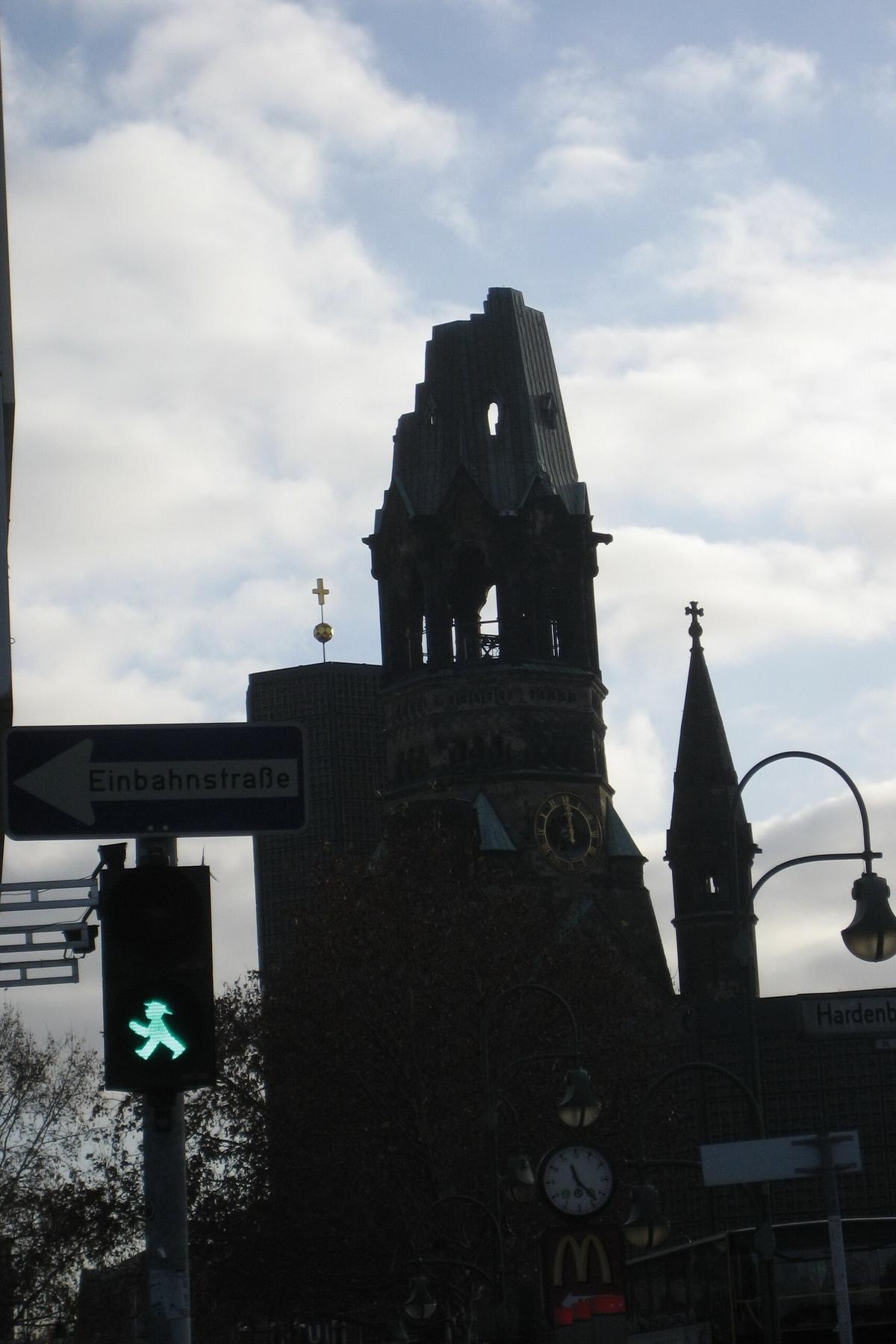
The Ampelmännchen was not always a souvenir. Designer Karl Peglau created it in 1961 for East Berlin traffic signals, and it was introduced to the streets in 1969. By the early 1990s, after reunification, West German standardisation threatened to replace every one with the leaner, less charismatic West German figure. The abolition began in the early 1990s as part of the broader traffic sign harmonisation.
In 1996, Markus Heckhausen and Pasquale Virginio Rotter founded the Komitee zur Rettung der Ampelmännchen, a citizen campaign that succeeded within a year. The first new installations in former East Berlin returned in 1997. By 2005 the Berlin Senate decided that all new pedestrian signals city-wide would use the Peglau design. The same year Heckhausen founded Ampelmann GmbH to sell merchandise, with the first shop in Hackesche Höfe. The company now runs eight shops across Berlin and sells more than 400 product types.
What this means for you. A Peglau traffic light still standing on a pole in Friedrichshain or Prenzlauer Berg is genuine GDR infrastructure. A shirt bought at a Hackescher Markt shop is a licensed product designed 20 years after the country fell. Neither is fake the rescue campaign is a legitimate part of Berlin history but only the pole version has 1969 provenance. Photograph the signals at the corner of Oranienburger Strasse and Torstrasse. If you want the merchandise, pay Ampelmann GmbH and know what you are funding.
Trabant Berlin Souvenir: the Car That Became an Irony Object
The Machine
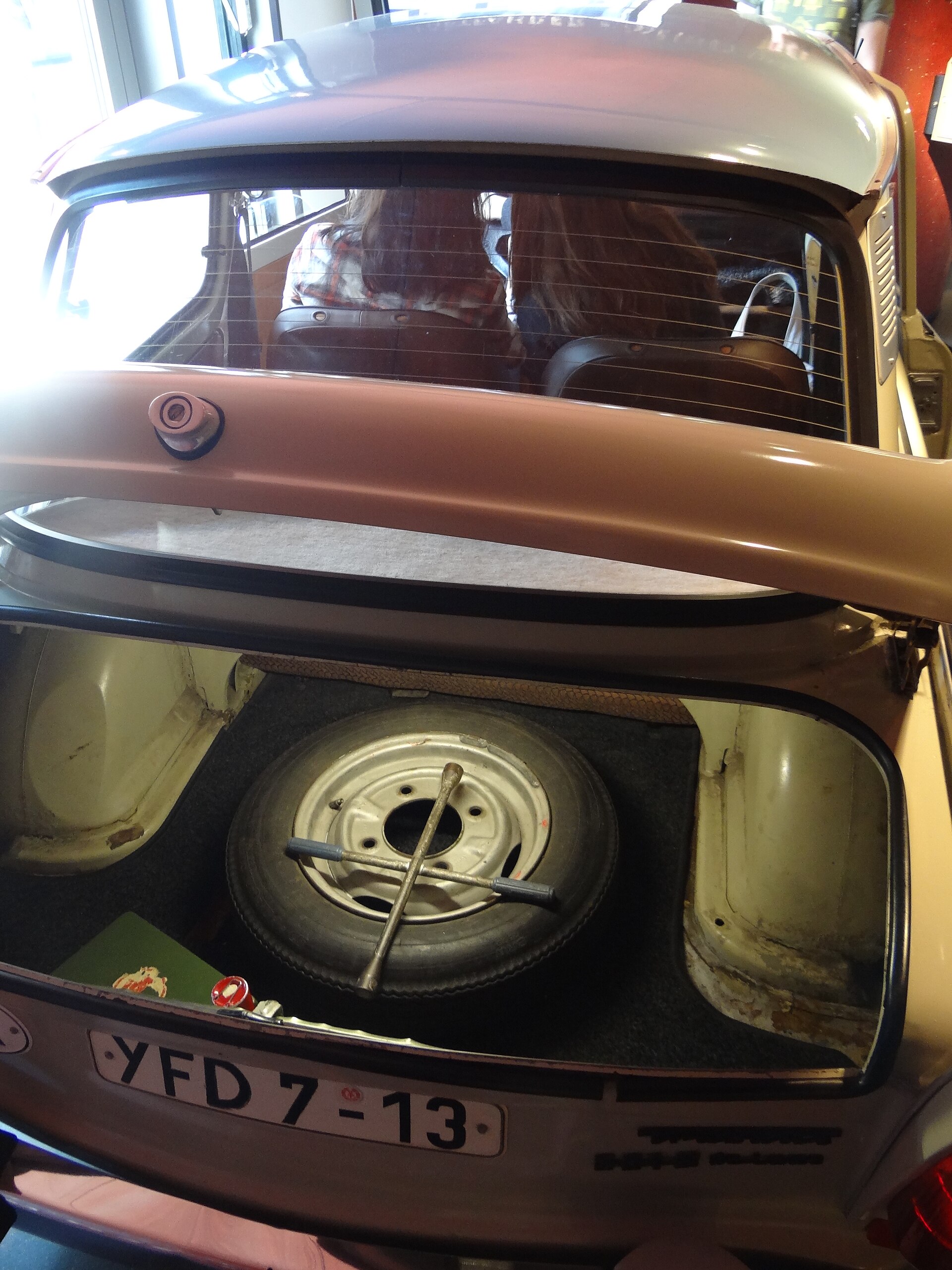
The Trabannt P601 was produced by VEB Sachsenring Automobilwerke Zwickau from 1957 to 1991. Its body was Duroplast a cotton-waste-reinforced phenol resin its engine a two-cylinder two-stroke with 594 cc, and its top speed around 100 to 110 km/h. Fuel consumption ran approximately 7 to 9 litres per 100 km. It was slow, smoky, and famously unreliable. Waiting lists for a new Trabi stretched into years. After 1990, used Trabants were abandoned in ditches. You could buy one for the equivalent of 50 Deutschmarks.
The Souvenir
By the late 1990s the Trabi was no longer a car. It had become a ironic souvenir object. Tourists wanted to ride them. East Berliners wanted to forget them. The tension between those two positions is still visible.
Trabbi-Safari. The main rental provider runs a fleet of about 30 Trabbis. Tours are self-drive convoys with a guide. The route covers Karl-Marx-Allee, East Side Gallery, Oberbaumbrücke, Alexanderplatz, and Checkpoint Charlie. Prices run between €59 and €99 per person depending on whether you drive or ride passenger. The format is a theme park ride in a car that smells of two-stroke oil. It is not a GDR experience no one drove a Trabi as a guided convoy tour in 1985. But the car itself is the real machine, and the diesel rattle is genuine. If you want the closest thing to driving the real object, this is it. Just do not pretend it is a historical reenactment.
GDR Nostalgia Berlin: Museums That Hold Original Context
DDR Museum
If you want genuine GDR memory, skip the novelty shops and go to the institutions that preserve objects in their original configuration.
Opened 2006 on Karl-Liebknecht-Str. 1 directly opposite Berliner Dom. Exhibition area covers approximately 1,000 square metres. Around 600,000 visitors per year. The museum includes a reconstructed GDR flat with fittings and a Trabannt driving simulator. The interactive displays allow you to open drawers and touch objects, which is unusual for a museum. The flat is a composite of real components. It is not a preserved room, but each object in it was manufactured before 1990. Book your ticket online and arrive before 10:00 to avoid the school groups.
Hellersdorf Flat
Located at Kastanienallee 12 in the Hellersdorf district. Opened 2018 as part of the Museum im Kino. This is the real thing: wallpaper, furniture, household appliances, and consumer products from the 1980s. Not staged. Not rearranged. The flat is exactly as the last tenant left it. This is more authentic than the DDR Museum because it was never curated for tourism. Take the U5 to Hellersdorf and walk five minutes. The museum opens irregular hours, so check the schedule a week ahead.
Stasimuseum
On Ruschestrasse in Lichtenberg, in the former Stasi headquarters building. The office of Erich Mielke remains in its original state on the 2nd floor. The museum opened in 1990 as the Forschungs- und Gedenkstätte Normannenstraße. It covers the surveillance apparatus of the GDR, not the everyday life that Ostalgie markets. Pair this with one of the GDR everyday museums to get both sides of the equation the state and the citizen.
Ostalgie Products Berlin: What to Buy and What to Skip
Buy These
Walk through any flea market in Berlin and you will see stands selling Trabant keychains, Ampelmännchen mugs, and fake GDR army jackets. The Sunday flea market at Mauerpark, which started in 2004 and includes the karaoke strip that Joe Hatchiban began in 2009, is the epicentre of this trade. Some of it is genuine. Most of it is not.
Vita Cola, Spreewald gherkins, Rotkäppchen Sekt, Bautz'ner Senf, Nudossi, and Club-Cola all have continuous production from the GDR period or immediate re-launch after 1990. You find all of them in any supermarket for under €5. The gherkins carry a protected geographical indication since 1999. The fact that you can still buy them means the supply chain survived the Wende. That is the real continuity.
Skip These
Any item sold as an Ampelmann that is not a traffic signal. The merchandise is made now. Any Trabant model that is not the actual car. The plastic keychains, the metal lapel pins, the iron-on patches. These are manufactured in the same Chinese factories that make Disney character merchandise. They have no GDR provenance. They are design objects that reference a design object, nothing more.
The Honest Purchase
If you want a souvenir, buy a bottle of Vita Cola, drink it, keep the bottle. That bottle was filled in Thüringen using a recipe that has not changed since the GDR era. It is the cheapest genuinely Ostalgie product you can buy, and nobody will argue about its authenticity.

Where to Eat Genuine GDR Food in Berlin Right Now
Ketwurst at Ostel
The Ketwurst a ketchup filled hot dog from the GDR period was revived at the Ostel hotel in Friedrichshain. Ostel opened in 2007 and styles itself as a GDR themed hotel with furniture sourced from estate clearances. It is not a GDR building, but the furniture is real. The Ketwurst served at the in house bar is a revival, not a continuous product. That makes it an Ostalgie reproduction, but the ingredients and preparation match the period version. If you want the taste without the argument, this is the place.
Konnopke's Imbiss
At the Prenzlauer Berg U-Bahn station Eberswalder Strasse. Open since 1960. It survived the Wall and the reunification. The currywurst recipe is continuous, not revived. This is the genuine GDR street food experience. Order with a bottle of Vita Cola from the supermarket across the street.
Prater Garten
Berlin's oldest beer garden on Kastanienallee in Prenzlauer Berg. It was a meeting point during the Wende period. The beer garden has been operating continuously, not revived. Go in the afternoon when the light hits the chestnut trees. Cash only. Bring enough for a meal and two beers; check the menu board for current prices.
Karl-Marx-Allee and Alexanderplatz: the Architecture of Everyday GDR Life
Karl-Marx-Allee
The most visible genuine GDR structures in Berlin are not shops or museums. They are the buildings themselves. Karl-Marx-Allee, originally named Stalinallee from 1949 to 1961, runs approximately 2.3 km from Strausberger Platz to Frankfurter Tor. It was built between 1952 and 1964 in the Socialist Classicism style called Zuckerbäckerstil. The apartments were called Arbeiterpaläste because they included central heating and high ceilings, luxuries in the GDR. These are real. They were built by the state for workers. The facades have been maintained, not reconstructed.
Alexanderplatz
At Alexanderplatz, the World Time Clock was installed in 1969 with a design by Erich John. It was renovated in 1997. The Fernsehturm tower built 1965 to 1969 rises 368 metres with an observation deck at 203 metres and a revolving restaurant called Sphere that completes one full rotation in 30 minutes. The Haus des Lehrers, also completed 1964, carries the 7 metre by 125 metre mural Unser Leben by Walter Womacka. Kino International, opened 1963 with 551 seats, still operates as a cinema under the Yorck Kinogruppe. Café Moskau, opened 1964, now functions as an event venue. All of these were built before 1989 and never stopped operating. That is the definition of genuine.
The Single Thing That Goes Wrong
You buy an Ampelmännchen keychain at a souvenir stand near Checkpoint Charlie for €8, thinking it is a piece of GDR history. It was manufactured in China three months ago. The actual GDR history is the traffic signal at the corner of Oranienburger Strasse and Torstrasse, which is free to look at and carries the 1969 design by Karl Peglau. Do not buy the keychain. Drink a Vita Cola instead.
Read next
-
 East Side Gallery
-
 Checkpoint Charlie
The guardhouse at Checkpoint Charlie is a replica from 2000. Here is what is original Cold War fabric, what is a set, and where the real booth ended up.
Checkpoint Charlie
The guardhouse at Checkpoint Charlie is a replica from 2000. Here is what is original Cold War fabric, what is a set, and where the real booth ended up.
-
 Charlottenburg
-
 Mitte
Mitte
-
 Prenzlauer Berg
-
 Friedrichshain
-
 Neukölln
-
 Kreuzberg
-
 Berlin 1990s Films Run Lola Run Sun Alley and Berlin Babylon What They Captured
Run Lola Run, Sun Alley, and Berlin Babylon each captured a different Berlin of the 1990s — the first a sprint through the post-Wall city, the last a techno-scored documentary of its construction.
Berlin 1990s Films Run Lola Run Sun Alley and Berlin Babylon What They Captured
Run Lola Run, Sun Alley, and Berlin Babylon each captured a different Berlin of the 1990s — the first a sprint through the post-Wall city, the last a techno-scored documentary of its construction.