Friedrichstrasse in Berlin and the 1990s Attempt to Build a Luxury Shopping Street
Friedrichstrasse in Berlin was meant to become a luxury shopping mile after reunification, but the 1990s retail boom left behind half-empty passages and a cautionary tale.

Friedrichstrasse in Berlin and the 1990s Attempt to Build a Luxury Shopping Street
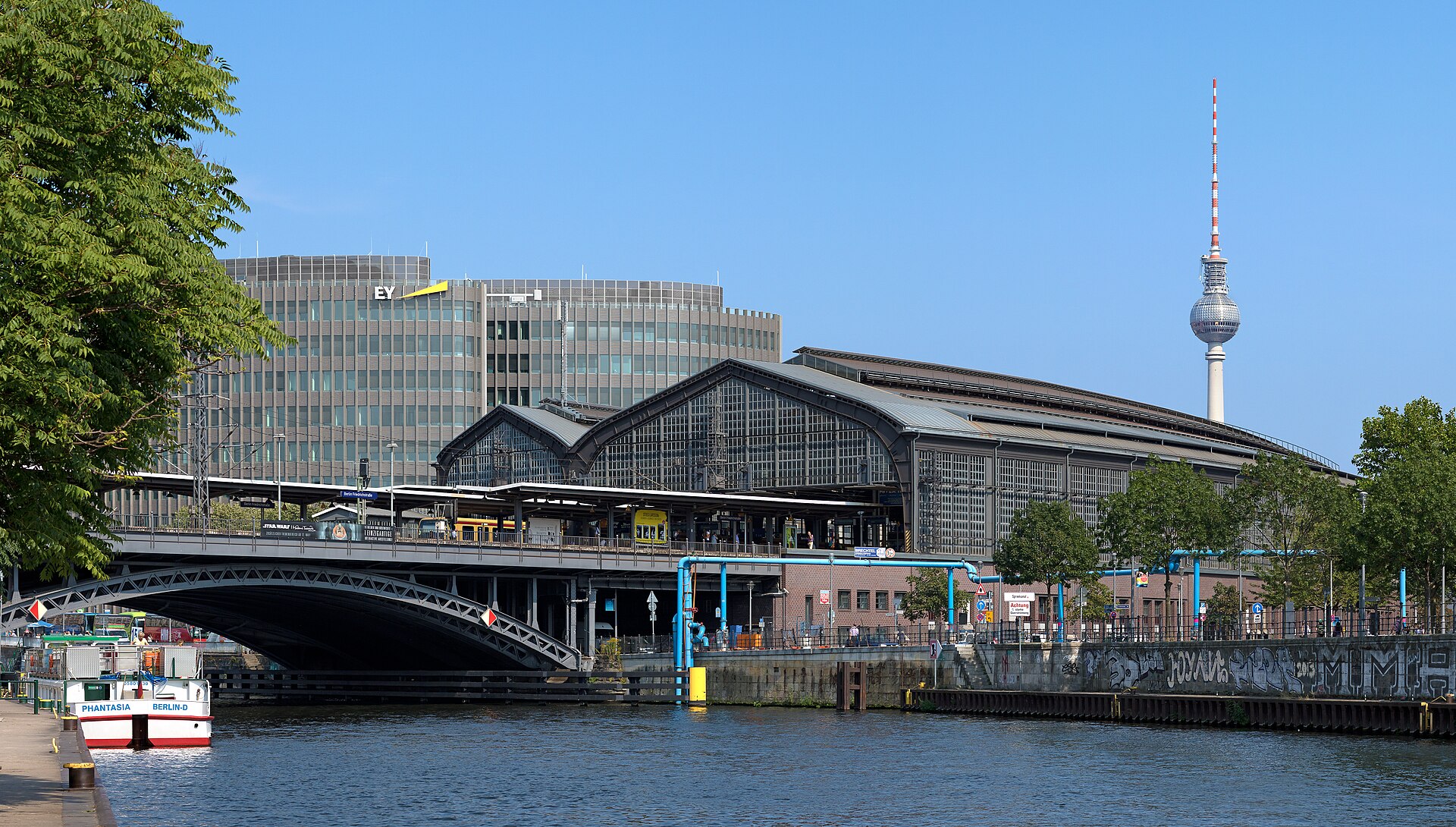
You probably assume Friedrichstrasse is Berlin's answer to the Champs Elysees. It is not. The 1990s ambition to establish Friedrichstrasse as a Bond Street of the East failed decisively. The street that was once a GDR border crossing dead zone now contains some of the highest commercial vacancy rates in the city, with entire blocks of luxury retail space sitting empty. The architecture is exceptional. The plan is a ruin. Understanding why requires walking the half kilometre between Franzosische Strasse and Mohrenstrasse, into the Friedrichstadtpassagen complex, and then out again to see where the money went wrong.
Friedrichstrasse 1990s Redevelopment
Before 1989, Friedrichstrasse was not a shopping street. It was a border. The Berlin Wall severed it at Checkpoint Charlie to the south and at the Tränenpalast to the north, where the GDR processed westbound visitors. The street became a dead zone. After the Wall fell, the logic seemed obvious: reconnect Friedrichstrasse, rebuild the Friedrichstadt district, and capture the pent-up consumer demand of a reunified city. Investors poured approximately 1.2 billion Deutsche Mark into the Friedrichstadtpassagen alone. The urban planning framework was the post-reunification Planwerk Innenstadt, which mandated critical reconstruction of the pre-war street grid. The goal was a luxury shopping boulevard.
The problem was timing and geography. The construction boom hit right as Berlin's economy cratered after the euphoria of 1990. The city had no luxury goods market to speak of. Munich and Hamburg already had that. Berlin had a weak service sector, high unemployment, and a population that had spent forty years shopping at Konsum. The developers built for a demand that never arrived. By the late 1990s, the first wave of luxury tenants were already negotiating exit clauses.
Berlin Friedrichstrasse History Before 1989
Friedrichstrasse had a pre-war identity as a major retail and entertainment street. The GDR truncated that. The U-Bahn station and S-Bahn station at Friedrichstrasse became a transit point for West Berliners entering the East, but the street above was a low-traffic stretch of state-run shops and empty lots near the Wall. The Tränenpalast at the northern end was a border crossing where GDR officials processed westerners and forced them to exchange currency at punitive rates. The structure now operates as a free museum documenting the everyday humiliation of crossing into the East. Allow thirty minutes. Walk in without a ticket. The southern end of the street terminated at Checkpoint Charlie, the most famous Cold War crossing, now a tourist trap with actors in military costumes charging for photographs. Walk past it to understand why the street was dead. Do not pay to enter the outdoor museum that has been commercialised to absurdity.
Friedrichstrasse Luxury Retail the Failed Vision
The theory was that Friedrichstrasse would compete with Kurfürstendamm, the traditional western shopping street. The new luxury retail would sit in the Friedrichstadtpassagen, three mega-blocks built between 1995 and 1996: Quartier 205, Quartier 206, and Quartier 207. Each was assigned a different architect. Each was meant to anchor a different price tier. Each failed on the same metric. The total retail area at opening covered 50,000 square metres. By 2025, the ground-floor empty-unit rates ranged from 60 percent in Quartier 205 to 90 percent in Quartier 207. The upper floors are worse. These are not subtle numbers. The luxury brands retreated for a specific set of reasons, and those reasons are visible from the pavement.
The Friedrichstadtpassagen Three Quartiers, Three Failures
Quartier 205, at Friedrichstrasse 67, was designed by Oswald Mathias Ungers in a Rationalist, stone-clad grid facade. It opened in 1995 with a mixed mid-to-premium retail and office concept. The total floor area is 80,000 square metres. The anchor tenant was Dussmann das KulturKaufhaus, a 7,500-square-metre bookstore and music store that opened in 1997 and still operates today. That is the only surviving retail anchor in the entire Friedrichstadtpassagen. The rest of the ground floor sits about 60 percent empty as of 2025. The place feels busy only because of Dussmann. Walk past it and the windows are bare or taken by pop-up galleries that never last.
Quartier 206: Black Marble and Empty Boutiques
Quartier 206, at Friedrichstrasse 71, was designed by Pei Cobb Freed and Partners with Henry N. Cobb as lead architect, not I.M. Pei himself as some briefs suggest. The structure is postmodern black granite and glass with an elliptical atrium and a black-and-white marble floor housing a hanging sculpture called Galaxy by Alexander Polzin. It opened in 1996 with luxury mono-brand boutiques as its original retail concept. The total floor area is 30,000 square metres. The ground-floor empty-unit rate in 2025 stood at 80 percent. The upper floors ran at 70 percent empty. The property has been partially converted to offices and medical practices. There is no anchor tenant. The interior is worth seeing for the architecture alone. The black marble floor and elliptical void are genuinely striking. There is almost nothing to buy. The structure has been listed as a Baudenkmal since 2022, which means the owners cannot easily alter the interior that is causing them to lose money.
Quartier 207: Nouvel's Glass Cones
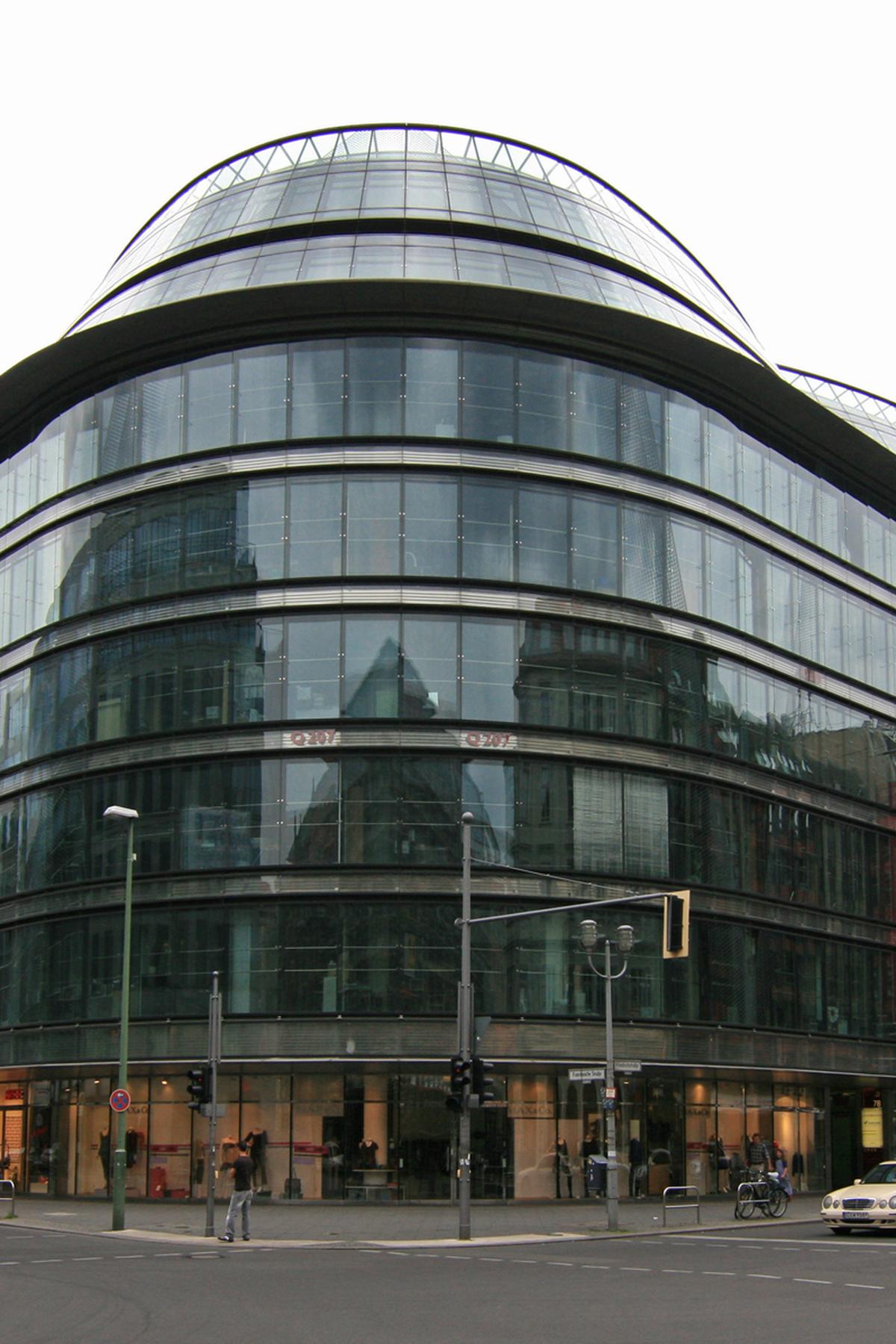
Quartier 207, at Friedrichstrasse 76-78, is the most spectacular. Jean Nouvel designed a Deconstructivist glass-and-steel facade with two glass cones, one inverted, penetrating all five floors. The larger cone is 25 metres tall and 22 metres in diameter at the base, made of 3,000 glass panes. It functions as a structural light well, not retail space. The property opened in 1996 as Galeries Lafayette Berlin, an 8,000-square-metre French department store that ran until 31 July 2024. That closure was the final blow. The ground-floor empty-unit rate in 2025 was 90 percent. The total floor area is 25,000 square metres. The property is now partially converted to offices. The cones are still visible from the pavement but the interior is largely empty. Walk in through the main entrance on Friedrichstrasse. You will see two floors of nothing, then a staircase up to a food court that closed years ago. It is a beautiful corpse.
Galeries Lafayette Berlin Why it Could Not Save the Street
Galeries Lafayette Berlin opened on 29 February 1996 as a five-floor department store. It was the European flagship of the French chain and the only full-service department store on the street. It had a food court, a wine bar, and a selection of luxury French brands that no Berliner had previously seen in person. The store closed on 31 July 2024. The company cited the same reason as every other tenant: Berlin does not support a luxury department store at this scale. The location required a critical mass of foot traffic that never materialised. Tourists who came to see the Nouvel structure did not spend enough. Berliners went to KaDeWe on Tauentzienstrasse or shopped online. The closure of the anchor tenant made the other two blocks even less viable. To see the cones, enter the property during limited hours. The management has not announced a permanent successor tenant. The failure is not subtle. The street now has no department store, no anchor boutique, and no reason for a luxury shopper to get off at U-Bahn Friedrichstrasse.
Why the Luxury Brands Left Oversupply and Weak Demand
The research from the development phase lists three specific reasons for the retail failure. All three are still active. First, oversupply of luxury retail space in Berlin: the Friedrichstadtpassagen alone added 50,000 square metres of high-end floor space to a street that had none in 1989. Second, competition from Kurfürstendamm and Potsdamer Platz: Ku'damm had the existing luxury customer base, and Potsdamer Platz opened a few years later with its own retail galleries that drew the same consumers. Third, Berlin's weak luxury goods market compared to Munich or Hamburg. Berlin's per capita income was lower, its tourism was budget-oriented, and its residents had no history of high-end shopping. The street itself is too wide and traffic-heavy. The Quartier 206 design is inward-facing, with entrances that feel like bank vault doors. You cannot window-shop from the pavement. You have to commit to entering a property that looks like a corporate headquarters. Once inside, the marble atrium and 80 percent empty-unit rate make you feel like you wandered into a failed mall.

What Stands There Now and What is Worth Entering
Most of the Friedrichstrasse luxury retail corridor is now a set of architectural shells. Enter Quartier 206 to see the black marble space. The Galaxy sculpture by Alexander Polzin is worth the two-minute detour, and the elliptical atrium is one of the most impressive interiors in Berlin. Enter Quartier 207 only to see the Nouvel cones from below; the rest is empty. Enter Quartier 205 only if you are going to Dussmann das KulturKaufhaus. It is genuinely good, open seven days a week, and sells books and music that cover Berlin's 1990s history in depth. The S-Bahn station at Friedrichstrasse is the most efficient transit hub for all three properties. Walk from the station to the southern end of the Friedrichstadtpassagen in about four minutes. The pedestrian passage runs continuously from Französische Strasse to Mohrenstrasse, about 250 metres indoors. It is usually empty.
The Geography of a Divided City Defeated the Plan
The ultimate reason the luxury plan failed is structural, not economic. Friedrichstrasse was a border crossing street for forty years. The address that was supposed to become a shopping destination starts at Checkpoint Charlie and ends at the Tränenpalast. Tourists walk that stretch to see Cold War history, not to buy shoes. The street was never a pre-war retail destination for the same reason London's Oxford Street runs through Bond Street: the city already had a luxury shopping location. Berlin's Kurfürstendamm had that role since the 1920s. The post-Wall investors assumed reunification would create a new centre of gravity. The city has two centres, not one. The old West has Ku'damm. The old East has Alexanderplatz. Friedrichstrasse sits between them and has never become a destination on its own. The double cobblestone line marking the Wall's path runs directly east-west across the street at multiple junctions. You cannot ignore the scar. The 1.2 billion DM spent on Friedrichstadtpassagen tried to paper over a geographic reality that cannot be erased.
Final Instruction Walking Friedrichstrasse
Start at the U-Bahn Friedrichstrasse station exit near the junction with Unter den Linden. Walk south. Pass the Tränenpalast on your left. It is a small glass-and-steel structure that costs nothing to enter. Continue to Quartier 206 and enter for the atrium. Continue to Quartier 207 and look up at the Nouvel cones from the entrance lobby. Do not plan to shop. Do not expect a luxury retail experience. The lesson of Friedrichstrasse is that a divided city's geography cannot be overwritten by architecture and investment. The 1.2 billion Deutsche Mark are still embedded in the walls. The luxury brands are gone. The street is now a monument to a failed idea, and that is what makes it worth seeing.
Read next
-
 East Side Gallery
-
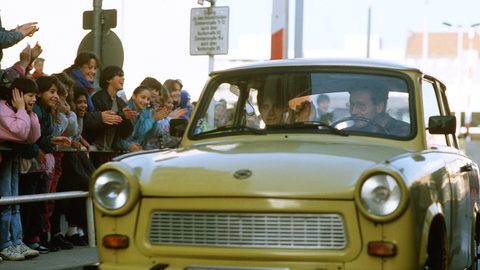 Checkpoint Charlie
The guardhouse at Checkpoint Charlie is a replica from 2000. Here is what is original Cold War fabric, what is a set, and where the real booth ended up.
Checkpoint Charlie
The guardhouse at Checkpoint Charlie is a replica from 2000. Here is what is original Cold War fabric, what is a set, and where the real booth ended up.
-
 Charlottenburg
-
 Mitte
Mitte
-
 Prenzlauer Berg
-
 Friedrichshain
-
 Neukölln
-
 Kreuzberg
-
 Berlin 1990s Films Run Lola Run Sun Alley and Berlin Babylon What They Captured
Run Lola Run, Sun Alley, and Berlin Babylon each captured a different Berlin of the 1990s — the first a sprint through the post-Wall city, the last a techno-scored documentary of its construction.
Berlin 1990s Films Run Lola Run Sun Alley and Berlin Babylon What They Captured
Run Lola Run, Sun Alley, and Berlin Babylon each captured a different Berlin of the 1990s — the first a sprint through the post-Wall city, the last a techno-scored documentary of its construction.