Mayday and Tekknozid: The Berlin Raves Beside the Loveparade

Mayday and Tekknozid Berlin Raves: the Indoor Engine That Ran Beside the Loveparade
On the night of 30 April 1991, 6,000 people lined up outside Halle Weissensee in Berlin Weissensee, a former bus depot built in the 1920s. The queue stretched down Hansastraße in cold drizzle. Inside, two floors of sound systems pushed 50 kW of audio at a crowd that had paid 25 DM for a single ticket. They stayed from 21:00 to 10:00. This was the first Mayday, and it defined a format the Loveparade could never match: an indoor winter rave that built the scene in the dark months. The Mayday and Tekknozid raves were the industrial, unlicensed, brutalist engine of a scene the summer parade only advertised.
Mayday Rave History Berlin: the First Three Editions
Halle Weissensee and the 1991 Debut
Mayday started as a one off gamble by Low Spirit Recordings, the label run by WestBam, Fabian Lenz, and William Röttger. The first event on 30 April 1991 used Halle Weissensee, a venue that still stands on Hansastraße in Berlin Weissensee, operating today as an event hall. The DJ roster that night included Sven Väth, WestBam, Tanith, and Dr. Motte, playing across two floors.
The Move to Messe Berlin
The second Mayday, on 30 April 1992, moved to Messe Berlin. It used Halls 1, 2, and 4, shifting to the trade fair grounds as attendance climbed past 5,000. The third Mayday, 30 April 1993, stayed at Messe Berlin and pushed capacity toward 15,000. Each edition ran the same single ticket, long duration format: one entry, 10 to 14 hours inside, no re entry.
When the Scale Outgrew the Party
By 1994, the queue hit three hours outside. Indoor temperatures reached 35 C. The sound pressure level at the front of the stage measured 110 dB(A). That year saw over 200 medical incidents, water limited to bar areas with no free stations, and a toilet to attendee ratio of 1:500. The scale had outgrown the party.
Tekknozid Frankfurt to Berlin: Why the Hardcore Party Moved
Tekknozid began in Frankfurt on 24 February 1990, organized by Wolle XDP (Wolfgang Neuhaus). The first event took place at the E Werk in Berlin, not Frankfurt. The name followed the party, not the city. After that launch, Tekknozid roamed through disused factory halls and empty industrial buildings across Berlin through 1990 and 1991, hosting crowds of 1,000 to 3,000 at each edition. The capacity range was deliberate: small enough to stay under police radar, large enough to pay the 10 to 15 DM entry fee that covered a self built sound system rated at 10 to 20 kW. DJs like Tanith, Rok, Jonzon, and Mijk van Dijk played sets that leaned harder into hardcore and gabber than the Mayday lineup. The events were unlicensed but tolerated by authorities. Promotion ran through flyers distributed in record shops and a phone hotline. Bars were self run and sold beer and soft drinks. Portable toilets were the only sanitation. Tekknozid carried the blueprint of the Frankfurt warehouse scene into Berlin, then let the city's reunification energy reshape it.
1990s Berlin Indoor Raves: Venues, Sound Systems, and Flyer Art
The Spaces the City Could Not Sell
The indoor raves of 1990s Berlin used spaces the city could not sell. The E Werk at Wilhelmstraße 43, 10117 Berlin, was an electrical substation built between 1885 and 1889. It hosted techno from 1990 to 1997, then closed on 24 July 1997. Today it stands and operates as an event venue. The Bunker Albrechtstrasse, another repurposed structure, became a space where sound systems were tested and crowds pushed the concrete limits.
What Defined the Rave Experience
These venues shared physical constraints that defined the rave experience. Single ticket entry meant no re entry, no stamps, no door selection. A rave ran 10 to 14 hours. A club night ran 6 to 8. Spatial layout used multiple large halls with a single sound focus per hall. Clubs had multiple small rooms with bar access throughout. Lighting meant large scale rigs with lasers and strobes operated by a dedicated crew, not fixed club fittings. Security was external firms with bag searches at a single entry, not selective door staff.
The Flyer Economy
The flyer art for these events became a collectors market: photocopied, hand coloured, and distributed through record shops, carrying dates and phone numbers instead of URLs.
Low Spirit Records Mayday: the Label That Built the Format
Low Spirit Recordings did not just throw parties. They invented the commercial rave model in Germany. Mayday was their product, and they ran it like a label release cycle: a new edition every spring, a fixed venue upgrade as attendance grew, and a sound system contract that kept volume at 50 kW for the 1991 edition. From 1996 to 2001, Mayday moved to the Velodrom at Paul Heyse Straße 26, 10407 Berlin, a venue built from 1992 to 1996 as an Olympic cycling bid that later became a single floor event space with a capacity of 12,000. The Velodrom still stands, operating as a cycling track and event venue. Low Spirit controlled the bar catering, the ticket outlets in record shops, and the radio ads on DT64 and SFB that turned Mayday from a scene party into a national draw. The label understood that a rave with a single ticket, a long duration, and a centralized bar away from the dance floor created a captive audience that spent money at predictable rates. The comparison to the Loveparade is direct: the parade was free, outdoor, and decentralized. Mayday was paid, indoor, and tightly managed.
The Difference Between the Loveparade and These Indoor Raves
The Loveparade was a summer Saturday parade, a carnival of cultures that moved through Tiergarten and down the Straße des 17. Juni. It was free, unfenced, and open to anyone who walked out of a U Bahn station. The indoor raves were the opposite. They required a ticket bought in advance, a specific arrival time, a willingness to queue, and a tolerance for 35 C heat inside a former factory hall with 1:500 toilet ratios. The Loveparade was photographed. Postcards show the floats, the crowds, the sunshine. No postcard shows the queue outside Halle Weissensee in a December 1991 rain. But those queuing were the ones who kept the scene alive when the parade was not running. The indoor engine ran from October through April, building the DJ rosters, testing the sound systems, and training the crowds that later filled the summer streets. The Loveparade was the billboard. Mayday and Tekknozid were the label.

What Those Venues Are Used for Today
Venues Still Standing
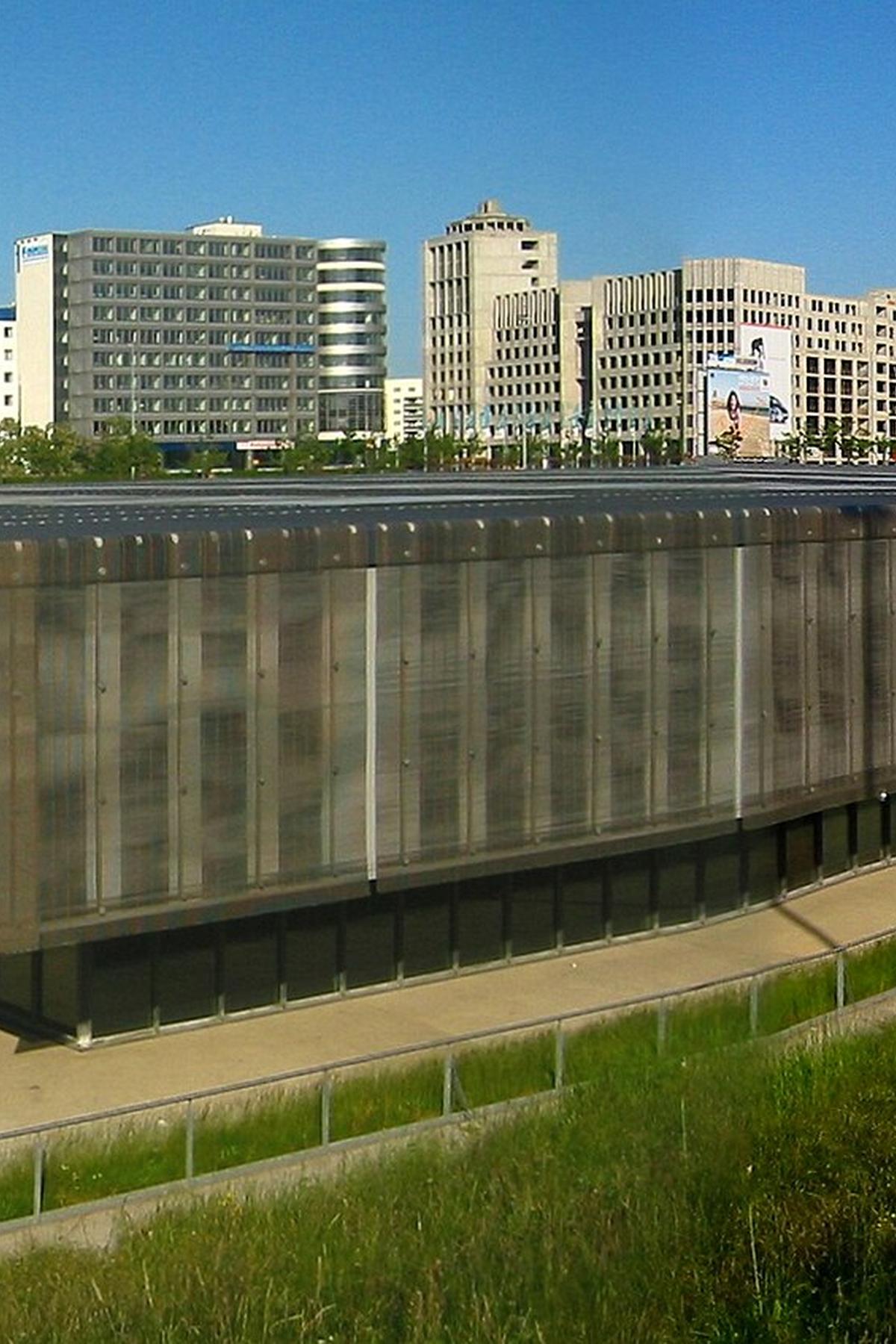
Halle Weissensee on Hansastraße still operates as an event venue. Book it for trade fairs, concerts, and private events. The E Werk at Wilhelmstraße 43 still stands and functions as an event space, though it no longer runs techno nights. The Velodrom remains a cycling track and hosts concerts, trade shows, and Mayday itself in annual editions. The Messe Berlin halls continue active trade fair operations at Messedamm 22.
Repurposed and Priced Out
The Bunker Albrechtstrasse now houses the Boros Collection, a private art gallery that requires advance booking. RAW Gelände, the former Reichsbahn repair works that became a 1990s club compound, still operates as a mixed use site with clubs, bars, and galleries. Tresor moved from its original bank vault location to a new space in the Kraftwerk building but continues to run.
What You Cannot Find
You cannot walk into any of these spaces and find the 1991 rave intact. They have been repurposed, demolished in some cases, or priced beyond the scene that created them. The closest experience is a Mayday edition at the Velodrom, which still runs the single ticket, long duration format, though at current prices and with proper water stations.
| Event | Years | Venue | Address | Capacity |
|---|---|---|---|---|
| Tekknozid | 1990 1991 | Various factory halls and E Werk | Wilhelmstraße 43 | 1,000 3,000 |
| Mayday | 1991 | Halle Weissensee | Hansastraße | 6,000 |
| Mayday | 1992 1995 | Messe Berlin Halls 1, 2, 4 | Messedamm 22 | 5,000 15,000 |
| Mayday | 1996 2001 | Velodrom | Paul Heyse Straße 26 | 12,000 |
What You Should Do Next If You Want to Trace This History
Go to the Velodrom on 30 April if you want the closest living version of a 1990s Mayday. Buy your single ticket in advance from the Low Spirit record shop outlet or the official site. Arrive by 21:00. The queue that forms by 22:00 will cost you hours. Bring cash for the centralized bar. Do not expect free water stations. The one thing that goes wrong is arriving after midnight when the queue is still three hours long and the indoor temperature has already hit 35 C. Skip the queue entirely. Go to the E Werk on a weekday afternoon. Stand in the same room as the first Tekknozid and pay nothing to look at the architecture. Then walk to the Bunker Albrechtstrasse and book the Boros Collection tour weeks ahead. If you cannot get a ticket, stand outside the Velodrom at 03:00 and listen to the 110 dB(A) bleed through the walls. That sound is the only thing still authentic.
Read next
-
 East Side Gallery
-
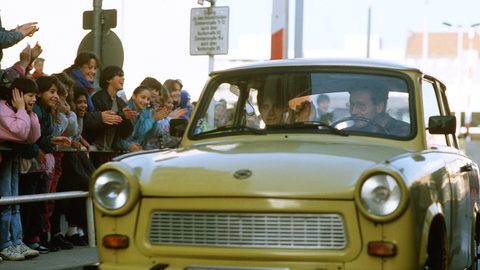 Checkpoint Charlie
The guardhouse at Checkpoint Charlie is a replica from 2000. Here is what is original Cold War fabric, what is a set, and where the real booth ended up.
Checkpoint Charlie
The guardhouse at Checkpoint Charlie is a replica from 2000. Here is what is original Cold War fabric, what is a set, and where the real booth ended up.
-
 Charlottenburg
-
 Mitte
Mitte
-
 Prenzlauer Berg
-
 Friedrichshain
-
 Neukölln
-
 Kreuzberg
-
 Berlin 1990s Films Run Lola Run Sun Alley and Berlin Babylon What They Captured
Run Lola Run, Sun Alley, and Berlin Babylon each captured a different Berlin of the 1990s — the first a sprint through the post-Wall city, the last a techno-scored documentary of its construction.
Berlin 1990s Films Run Lola Run Sun Alley and Berlin Babylon What They Captured
Run Lola Run, Sun Alley, and Berlin Babylon each captured a different Berlin of the 1990s — the first a sprint through the post-Wall city, the last a techno-scored documentary of its construction.