1999: The Government Arrives in Berlin and the Buildings Put Up for It

1999: the Government Arrives in Berlin and the Buildings Put Up for it
Most visitors assume the German government has always sat in Berlin. It has not. Between 1949 and 1999, Bonn was the capital. The buildings that opened in 1999 are the physical answer to a question that took a decade to resolve: where to put a parliament, its offices, and its chancellor in a city still scarred by division. The relocation shifted roughly 660 members of parliament and about 10,000 civil servants from Bonn to Berlin by 2001. Ten of fourteen ministries relocated. Berlin's population in 1999 was approximately 3,386,000. By 2001 it had crept to 3,388,000. The buildings themselves, designed by five different architects, form a 900-metre ribbon, the Band des Bundes, that crosses the Spree twice.
Regierungsumzug Berlin 1999: What Moved and When
The Regierungsumzug Berlin 1999 was not a single day. Parliament held its first session in the Reichstag on 19 April 1999. That is the practical date for the move. Ministries followed in waves through 2001. The total cost hit approximately DEM 1.6 billion, about EUR 818 million. For a visitor, the year matters because it sets the construction timeline: every building in the government quarter opened between 1999 and 2001. Nothing was there before. Potsdamer Platz was still Europe's largest construction pit. The Spreebogen was empty grassland.
Bonn to Berlin Government Relocation: Why the Buildings Exist
The Bonn to Berlin relocation created a design problem. Parliament needed a chamber. The Chancellor needed an office. Twelve thousand civil servants needed desk space. Berlin had none of it. The solution was the Band des Bundes, a roughly 900-metre arc of new buildings along the Spree bend, the Spreebogen. Two of the buildings, Paul-Löbe-Haus and Marie-Elisabeth-Lüders-Haus, cross the river. The ribbon uses the Spree as its organising axis. Stand on the Spreebogen footbridge and you can see all of them.
Reichstag Renovation Norman Foster: the 1999 Glass Dome
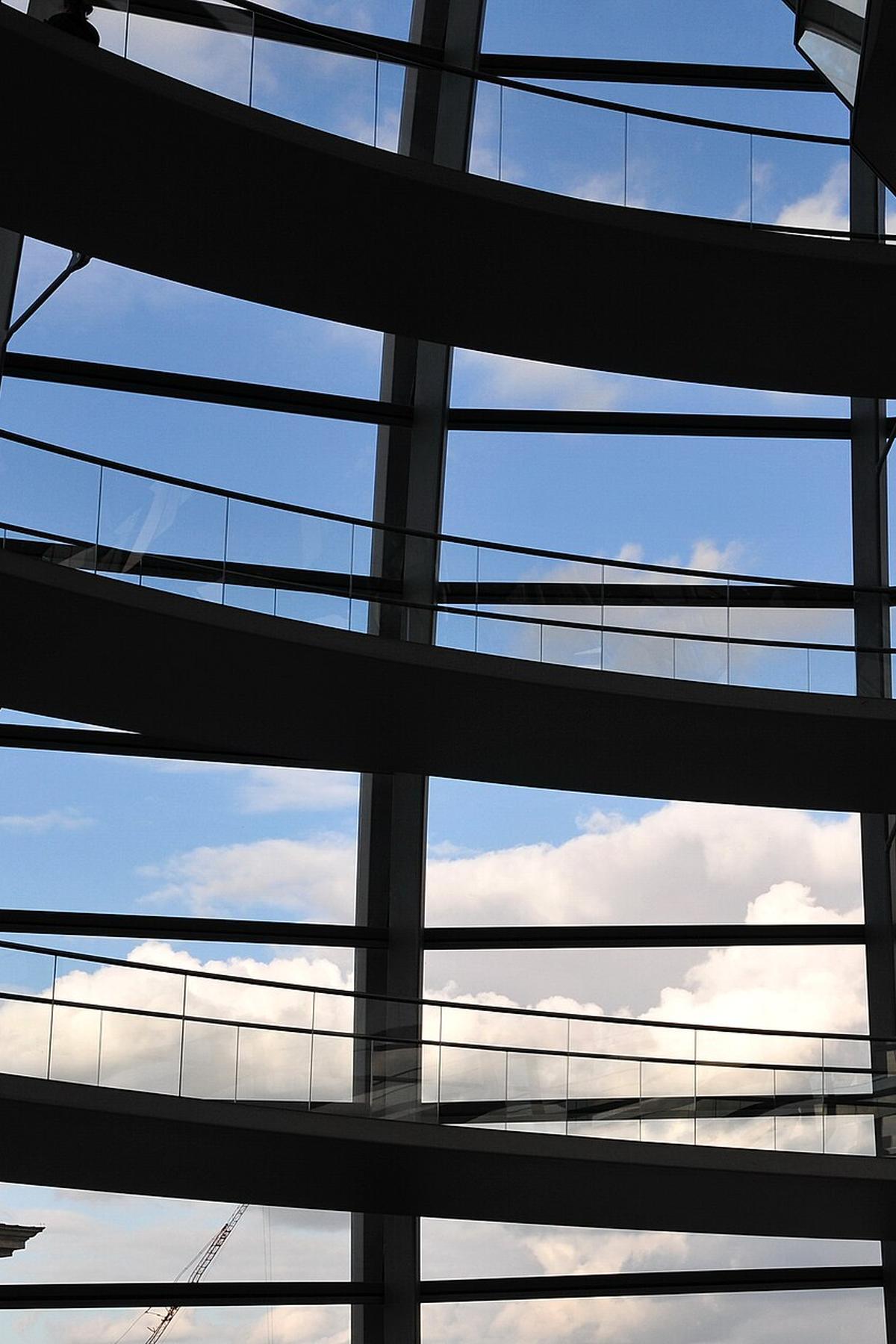
The Reichstag renovation Norman Foster delivered reopened on 19 April 1999. The glass dome, 23.5 metres tall and 40 metres in diameter, sits 47 metres above ground. Its mirrored funnel, roughly 15 metres high, channels light into the Plenarsaal below. The dome opened that year, not earlier. The original building was gutted after the 1933 fire and sat derelict through the Cold War. Foster kept the scars visible.
Booking a Dome Visit
The dome is free to enter. Register online via the Bundestag visitor service at least two days in advance. The window opens up to 90 days ahead. Book early or lose the slot entirely. Bring your passport or national ID card. Hours run 08:00 to 24:00; last admission is 22:00. Closed 24 December, 31 December, and for roughly two weeks in July for cleaning. Daily capacity sits around 8,000. Slots vanish fast.
Berlin Chancellery Building: Axel Schultes and Charlotte Frank
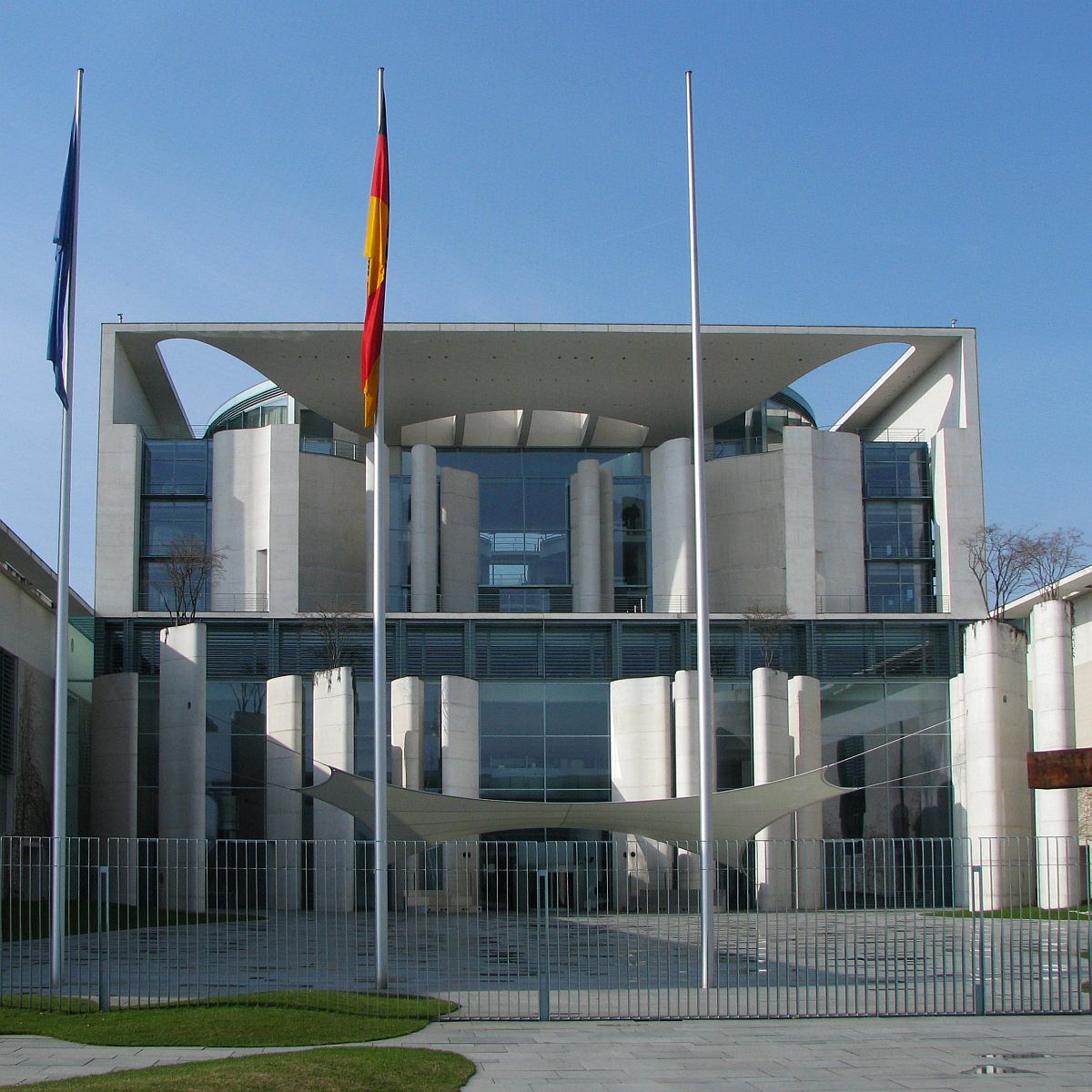
The Berlin Chancellery, the Bundeskanzleramt, completed on 2 May 2001. Its architects, Axel Schultes and Charlotte Frank, designed a white concrete box with a curved facade that sits at the north edge of the Tiergarten. It is the largest chancellery in the world by floor area. The design deliberately avoids monumentality in the traditional sense: no columns, no pediments, just a long horizontal mass.
Getting Inside, and When You Cannot
You cannot walk inside on a normal day. The Chancellery opens once per year during the Tag der offenen Tür der Bundesregierung, usually in August. Register online in advance. If you miss that day, view it from the footbridge or the riverbank. The Spreebogen footbridge gives the best angle.

Band Des Bundes: the 900-Metre Federal Ribbon
The Band des Bundes runs from Paul-Löbe-Haus on the south bank of the Spree to Marie-Elisabeth-Lüders-Haus on the north bank, with Jakob-Kaiser-Haus completing the arc. All three opened between 1999 and 2001. They house committee rooms, parliamentary libraries, and member offices. None are open to the public.
Paul-Löbe-Haus
Paul-Löbe-Haus crosses the Spree once. It contains committee rooms and parliamentary group offices. No public access. Viewed from the footbridge, its glass and steel volume sits low to the water.
Marie-Elisabeth-Lüders-Haus
Marie-Elisabeth-Lüders-Haus crosses the Spree as the second bridge building. It houses the parliamentary library and research services. No public access. The reading room faces the river.
Jakob-Kaiser-Haus
Jakob-Kaiser-Haus closes the ribbon at its eastern end. It contains offices for members of parliament. No public access. The facade aligns with the Spreebogen curve.
Read next
-
 East Side Gallery
-
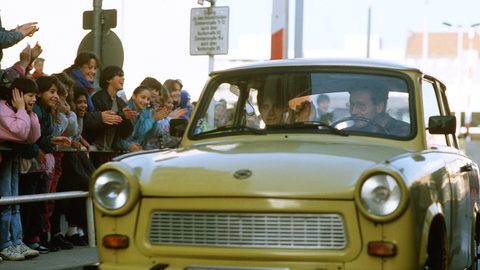 Checkpoint Charlie
The guardhouse at Checkpoint Charlie is a replica from 2000. Here is what is original Cold War fabric, what is a set, and where the real booth ended up.
Checkpoint Charlie
The guardhouse at Checkpoint Charlie is a replica from 2000. Here is what is original Cold War fabric, what is a set, and where the real booth ended up.
-
 Charlottenburg
-
 Mitte
Mitte
-
 Prenzlauer Berg
-
 Friedrichshain
-
 Neukölln
-
 Kreuzberg
-
 Berlin 1990s Films Run Lola Run Sun Alley and Berlin Babylon What They Captured
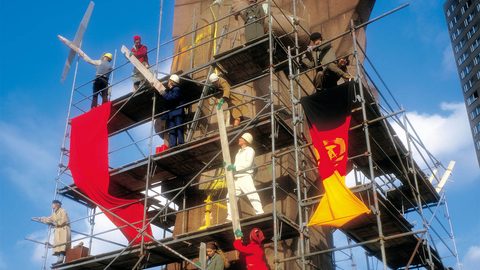
Run Lola Run, Sun Alley, and Berlin Babylon each captured a different Berlin of the 1990s — the first a sprint through the post-Wall city, the last a techno-scored documentary of its construction.
Berlin 1990s Films Run Lola Run Sun Alley and Berlin Babylon What They Captured
Run Lola Run, Sun Alley, and Berlin Babylon each captured a different Berlin of the 1990s — the first a sprint through the post-Wall city, the last a techno-scored documentary of its construction.