When Christo Wrapped the Reichstag in Berlin During June 1995
In June 1995 Christo wrapped the Berlin Reichstag in silvery fabric, drawing five million people to a building that still bore Soviet graffiti and had no clear future.
When Christo Wrapped the Reichstag in Berlin During June 1995
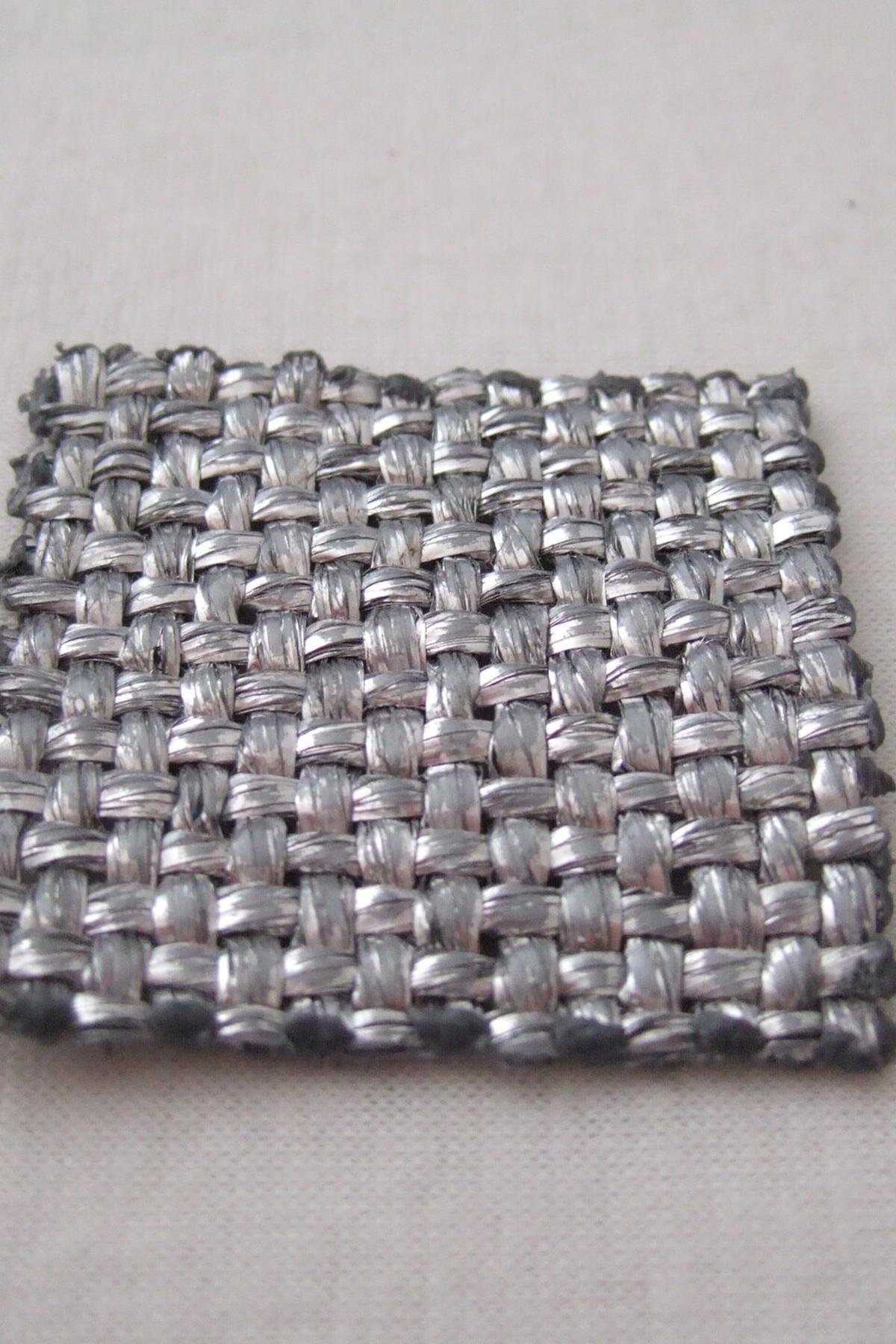
Most visitors assume the Reichstag building has always looked as it does now, with the glass dome drawing them up into the sky. That is wrong. In 1995, when Christo enveloped the Reichstag in 100,000 square metres of silvery woven polypropylene fabric tied with 15,600 metres of blue polypropylene rope, what sat at Platz der Republik was not a national parliament. It was a gutted hulk still carrying Soviet graffiti from 1945, its dome demolished in 1954, and its interior rebuilt so aggressively by Paul Baumgarten in the 1960s that Berliners barely recognised it as their own. The shrouding did not hide a functioning building. It cloaked a ruin that had no clear future, and that ambiguity is what drew five million people onto the lawn in fourteen days. The two-week installation that ran from 24 June 1995 to 7 July 1995 forced a decision the German state had been dodging for a decade: either move the Bundestag back into this scarred shell, or abandon it to its status as a half-museum half-warehouse for history nobody wanted to touch. The wrapping was not an art event. It was the hinge that swung the Reichstag back into political life.
Christo and Jeanne-Claude Berlin: the 24 Year Negotiation
The Fight for Permission
Christo Vladimirov Javacheff and Jeanne-Claude Denat de Guillebon first proposed sheathing the Reichstag in 1971. The Bundestag did not vote on the project until 25 February 1994, twenty-three years later. The vote passed 292 in favour to 223 against, with nine abstentions. That narrow margin is why the project cost roughly 13 million Deutsche Mark, funded entirely through sales of preparatory drawings, collages, and scale models. The artists never accepted corporate sponsorship or public money.
What the Materials Became
The seven scale models and the 68 drawings plus 22 collages that sold to fund the real thing are now held in private collections and institutions, with no single permanent public display of the full set. The fabric supplier was J. Schilgen GmbH & Co. of Emsdetten, Germany. The material was a woven polypropylene sheet with an aluminium surface layer, cut into 70 custom panels weighing 90 tonnes. The total assembled weight, including rope and substructure, reached approximately 200 tonnes. After the two-week installation ended, the fabric was shredded and used as insulation material, granulate, and fleece. The rope went back to the manufacturer for regranulation into new products. Nothing went to landfill.
Reichstag Building History: from Fire to Ghost
Paul Wallot designed the original Reichstagsgebaeude, built between 1884 and 1894. On 27 February 1933 the building was severely damaged by arson, an event the Nazi regime used to suspend civil liberties. In the Battle of Berlin in 1945 Soviet soldiers fought floor by floor through the interior, then left their names and political slogans scratched and painted onto the walls. Those marks remain visible today, preserved as the only untouched fabric of the 19th-century structure. The original dome was demolished between 1954 and 1955 because it was structurally unsafe. From the 1960s through the 1990s the building was used for occasional exhibitions and as a German history museum, but the interior had been hollowed out by the Paul Baumgarten renovation that stripped it of its ornate chambers and replaced them with bland institutional spaces. When Christo covered it, the Reichstag had no plenary chamber, no permanent political function, and no dome. It was a monument to failure.
Wrapped Reichstag Berlin: the 1995 Spectacle and the Decision it Triggered
Over the fourteen-day installation the peak single-day visitor count reached half a million people. The total across the run was five million. They came from the Tiergarten side, crossed the Platz der Republik, and stood on the grass looking up at silver fabric that rippled in the Berlin wind. The spectacle was not political, but its effect was. The public demand to see the building transformed, to touch the fabric, to stand where the Bundestag had not sat since 1933, created a momentum the German government could not ignore. Thirteen days after the covering ended, on 20 July 1995, Norman Foster began the reconstruction. The interior was gutted again, but this time the intent was to turn the shell into a working parliament that would display its own wounds rather than hide them. The construction took four years. In 1999 the German Bundestag moved in.
Reichstag Glass Dome Norman Foster: What You See Now
Booking Your Slot
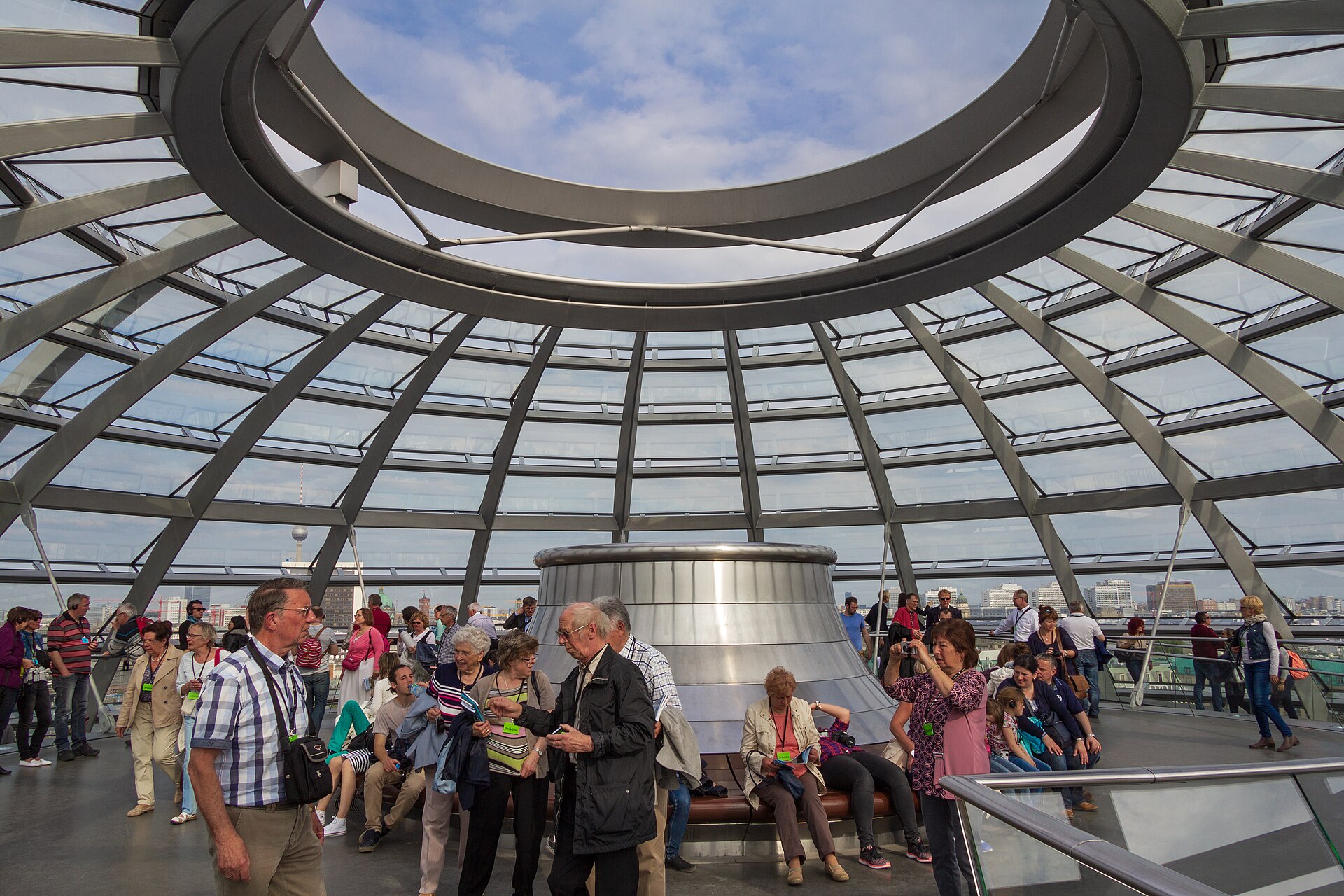
The Reichstag glass dome Norman Foster carved into the building is the most visible symbol of German reunification on the skyline, but it is also the piece that has the least to do with the 1995 project. The dome is a glass and steel walkway that spirals up over the plenary chamber below. It is free to enter, but you cannot just walk up and queue. Register in advance through the Deutscher Bundestag Visitors' Service. The process requires online registration with full names and passport numbers for every visitor. Walk-ups are not possible. Book at least two weeks ahead in peak season, May to September.
Arriving and Entering
The address is Platz der Republik 1, 11011 Berlin. The coordinates are 52.5186° N, 13.3762° E. The annual visitor count to the dome, roof terrace, and plenary area runs at approximately three million. The nearest S-Bahn station is Brandenburger Tor. Enter from the west side, facing the Tiergarten, not from the main facade on the Platz der Republik. Arrive at least 30 minutes before your booked slot to clear security.


What the Wrapped Reichstag Means Now
The enveloping of the Reichstag was the pivot between two Berlins. Before it, the building was a dead monument, a fragment of a pre-war capital that had no government and no roof. After it, the same shell became the seat of a reunited Germany, the most visited parliamentary building in Europe, and the backdrop against which the new Berlin defined itself. The five million people who stood on the grass at Platz der Republik in June and July 1995 did not come to see an art installation. They came to see a building that had been taken from them and was now, under a sheet of silver fabric, being given back. Christo and Jeanne-Claude understood that the covering was the only way to force a decision. They were right.
Who the Reichstag Wrapping Story Suits and Who Should Skip it
This is for Cold War history obsessives who want to trace how a building that survived arson, bombing, and a gutless 1960s renovation became the heart of a reunified capital. It suits architecture students of adaptive reuse who need to understand how Norman Foster carved a glass dome into a 19th-century shell without erasing its wounds. It suits anyone who prefers a building with visible scars over postcard views, because the Reichstag story is not about the finished product. It is about the twenty-four-year fight to get permission for the project and the two-week spectacle that finally made the Bundestag move back in. It is not for luxury seekers wanting a pampered city break. It is not for families with young kids expecting fairy-tale charm. The Reichstag dome is a working parliament building, not a theme park. If you dislike queue lengths, mandatory registration through a bureaucratic online portal, and a building where the most interesting thing is the Soviet graffiti you can see only with a separate tour, this is not the highlight you are looking for. The single thing that most often goes wrong here is assuming you can walk in without a booking. You cannot. The security checkpoint clears only registered visitors, and the closest alternative is standing outside on Platz der Republik looking at a building you cannot enter.
Read next
-
 East Side Gallery
-
 Checkpoint Charlie
The guardhouse at Checkpoint Charlie is a replica from 2000. Here is what is original Cold War fabric, what is a set, and where the real booth ended up.
Checkpoint Charlie
The guardhouse at Checkpoint Charlie is a replica from 2000. Here is what is original Cold War fabric, what is a set, and where the real booth ended up.
-
 Charlottenburg
-
 Mitte
Mitte
-
 Prenzlauer Berg
-
 Friedrichshain
-
 Neukölln
-
 Kreuzberg
-
 Berlin 1990s Films Run Lola Run Sun Alley and Berlin Babylon What They Captured
Run Lola Run, Sun Alley, and Berlin Babylon each captured a different Berlin of the 1990s — the first a sprint through the post-Wall city, the last a techno-scored documentary of its construction.
Berlin 1990s Films Run Lola Run Sun Alley and Berlin Babylon What They Captured
Run Lola Run, Sun Alley, and Berlin Babylon each captured a different Berlin of the 1990s — the first a sprint through the post-Wall city, the last a techno-scored documentary of its construction.