The Night the D-Mark Arrived in East Berlin on 1 July 1990 and What the Currency Change Cost
On 1 July 1990 East Berliners swapped Ostmarks for D-Marks overnight in a currency union that euphorically dismantled the GDR economy three months before political reunification.
.jpg)
The Night the D-Mark Arrived in East Berlin on 1 July 1990 and What the Currency Change Cost
You probably picture German reunification happening on 3 October 1990, with flags and speeches. The dismantling of East Germany began three months earlier. The date was 1 July 1990, and what hit the streets was not a flag but the D-Mark. It arrived in bank vaults, cash registers, and the pockets of every citizen who queued from midnight to swap their Ostmarks for hard money. That night, the Staatsbank der DDR stopped being a central bank and became a counting house. By the time the sun rose on Alexanderplatz, the economy of the German Democratic Republic was dead.
Währungsunion Berlin 1990: What Actually Happened at Midnight
Midnight Bank Queues Across East Berlin
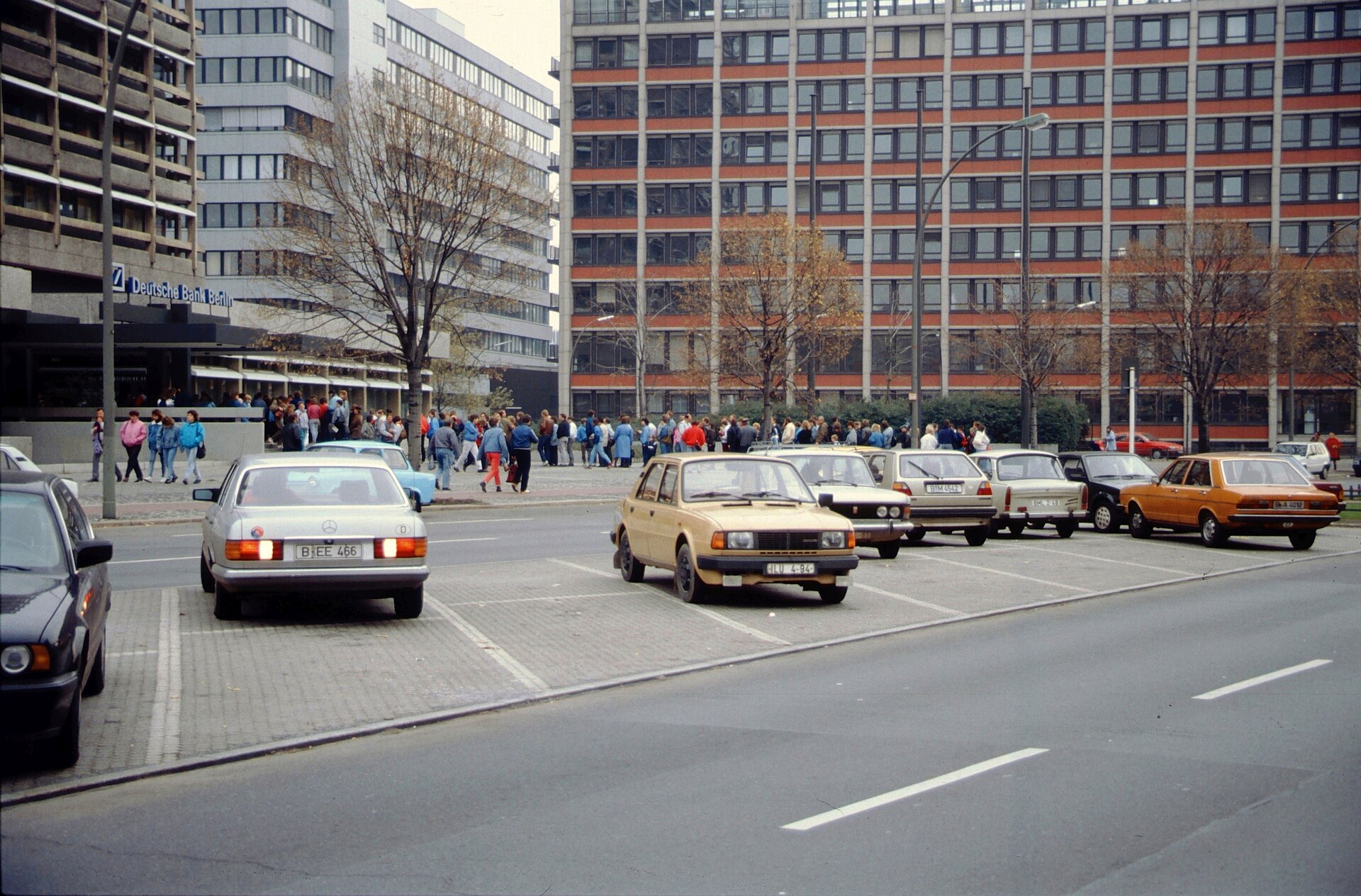
Starting at midnight on 1 July 1990, bank branches across East Berlin opened their doors. Lines formed at banks on Alexanderplatz, in Prenzlauer Berg, and in every district centre. People carried savings books, wage slips, and pension documentation. The rule was simple for individuals: the first 4,000 Ostmarks exchanged at 1:1. Everything above that swapped at 2:1. Wages, rents, and pensions converted at the full 1:1 rate regardless of amount. Corporate debt and savings above the threshold took the 2:1 hit. Each East German citizen also received 100 DM as Begrüßungsgeld welcome money, handed out at exchange counters.
The Spending Frenzy and the Death of GDR Brands
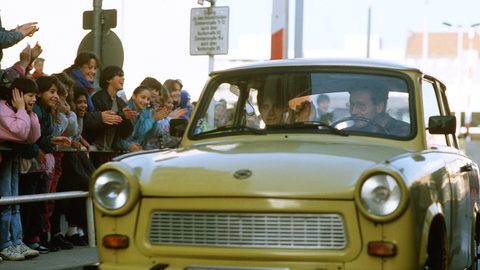
The immediate effect was a spending frenzy. On the morning of 2 July 1990, West German consumer goods appeared on East Berlin shop shelves for the first time. Within days, GDR products collapsed. Spreewaldgurken pickles, Spee washing powder, Club-Cola, Rondo coffee, and Schlager Süßtafel chocolate vanished. East German industry could not compete with goods priced in D-Marks. The Trabant became worthless overnight, a car no one would buy at any price.
East German Mark Exchange: the Rates That Broke an Economy
The 1:1 exchange rate for savings up to 4,000 Ostmarks was a political gift from Helmut Kohl, not an economic decision. The Bundesbank warned against it. The rate subsidised East German savers while making eastern industry uncompetitive. Wages at 1:1 meant an East German worker suddenly cost the same as a West German one, while producing goods no one wanted. Debt conversion at 2:1 meant companies owed twice as much in D-Marks as they had in Ostmarks. Everything from bread to rent rose in price immediately, because the Ostmark had been worth roughly 5 to 10 pfennigs on the black market, not 100 pfennigs. The 1:1 rate for wages meant eastern purchasing power collapsed in real terms within weeks.
Berlin Currency Change 1990: Where People Lined Up and What They Bought
The Queues at Alexanderplatz
The longest queues formed at the Staatsbank der DDR branch on Alexanderplatz. People arrived before midnight on 30 June 1990. Cashiers worked through the night. By dawn, the street was filled with people carrying new D-Mark notes. The first West Berlin goods arrived by truck that same morning.
First Purchases and Empty Shelves
At Konnopke's Imbiss under the Prenzlauer Berg U-Bahn viaduct, customers paid with D-Marks for the first time. The Kreuzberg border crossings saw an immediate surge of East Berliners crossing to buy bananas, coffee, and chocolate in West Berlin grocery stores. The shelves of East Berlin's Centrum department stores emptied as shoppers abandoned GDR brands for anything western.
The intersection of two currency zones vanished in a single transaction. The Berlin Wall had fallen on 9 November 1989, but its economic barrier stayed up until the Ostmark disappeared. The money change at midnight on 1 July 1990 did what the opening of the border could not: it made the GDR economy unsustainable within weeks.
Treuhand Currency Reform: the Privatisation That Followed the Exchange
The Treuhandanstalt Mandate
On the same day the D-Mark arrived, the Treuhandanstalt was founded. Its mandate: privatise approximately 8,500 state-owned enterprises. Between 1 July 1990 and its dissolution on 31 December 1994, the Treuhand closed or sold every significant GDR industrial asset. The result was 2.5 million jobs lost. In East Berlin, five major industrial sites shut down: VEB Elektrokohle Lichtenberg, VEB Werk für Fernsehelektronik (WF), VEB Kabelwerk Oberspree (KWO), VEB Bergmann-Borsig, and VEB Narva.
Empty Factories Become Clubs
Those empty factory halls did not stay empty. The economic shock therapy created the space for Berlin's 1990s club scene. VEB Elektrokohle Lichtenberg became E-Werk, which opened in 1993. VEB Kabelwerk Oberspree became KWO and later Arena Club. VEB Werk für Fernsehelektronik became Ostgut, opening in 1998 and running until 2003. VEB Narva became Pfefferberg. The former Reichsbahn repair works became RAW-Gelände with multiple clubs from the mid 1990s. The Centrum Warenhaus at Ostbahnhof became the original Tresor, opening on 13 March 1991 in the vault of a former Wertheim department store on Leipziger Straße. The clubs were not incidental to the currency union. They were its direct architectural consequence.

What the Currency Exchange Did to East Berlin Streets
Alexanderplatz as a Cash Exchange Floor
Walk Alexanderplatz today and you will find a shopping centre, a train station, and a television tower. In July 1990, this square was a cash exchange floor. People stood in lines that wrapped around the former Staatsbank building. The queues were quiet, not celebratory. East Berliners knew the Ostmark was worthless outside their own country. They had watched Intershop chains across the GDR sell western goods only for forum checks or hard currency. The D-Mark meant you could buy anything in any shop. It also meant what you earned had to compete with West German wages.
Konopke's, Kreuzberg, and the Vanishing Border
At Konnopke's Imbiss in Prenzlauer Berg, which opened in 1960 and survived the Wall, the currywurst price jumped. At the Kreuzberg border, the distinction between eastern and western Berliners blurred for the first time since 1961. The Wall's path still ran through the city, but the economic border collapsed into a double cobblestone line you can still trace today. The Trabant became a souvenir, not a car. GDR manufacturing stopped producing anything anyone would buy.
Who This Subject Suits and Who Should Skip it
The story of1 July 1990 suits Cold War history obsessives who want to understand why East Germany disappeared so fast. It suits urban explorers who want to trace the path from empty factory halls to club floors. It suits travellers who prefer the unvarnished city over postcard views: the currency union was not a tidy transition from communist to capitalist. It was an economic shock that emptied industrial sites, put 2.5 million people out of work, and left repurposed ruins across Berlin.
Skip this subject if you want a pampered city break or are travelling with young children expecting fairy-tale charm. The single thing that most often goes wrong for visitors tracing this history is assuming the Wall's path is a single continuous monument. It is not. The Wall was mostly demolished in 1990 and 1991. What remains is a fragmented scavenger hunt between memorial sections, the double cobblestone line on the street, and repurposed border crossings. You will need a map and patience to connect them.
Read next
-
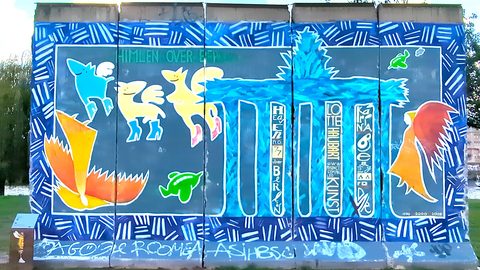
 East Side Gallery
-
 Checkpoint Charlie
The guardhouse at Checkpoint Charlie is a replica from 2000. Here is what is original Cold War fabric, what is a set, and where the real booth ended up.
Checkpoint Charlie
The guardhouse at Checkpoint Charlie is a replica from 2000. Here is what is original Cold War fabric, what is a set, and where the real booth ended up.
-
 Charlottenburg
-
 Mitte
Mitte
-
 Prenzlauer Berg
-
 Friedrichshain
-
 Neukölln
-
 Kreuzberg
-
 Berlin 1990s Films Run Lola Run Sun Alley and Berlin Babylon What They Captured
Run Lola Run, Sun Alley, and Berlin Babylon each captured a different Berlin of the 1990s — the first a sprint through the post-Wall city, the last a techno-scored documentary of its construction.
Berlin 1990s Films Run Lola Run Sun Alley and Berlin Babylon What They Captured
Run Lola Run, Sun Alley, and Berlin Babylon each captured a different Berlin of the 1990s — the first a sprint through the post-Wall city, the last a techno-scored documentary of its construction.