The Treuhand: Who Owned Berlin After 1990

The Treuhand: Who Owned Berlin After 1990
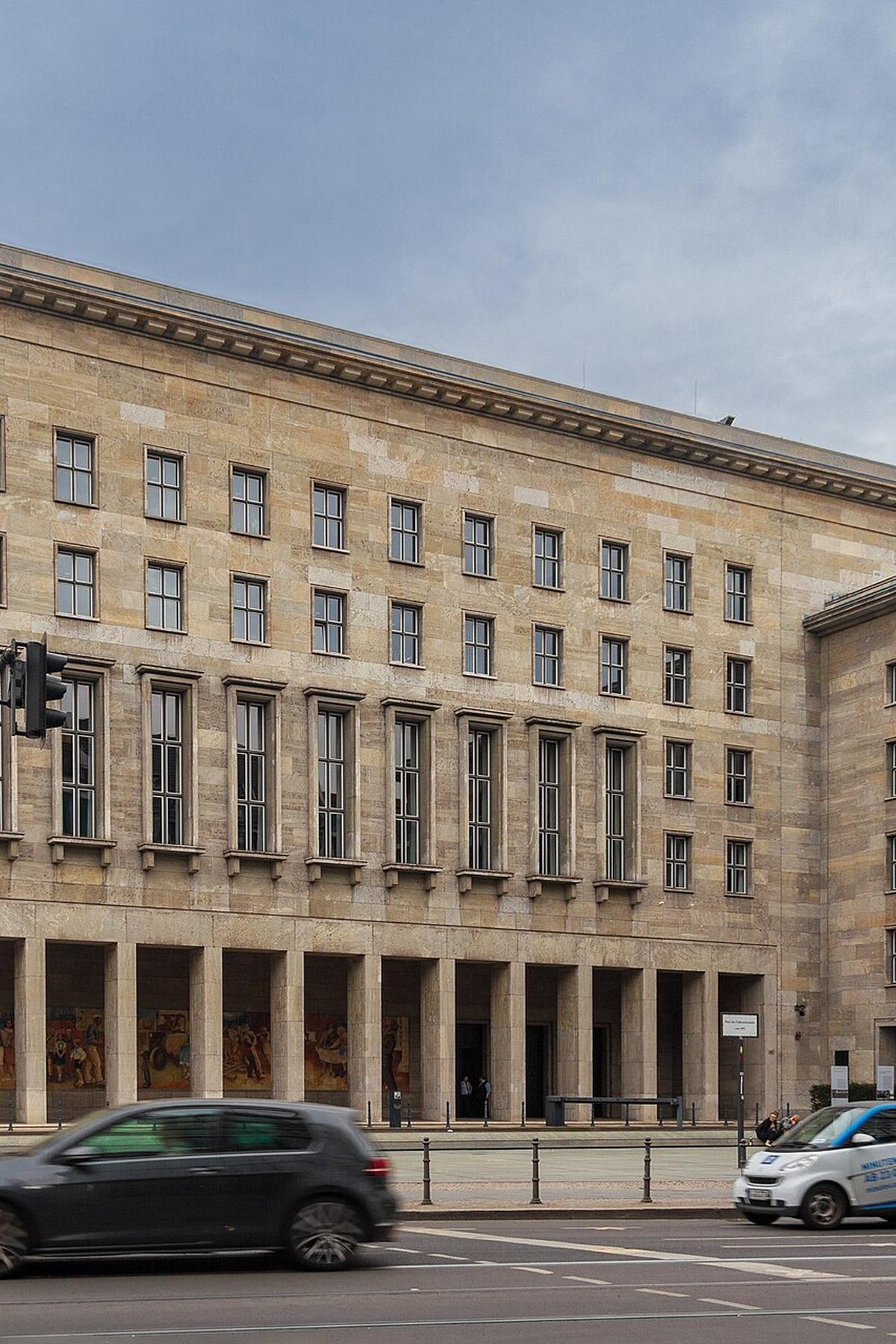
The Treuhand is the reason you can pay 15 euros to dance in an abandoned power station at 4am. It is also the reason the squat next door is now a co-working space. The Treuhandanstalt, created by the last East German parliament on 17 June 1990, inherited every state-owned asset of the German Democratic Republic and sold it off between 1 July 1990 and 31 December 1994. Its headquarters sat at Leipziger Straße 5-7, the former Reich Air Ministry building, now called the Detlev-Rohwedder-Haus and occupied by the Federal Ministry of Finance at Wilhelmstraße 97. What the agency did with roughly 8,500 enterprises employing 4 million people decided which parts of Berlin became clubs, which became luxury flats, and which remain empty shells.
Treuhandanstalt East German Assets: What the Agency Actually Inherited
The portfolio was everything the GDR state owned, known as Volkseigentum or public property. Factories, office blocks, housing stock, railways, film studios, department stores, vacant land. In East Berlin alone, the Treuhand controlled entire industrial belts in Schöneweide and Oberschöneweide, the Reichsbahn repair works at RAW-Gelände, and the empty streets of Mitte where the Wall had bisected the city centre.
Keep, Break Up, or Close
The agency had to decide which of those 8,500 enterprises to keep whole, which to break up, and which to close. It sold around 6,500 to private investors, liquidated 3,700, and returned 1,600 to former owners under property restitution rules. The final deficit was enormous, and the cost of reunification continues to be debated.
Berlin Property Privatisation 1990s: How the Sales Worked
The legal machinery was built on three acts. Article 22 of the Unification Treaty, signed on 31 August 1990, suspended restitution claims on land needed for investment. The Investitionsvorranggesetz (Investment Priority Act) of 14 July 1992 allowed the Treuhand to sell land even when a former owner, known as an Alteigentümer, had a pending claim, provided the buyer made binding investment pledges. The Sachenrechtsbereinigungsgesetz (Property Rights Clarification Act) of 21 September 1994 separated building ownership from land ownership, resolving cases where the building and the ground had been split by GDR expropriation.
The result in Berlin was a market where title was often unclear. A Treuhand-managed property could be sold to an investor who promised to build offices, then resold when the market changed. The lease for early 1990s clubs was a short term, revocable, verbal agreement with an absent or contested owner. That informality is why so many venues opened in 1991 and closed by 1997.
| Property | GDR Use | Treuhand Era | What It Became |
|---|---|---|---|
| RAW-Gelände, Friedrichshain | Reichsbahn repair works | Sold to private investors piecemeal | Club compound, flea market, event space |
| Tresor vault, Leipziger Straße 126-128 | Wertheim department store vault | Treuhand-managed property | First techno club, demolished 2005 |
| Kunsthaus Tacheles, Oranienburger Straße 54-56a | Retail arcade (GDR) | Treuhandliegenschaft, later Fundus-Gruppe | Artist squat 1990-2012, now luxury flats |
| Ostgüterbahnhof power station, Friedrichshain | Railway power plant | Sold to club operators | Ostgut (1998-2003), then Berghain (2004 onward) |
| E-Werk club site, Wilhelmstraße 43 | Electrical substation | Sold to club operators | E-Werk club 1993-1997 |
| Bunker club site, Albrechtstraße 24 | Reichsbahn air-raid bunker | Sold to private buyer | Bunker club 1992-1996, now Boros Collection |
| Köpenicker Straße 137 (Köpi) | GDR commercial property | Treuhandliegenschaft | Squatted 1990, later sold to private investor |
GDR Factories Sold Berlin: from Industry to Nightlife
The Schöneweide industrial belt is the clearest example of Treuhand sales directly creating Berlin's repurposed culture. The agency liquidated most of the GDR electronics and machinery factories in Oberschöneweide, leaving a landscape of industrial ruins. By the mid 1990s, those empty factory halls were rented cheaply by event promoters. Sisyphos opened in a former carpet factory. Kraftwerk Berlin took over an abandoned heating plant. The RAW-Gelände in Friedrichshain, a Reichsbahn repair yard, was sold piecemeal to investors who tolerated the existing clubs rather than evicting them.
The Job Loss Number
The Treuhand's actions eliminated between 2.5 million and 3 million jobs across East Germany. In Berlin, the effect was concentrated in manufacturing districts like Schöneweide and along the industrial banks of the Spree. That collapse of the formal economy is the direct reason so many young Berliners turned to informal work: running a club night, selling drinks, building speakers. The club scene was not a culture that happened despite the Treuhand. It happened because of what the Treuhand destroyed.
Treuhand Controversy Berlin: Restitution, Corruption, and the Rohwedder Assassination
The operation generated three serious controversies. First, property restitution. Alteigentümer who had fled or been expropriated by the Nazis, then expropriated again by the GDR, filed claims on land the Treuhand was already selling. The Investment Priority Act let the agency sell anyway, but the legal battles ran through the 1990s and in some cases are unresolved today.
Second, corruption. Rapid privatisation of 8,500 enterprises meant deals were struck at speed, often without competitive bidding. Investors who made investment pledges sometimes failed to fulfill them, and the agency had limited capacity to enforce contracts after its dissolution in 1994.
Third, the assassination of Treuhand president Detlev Karsten Rohwedder. He was shot through the window of his home at Kaiser-Friedrich-Straße 16 in Düsseldorf on 1 April 1991, by a single high velocity rifle shot. The Rote Armee Fraktion claimed responsibility. No individual has been convicted. The building that housed his office, the Detlev-Rohwedder-Haus, carries his name. The assassination did not stop the sell-off. The agency continued operating until December 1994, then transferred its remaining work to the Bundesanstalt für vereinigungsbedingte Sonderaufgaben, which ended in 2000.

The Practical Sequel: What the Treuhand Chain Means for Your Visit
You cannot see the Treuhand. Its files are archived. The building where it worked is now a government ministry. Walk past the Detlev-Rohwedder-Haus at Wilhelmstraße 97, but you cannot enter without an appointment. What you can see is what it left behind: a fragmented scavenger hunt across the city.
- For the RAW-Gelände, take the U1 to Warschauer Straße and walk five minutes south. The complex contains clubs, a flea market on Sundays, and graffiti. Arrive before 10pm to see the space without a cover charge.
- For the Schöneweide industrial belt, take the S-Bahn S8 or S9 to Schöneweide station. Walk south along the Spree. The clubs Sisyphos and Kraftwerk sit inside Treuhand-era factory shells. Check Resident Advisor for opening schedules; these venues do not have regular hours.
- For the site of Tresor's original vault at Leipziger Straße 126-128, you will find a hotel. The club relocated to Köpenicker Straße. The original building was demolished in 2005.
- For a standing Treuhand document, visit the Topographie des Terrors at Niederkirchnerstraße. The permanent exhibition includes Wall history, but the adjacent 200-metre Wall segment is original, preserved because it sat on Treuhand-managed land that nobody immediately wanted.
The Single Thing That Goes Wrong
Do not try to find a single, continuous Wall to walk along. Most of it was demolished between June 1990 and November 1992, during the Treuhand period, by construction crews clearing land for the agency's sales. The experience is a fragmented scavenger hunt between memorial sections, the double cobblestone line barely visible on the pavement, and repurposed border crossings like Oberbaumbrücke.
What to Download Before You Go
Load the BVG app. Download the map of the Wall path specifically; the cobblestone line is easy to miss without it. Buy a prepaid eSIM. The patchy free Wi-Fi is a legacy of the 1990s investment void, when no telco wanted to wire up a city whose ownership was still in dispute.
Read next
-
 East Side Gallery
-
 Checkpoint Charlie
The guardhouse at Checkpoint Charlie is a replica from 2000. Here is what is original Cold War fabric, what is a set, and where the real booth ended up.
Checkpoint Charlie
The guardhouse at Checkpoint Charlie is a replica from 2000. Here is what is original Cold War fabric, what is a set, and where the real booth ended up.
-
 Charlottenburg
-
 Mitte
Mitte
-
 Prenzlauer Berg
-
 Friedrichshain
-
 Neukölln
-
 Kreuzberg
-
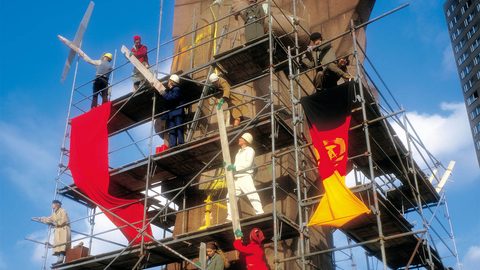 Berlin 1990s Films Run Lola Run Sun Alley and Berlin Babylon What They Captured
Run Lola Run, Sun Alley, and Berlin Babylon each captured a different Berlin of the 1990s — the first a sprint through the post-Wall city, the last a techno-scored documentary of its construction.
Berlin 1990s Films Run Lola Run Sun Alley and Berlin Babylon What They Captured
Run Lola Run, Sun Alley, and Berlin Babylon each captured a different Berlin of the 1990s — the first a sprint through the post-Wall city, the last a techno-scored documentary of its construction.