The DJs Who Built Berlin Techno: Dr. Motte, Westbam, Tanith, Marusha, and Paul van Dyk
The five DJs who built Berlin's 1990s techno scene: Dr. Motte, Westbam, Tanith, Marusha, and Paul van Dyk, from Tresor's vault to the Loveparade's Tiergarten trucks.

A flyer from 1994 lands on your desk. The names mean nothing without a face and a booth. The five Berlin DJs who built the 1990s sound are Dr. Motte, Westbam, Tanith, Marusha, and Paul van Dyk. Each made their name in a specific room, at a specific address, during a specific year. This is where they played, what they founded, and where they are now.
Dr. Motte: the Parade Founder Who Started in the Tresor Vault
The First Parade and the Tresor Years
Matthias Roeingh, called Dr. Motte, launched the first parade on 1 July 1989. Around 150 people walked the Kurfürstendamm route. By 1999, 1.5 million came. His sound was acid house and early techno. His residency was at the original Tresor location, the vault of a former department store at Leipziger Strasse 126, Berlin Mitte. He held that slot from 1991 through 2005, while Tresor operated there.
Dr. Motte also co-organised the parade until 2006. A dispute over commercialisation pushed him out. He still DJs today. The Tresor experience then was vinyl-only sets in a bank vault with no ventilation. Arrive before 23:00. After that, you wait outside for hours. The current Tresor at Köpenicker Strasse 70 opened in 2007 in a former heating plant. The original vault site is now part of an office complex. Nothing to see except a plaque.
Tresor Resident DJs 1991: Who Spun the Vault
The Room and the Residents
Beyond Dr. Motte, the core Tresor resident DJs in 1991 included Tanith. Her hard techno and gabber sets defined the deepest room. The research marks Tanith's residency at Tresor from 1991. The club operated Thursday through Sunday. Entry cost around 10 DM. Buy tickets at the door. There was no online presale. The Bunker club, a separate venue, ran harder nights but shared the same crowd.
The Tresor vault was a reinforced concrete room with a 60 cm thick door. You descended stairs into it. Dr. Motte played the main floor. Tanith played the vault itself. The sound system was Funktion One, rare for 1991. The club closed in 2005 and reopened at the new address in 2007. The current space runs a more polished program.
Parade Founders Berlin: the Route and the Float
Who Built the Parade
Dr. Motte and Westbam are the founders Berlin remembers. Westbam, real name Maximilian Lenz, founded Low Spirit Recordings in 1985, before the Wall fell. His key 1990s releases include "Celebration Generation" (1993) and "Bam Bam Bam" (1994). He also ran the Electric Kingdom sub-label. Westbam's role was regular headliner and co-organiser. He rode a float every year from 1990 through 2006.
The Route You Can Still Walk
The 1996 route ran from the Strasse des 17. Juni in Tiergarten to the Siegessäule. The 2000 route centred the Siegessäule as the main stage. Dr. Motte's early floats had no sound limit. By 1999, with 1.5 million attendees, the Berlin Senate required permits and noise caps. In 2006, the Senate withdrew permits entirely over costs and logistics. The final Berlin parade was that year. Walk the Tiergarten route today. It takes about an hour at a slow pace. The Siegessäule is free to climb. Expect a small ticket fee, set by the monument operator; check the official site before you go.
Westbam: the Mayday Rave Leader
From the Bunker to the RAW Gelände
Westbam held a principal residency at Mayday, the annual indoor rave that started in 1991 at various Berlin venues. The Mayday rave DJs of the early 1990s progressed from the Bunker club to the E-Werk to larger halls. Westbam played every Mayday from 1991 through at least 2005. He also ran a regular night at the WMF club on the former site, now a hotel.
Westbam's autobiography "Die Macht der Nacht" was published in 2015. He still DJs and produces. The Low Spirit label office was on the RAW Gelände, the Reichsbahn repair works turned club compound in Friedrichshain. Visit the RAW Gelände today. It houses several clubs, a skate park, and a beer garden. The address is Revaler Strasse 99. Entry to the grounds is free.
Mayday Rave DJs: Where the Indoor Scene Lived
The DJs and the Radio Star
Mayday began in 1991 at the Bunker club, then moved through the E-Werk and later locations. The DJs who played it include Marusha, who held a Mayday residency. Marusha, real name Marusha Aphrodite Gleiß, also hosted the "Dancehall" radio show on DT64, later Rockradio B, from 1991 through 1994. Her TV show "Feuerreiter" ran on ORB from 1993 through 1995.
Marusha's peak single "Somewhere Over the Rainbow" reached number 3 on the German singles chart in 1994. She ran a float each year. She now runs her own label, Marushamusic, and still DJs. The Mayday ticket in 1993 cost about 30 DM. Buy it at record shops or at the door. The event moved to Dortmund after 2000. The Bunker club at Ackerstrasse 22 is now an underground residence. You can only see it from outside.
Berlin Techno Pioneers at E-Werk and Beyond
Paul van Dyk and the Substation
Paul van Dyk joined the Berlin techno pioneers list with a residency at E-Werk from 1993 through 1997. The E-Werk address was Wilhelmstrasse 43, Berlin Mitte. The building was an electrical substation built between 1926 and 1928. Paul van Dyk, born 1971, played trance and progressive trance there. His breakthrough album "Seven Ways" came in 1996. He founded Vandit Records in 1998 in Berlin.
Paul van Dyk received a Grammy nomination in 2004. He still tours internationally. The E-Werk is now an event venue, not a regular club. You can rent it for private parties.
Tanith and the Harder End
Tanith, whose real name is Tanith Behrend, also qualifies as a Berlin techno pioneer. Her key 1990s party was Bash, a hard techno event at various Berlin locations. She left Berlin in the early 2000s. She returned to DJing sporadically and is now based outside Germany. The research lists this as so check residentadvisor.net for her current schedule.
Who Were the DJs and Where Did They Play?
The Five Names, With Addresses
You now have a name, a real name, a venue address, and a date for each of the five DJs. Dr. Motte at Leipziger Strasse 126 from 1991. Westbam at Mayday from 1991 and on the float every summer. Tanith in the Tresor vault from 1991. Marusha on the Mayday stage and the float. Paul van Dyk at E-Werk from 1993.
The Labels, the Parties, the Start Point
For the MFS Records connection, Paul van Dyk released early singles on that label. The Kraftwerk relocation to the Mitte district in the 1990s is a separate story, but the band's influence on the scene is direct. The Dubmission parties ran at the WMF club and at YAAM, the 90s beach bar that moved twice. YAAM operates at An der Schillingbrücke 3. Entry is free before 22:00.
The Kurfürstendamm in the 1990s was not a rave street. It was a shopping boulevard. The first parade walked it because it was the widest street in West Berlin. The crowd in 1989 was 150 people. By 1992 it had grown. By 1999 it was 1.5 million. Stand at the Kurfürstendamm and Ku'damm Eck intersection. That is the exact start point of the first parade.
| DJ | Real Name | Breakthrough Venue | Key Year | Label Founded | Still DJing? |
|---|---|---|---|---|---|
| Dr. Motte | Matthias Roeingh | Tresor (Leipziger Str. 126) | 1991 | None listed | Yes |
| Westbam | Maximilian Lenz | Mayday | 1991 | Low Spirit (1985) | Yes |
| Tanith | Tanith Behrend | Tresor vault | 1991 | None listed | Sporadically |
| Marusha | Marusha Aphrodite Gleiß | Mayday / parade float | 1991 | Marushamusic | Yes |
| Paul van Dyk | Paul van Dyk | E-Werk (Wilhelmsstr. 43) | 1993 | Vandit Records (1998) | Yes |
What to Know Before You Go
Clubs That Moved
The single thing that most often goes wrong is trying to find a club that moved or closed. Tresor relocated. E-Werk is an event space. The original WMF club is a hotel. The Bunker club is a residence. Bring a guidebook with addresses and years, or use residentadvisor.net on a phone with a prepaid eSIM. Free Wi-Fi is patchy. The BVG app needs data. Validate your U-Bahn ticket at the small red box on the platform or pay a fine; the transport operator sets the penalty, so check the BVG site before you travel.
Cash, Toilets, and the Wall Trail
Cash is still mandatory in the remaining 1990s-era bars and spätis. Carry small notes. Public toilets are scarce and charge a coin fee set by the operator. The double cobblestone line marking the Wall's path is easy to miss without a map. Download the Berliner Mauerweg GPS track before you arrive.
Who Should Follow This Trail and Who Should Skip it
Who It Works For
This trail works for Gen X ravers on a nostalgia trip, Cold War history obsessives, and architecture students of adaptive reuse.
Who It Does Not Work For
It does not work for luxury seekers wanting a pampered city break, families with young kids expecting fairy-tale charm, or anyone who dislikes vast distances between sights. The key sites are spread across a sprawling city. Minimum 3 days. Peak season is May to September when open-air clubs and flea markets run. Avoid ITB Berlin in early March and IFA in early September when hotel prices spike and availability crashes. Avoid 1 May in Kreuzberg if you dislike dense crowds.
Read next
-
 East Side Gallery
-
 Checkpoint Charlie
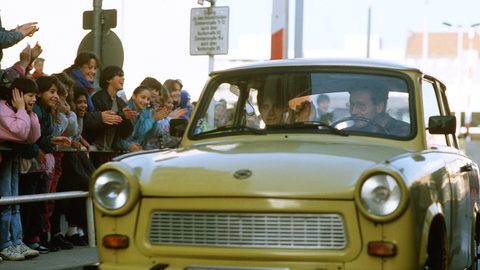
The guardhouse at Checkpoint Charlie is a replica from 2000. Here is what is original Cold War fabric, what is a set, and where the real booth ended up.
Checkpoint Charlie
The guardhouse at Checkpoint Charlie is a replica from 2000. Here is what is original Cold War fabric, what is a set, and where the real booth ended up.
-
 Charlottenburg
-
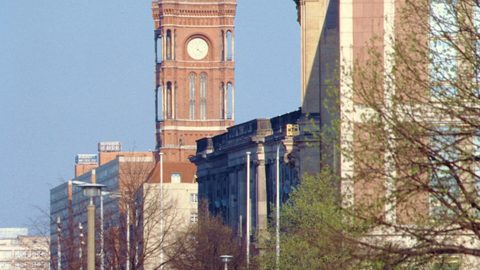 Mitte
Mitte
-
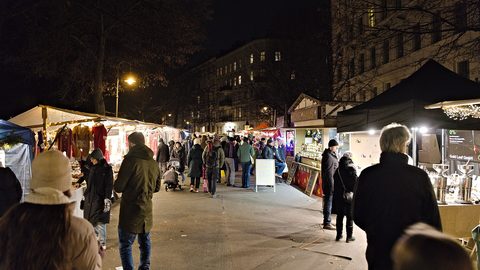 Prenzlauer Berg
-
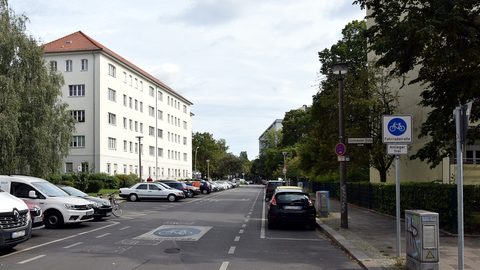 Friedrichshain
-
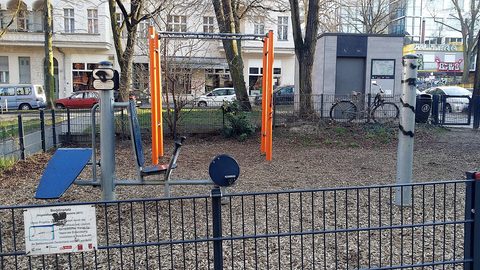 Neukölln
-
 Kreuzberg
-
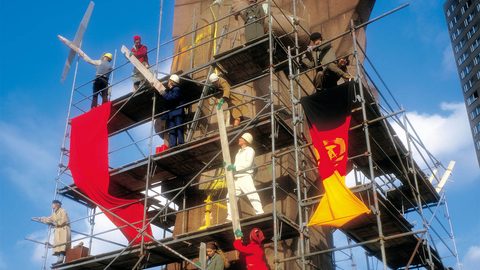 Berlin 1990s Films Run Lola Run Sun Alley and Berlin Babylon What They Captured
Run Lola Run, Sun Alley, and Berlin Babylon each captured a different Berlin of the 1990s — the first a sprint through the post-Wall city, the last a techno-scored documentary of its construction.
Berlin 1990s Films Run Lola Run Sun Alley and Berlin Babylon What They Captured
Run Lola Run, Sun Alley, and Berlin Babylon each captured a different Berlin of the 1990s — the first a sprint through the post-Wall city, the last a techno-scored documentary of its construction.