20 June 1991: The Capital Vote That Rebuilt Berlin

20 June 1991: the Capital Vote That Rebuilt Berlin
You are standing at the Reichstag, looking across the Spreebogen toward the glass and concrete of the Chancellery. You are wondering how a city that was a divided ruin six years earlier built an entire parliamentary district from nothing in a single decade. The answer is one session: the Berlin capital vote, 20 June 1991. On that day the Bundestag decided by 338 votes to 320 that Berlin, not Bonn, would be the seat of the German parliament. The debate lasted eleven hours. The building work that followed lasted ten. What you see at the Spreebogen, the Band des Bundes, the Norman Foster glass dome on the Reichstag, and the Chancellery designed by Axel Schultes and Charlotte Frank came into existence because of an 18-vote margin.
Hauptstadtbeschluss Berlin Bonn: the Vote That Nearly Stayed in Bonn
The Hauptstadtbeschluss Berlin Bonn was not a foregone conclusion. The debate opened at 10:00 on 20 June 1991 and ran for eleven hours. The final count was 338 for Berlin, 320 for Bonn, 1 abstention, and 1 invalid vote out of 660 ballots cast. The margin was so narrow the opposition demanded a recount.
The decision did not force every function to move. A compromise law, the Berlin/Bonn Gesetz, passed on 26 April 1994, split the federal presence. Nine ministries relocated to Berlin. Six stayed in Bonn: Defence, Agriculture, Environment, Health, Education and Research, and Economic Cooperation and Development. Bonn also kept the Bundesrechnungshof, the Bundeskartellamt, and the Bundesnetzagentur. Every ministry with a first seat in Berlin was required to maintain a second office in Bonn. The target was roughly 10,000 federal employees in each city after the move was complete, though exact figures are published periodically by the Bundesministerium des Innern. That legal architecture explains why you still find federal offices in Bonn more than thirty years later.
Bundestag Vote Berlin Capital: from Debate to Demolition
How the Vote Triggered Europe's Largest Building Site
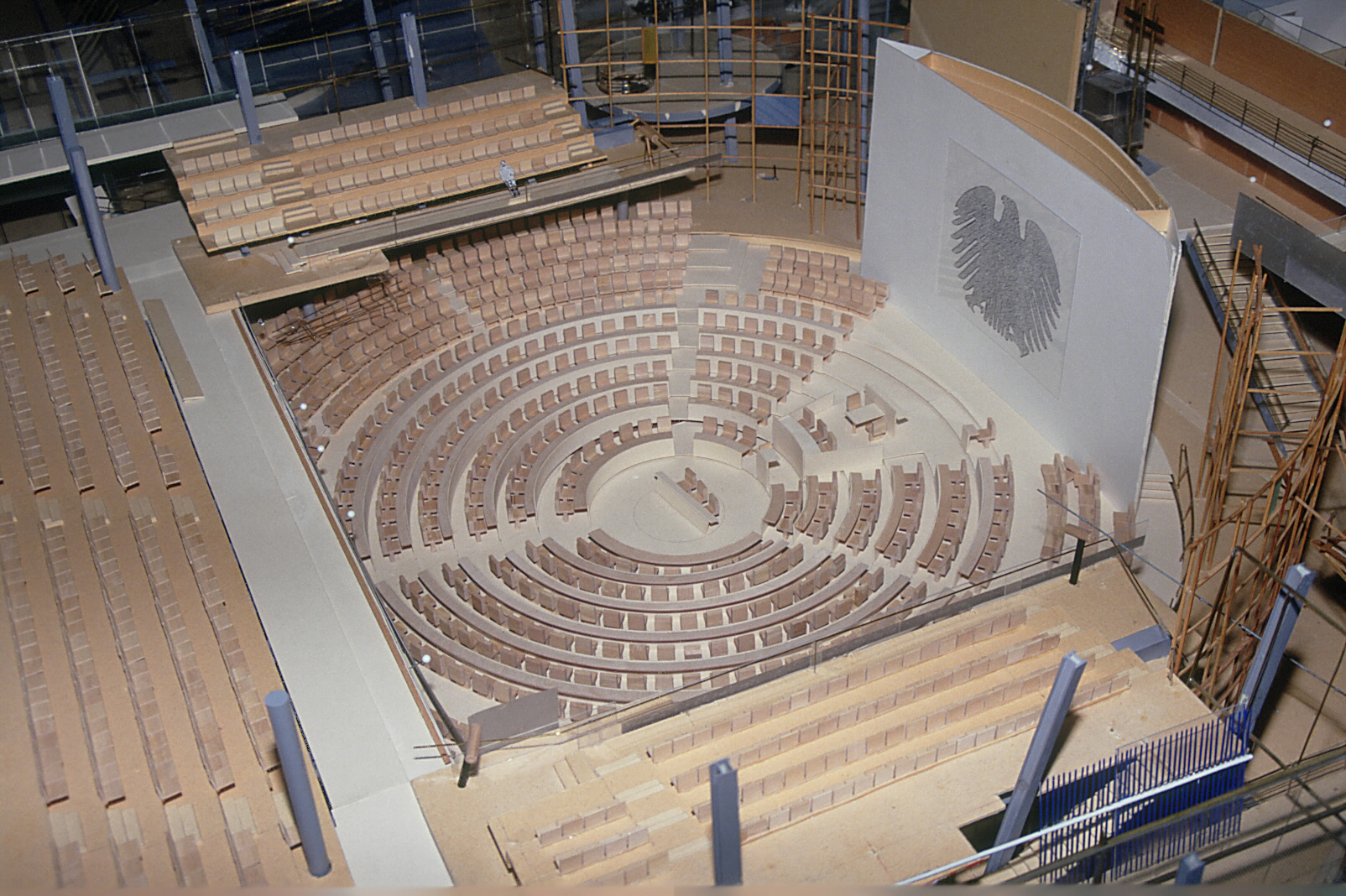
The Bundestag vote triggered the largest urban construction project in Europe at the time. Potsdamer Platz before 1990 was a divided wasteland with the Berlin Wall running through its centre. After the vote, redevelopment started in 1993. The parliamentary district was sited at the Spreebogen, the loop of the Spree River next to the Tiergarten. The Reichstag required a full renovation to house the Bundestag. Norman Foster won the commission and completed the building with its transparent glass dome in 1999. The Chancellery followed in 2001.
The Buildings That Line the Band des Bundes
The Paul Löbe Haus, housing committee rooms and offices, finished in 2001. The Marie Elisabeth Lüders Haus, containing the parliamentary library and research services, finished in 2003. The Jakob Kaiser Haus, another office block for members of parliament, was completed in 2002. These buildings line the Band des Bundes, the east-west axis across the Spree that physically links the Reichstag to the Chancellery.
Berlin Government Quarter Construction: What Was There Before
The parliamentary district was built on land that was essentially empty. The Spreebogen before 1991 held a few diplomatic buildings and the postwar Bundeshaus, but the Wall had severed the area from the rest of the city. The Tiergarten was a park used by West Berliners; the north side of the Spree was East German border zone. The vote required clearing nothing from the site except the memory of the division.
The key challenge was building a coherent district where no infrastructure existed. The Band des Bundes concept placed the Chancellery, the Paul Löbe Haus, and the Marie Elisabeth Lüders Haus along a pedestrian axis that crosses the Spree twice. The architects designed the whole district as a single urban plan, not as isolated buildings. Walk from the Reichstag to the Chancellery in under fifteen minutes across a sequence of bridges and plazas that did not exist before 1994.
Potsdamer Platz Rebuilding 1990s: the Construction Pit That Symbolized Reunification
The Potsdamer Platz rebuild was the commercial counterpart to the parliamentary district. Before the Wall fell, Potsdamer Platz was a dead zone. After the capital vote, developers moved in. By 1993, the site became Europe's largest construction pit. The red Info Box, a container raised on stilts, opened as a viewing platform where Berliners and tourists watched the new city rise. The corporate towers, the Sony Center, and the shopping arcades that stand there today were completed by the late 1990s.
Potsdamer Platz is the clearest physical example of what the vote made possible: a blank site at the old border turned into a functioning city centre within seven years. The Info Box was dismantled in 2001 after serving its purpose. Its site is marked on maps. To see the contrast between 1990 and 2000, take the Potsdamer Platz S-Bahn exit. It deposits you exactly where the pit used to be.
What the Reader Sees Today at the Spreebogen
The Walk Across the Band des Bundes
Walk from the Reichstag north across the Spree via the footbridge. On your left is the Paul Löbe Haus, completed 2001. On your right is the Marie Elisabeth Lüders Haus, completed 2003. Ahead is the Chancellery, completed 2001, designed by Axel Schultes and Charlotte Frank. The entire corridor is the Band des Bundes. None of these buildings existed before the capital vote.
The Reichstag Dome: Book It Now
The Reichstag glass dome, open free with timed registration, was completed in 1999. The building had been a hollow shell since the 1933 fire. Norman Foster kept the historical shell and inserted a modern parliamentary chamber and the dome above it. The dome is a public viewing platform. Book your slot online two weeks ahead. The queue runs about 30 minutes on a weekday morning; without a booking, you wait longer. After dusk the dome is illuminated from inside and you can see the whole district lit below.
Bonn Retained More Than You Expect
The Berlin/Bonn Gesetz of 1994 guaranteed that Bonn did not lose everything. Six federal ministries stayed: Defence, Agriculture, Environment, Health, Education and Research, and Economic Cooperation and Development. The Bundesrechnungshof, the Bundeskartellamt, and the Bundesnetzagentur remained in Bonn. Every ministry with a first seat in Berlin was required to maintain a second office in Bonn. The target was approximately 10,000 federal employees in each city.
If you visit Berlin expecting to find every federal function here, you will not. The Bundeskartellamt still operates from Bonn. The Ministry of Defence never moved. The capital vote was a political decision, not a total relocation. That compromise is why the Berlin district is smaller than you might expect for a national capital. The Band des Bundes contains only the Chancellery, the parliamentary offices, and the Reichstag. The ministries are spread across Berlin, many in converted buildings east of the Spree.

The Wall Remains That Mark the Pre Vote Landscape
The Surviving Fragments
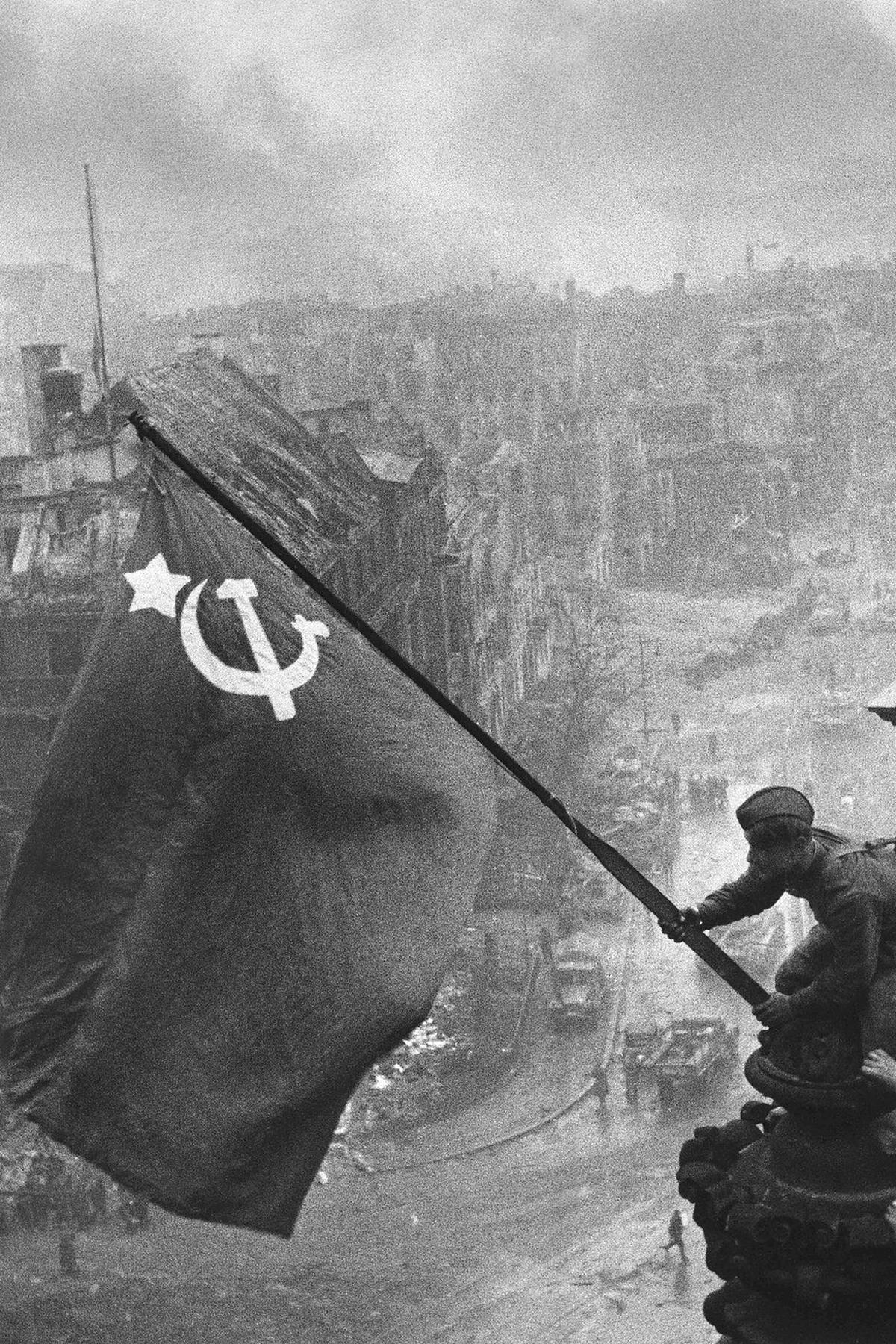
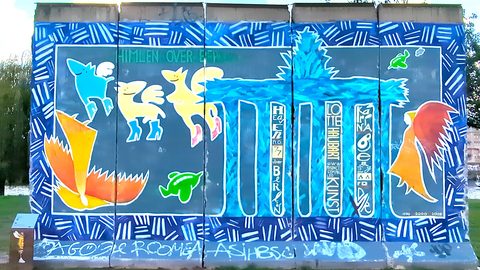
To understand the scale of the change, visit the Wall segments that survived the demolition. The 200-metre stretch at Niederkirchnerstraße is preserved in situ. The 1.4-kilometre section at Bernauer Straße is the Gedenkstätte Berliner Mauer. The 1.3-kilometre East Side Gallery was painted by 118 artists and completed on 28 September 1990. The Mauerpark, opened in 1994 on the former death strip between Prenzlauer Berg and Gesundbrunnen, is now a Sunday flea market and karaoke amphitheatre.
How to Connect the Pieces
These fragments show the border that made the Spreebogen and Potsdamer Platz uninhabitable before 1989. The double cobblestone line that marks the Wall's path through the city is discontinuous and easy to miss. Get the dedicated map from the Berliner Mauer Gedenkstätte. The point is simple: the capital vote could only happen because the Wall fell. The vote then directed the construction that filled the empty strip with the federal institutions of a unified country.
| Building | Architect | Completed |
|---|---|---|
| Reichstag (Bundestag chamber and dome) | Norman Foster | 1999 |
| Federal Chancellery | Axel Schultes and Charlotte Frank | 2001 |
| Paul Löbe Haus | Stephan Braunfels | 2001 |
| Jakob Kaiser Haus | Multiple architects | 2002 |
| Marie Elisabeth Lüders Haus | Multiple architects | 2003 |
Who This Subject Fits and Who Should Skip it
The capital vote and the construction of the parliamentary district suit travellers who want to understand how a single political decision reshaped a city physically. That means Cold War history obsessives, architecture students of adaptive reuse, and anyone who prefers a direct encounter with the city over postcard views. The district is walkable in two hours if you are interested in the buildings. If you are not, the Reichstag dome is a 30-minute visit and the rest is office blocks. Luxury seekers wanting a pampered city break will not find it here. Families with young kids expecting fairy-tale charm should book the Tiergarten instead.
The most common mistake is trying to find a single continuous Wall to walk along. Most of it was demolished. The experience is a fragmented scavenger hunt between memorial sections, the double cobblestone line, and repurposed border crossings. Bring the Berliner Mauer Gedenkstätte map and budget three days to connect the district to the Wall fragments that explain why the capital vote mattered.
Read next
-
 East Side Gallery
-
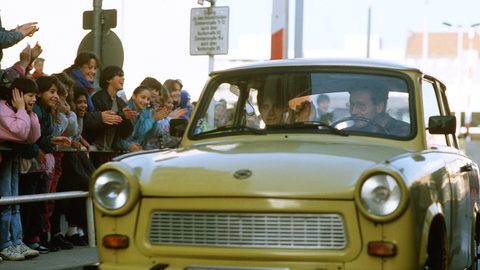 Checkpoint Charlie
The guardhouse at Checkpoint Charlie is a replica from 2000. Here is what is original Cold War fabric, what is a set, and where the real booth ended up.
Checkpoint Charlie
The guardhouse at Checkpoint Charlie is a replica from 2000. Here is what is original Cold War fabric, what is a set, and where the real booth ended up.
-
 Charlottenburg
-
 Mitte
Mitte
-
 Prenzlauer Berg
-
 Friedrichshain
-
 Neukölln
-
 Kreuzberg
-
 Berlin 1990s Films Run Lola Run Sun Alley and Berlin Babylon What They Captured
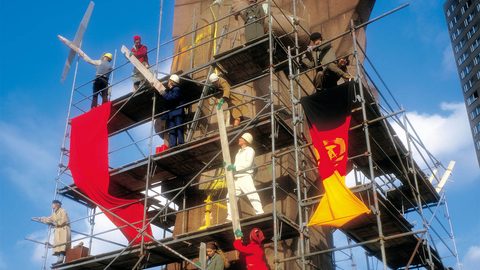
Run Lola Run, Sun Alley, and Berlin Babylon each captured a different Berlin of the 1990s — the first a sprint through the post-Wall city, the last a techno-scored documentary of its construction.
Berlin 1990s Films Run Lola Run Sun Alley and Berlin Babylon What They Captured
Run Lola Run, Sun Alley, and Berlin Babylon each captured a different Berlin of the 1990s — the first a sprint through the post-Wall city, the last a techno-scored documentary of its construction.