How the Hackesche Höfe in Berlin Went from Derelict GDR Courtyards to a Mitte Showpiece
The Hackesche Höfe on Rosenthaler Strasse in Berlin Mitte transformed from rotting GDR tenements into the city's most visited Jugendstil courtyard complex after reunification.
.jpg)
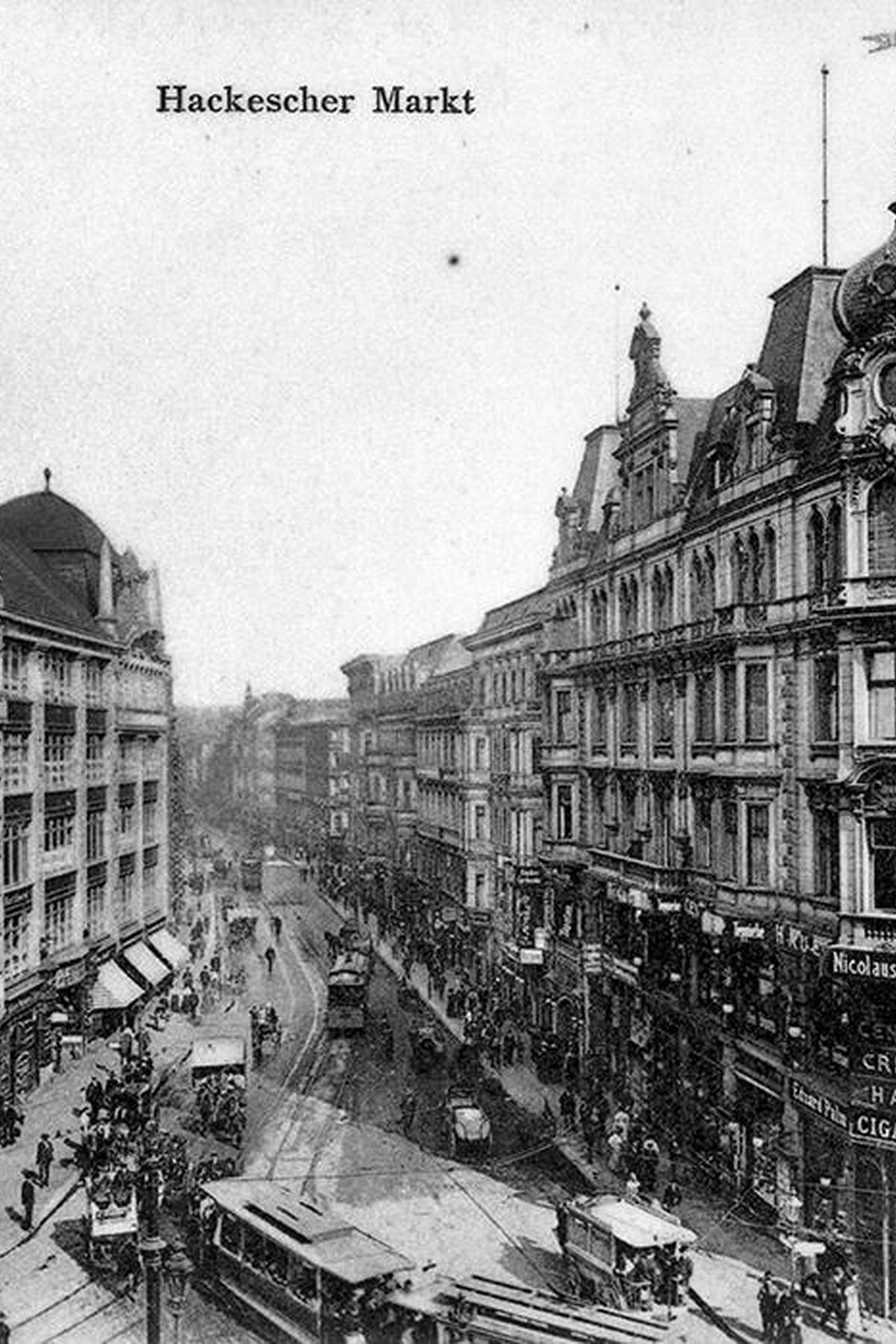
Most visitors assume the Hackesche Höfe Berlin is a single ornate mall. It is eight separate courtyards, built in 1906-1907 as Berlin's largest interlinked yard system. Its journey from a rotting GDR slum to Mitte's busiest commercial yard is a story of contested renewal, not smooth polish. The Hackesche Höfe Berlin sit on Rosenthaler Strasse, five minutes from S-Bahn Hackescher Markt. Architect Kurt Berndt designed them for client Jakob Michael as a mixed-use block of offices, shops, apartments, and a factory. The Jugendstil facade on the street front is the only part most tourists photograph. Behind it, the eight linked yards tell a different history.
How the Hackesche Höfe Fell Apart Under the GDR
Between 1949 and 1989 the East German state let the block decay. Upper floors stood vacant. Ground-floor shops kept trading, but the building fabric rotted. By the late 1980s the yards were partially derelict. The neglect was not accidental; the GDR had no budget or interest in pre-war commercial architecture that did not serve state industry. When the Wall fell in November 1989, the Hackesche Höfe became a problem for the new property order.
1990-1993: The Squat Period
Around 1990, squatters moved in and called it Hackesche Höfe besetzt. They opened artists' studios, galleries, an underground cinema, workshops, and bars. The most notable early venue was Kino Hackesche Höfe in Yard II, an independent cinema that started in a former factory space in 1991. The squatters operated under interim-use agreements, tolerated by the city but legally contested. Several hundred people used the spaces at the peak. The period lasted roughly until 1993, when the legal clock ran out.
Berlin Art Nouveau Architecture and the Restoration Battle
The Jugendstil architecture that makes the Hackesche Höfe famous almost did not survive. Investor Roland Ernst bought the block and began planning renovation in 1994. Construction started in 1996 and finished in 1997. The renovation architect was Weiß & Partner (Günter Weiß). The cost ran to approximately 80 million DM. Ernst fought a bitter battle with the city over heritage requirements, tenant rights, and the preservation of the original tenant mix. The squatters were evicted by 1993-1994 with no right of return. The temporary artists lost their studios; some were offered alternative spaces in the district, but most dispersed. Demonstrations against the displacement ran through 1993-1994, documented by local activist groups. When the yards reopened in 1997, the social mix that had defined the post-Wall years was gone.
The Jugendstil facade and the tiled yards were returned to their 1906 condition. But the renovation erased the raw GDR-era fabric that had made the space affordable for artists. That decision is the central tension of the Hackesche Höfe story.
Hackescher Markt Yards: What Each One Holds Now
The eight yards have designated names and distinct functions. Enter all of them for free during daytime hours. The layout is a sequence of connected spaces, not a maze. Walk through the entire block in about 15 minutes without backtracking.
- Yard I (Endellscher Hof): The first and most ornate. Jugendstil tiles, a small fountain, ground-floor fashion boutiques. This is the yard everyone photographs.
- Yard II (Theaterhof): Home to the Chamäleon Theatre, which opened in this yard in 1991 before renovation and re-established itself after 1997. It now runs commercial dinner-theatre productions. The original Kino Hackesche Höfe was evicted during renovation and reopened later as a commercial cinema.
- Yard III (Kunsthof): Art galleries and design showrooms. Quiter than the first two yards.
- Yard IV (Sophie-Gips-Höfe): Access via Sophienstraße, not through the main block. This is a separate but adjacent yard that connects visually and historically to the Hackesche Höfe.
- Yard V (Handwerkerhof): Craft workshops and small studios. Watch glassblowers and ceramicists work.
- Yard VI (Gartenhof): A landscaped garden yard with benches. The only quiet spot in the block.
- Yard VII (Rosenhof): Restaurants and cafes with outdoor seating. A Weinmeisterei bar ocupies one corner.
- Yard VIII (Brunnenhof): A fountain yard with a mix of offices and residential entrances. Residents-only signs are posted at the upper stairwells.
Mite Shopping Yards: What is Worth Your Time
The Hackesche Höfe are the most visible example of Mitte's yard shopping district, but they are no longer the most authentic. The shops are flagship retailers, design offices, and chain restaurants. The rent is high, and the mix is indistinguishable from any upmarket European shopping arcade. To see what the Hackesche Höfe looked like before renovation, walk to the neighbouring blocks that preserved their GDR-era fabric.
Heckmann-Höfe: The Unrestored Counterpart
The Heckmann-Höfe at Oranienburger Strasse 32 were built in 1905-1907, the same period as the Hackesche Höfe. Parts remain unrestored. You can see original brickwork, peeling paint, and industrial fittings that the Hackesche Höfe lost. Current tenants include artist studios, workshops, small businesses, and some residential units. Entry is free. This is the closest you will get to the 1990s atmosphere without a time machine.
Sophie-Gips-Höfe: Phased Renovation
The Sophie-Gips-Höfe at Sophienstrasse 21-22 are adjacent to the Hackesche Höfe Yard IV. The renovation approach was phaed and deliberately retained raw surfaces in sections. You can see unplastered brick walls, original steel beams, and worn stone paving that predate 1990. The contrast between the polished Hackesche Höfe and the raw Sophie-Gips-Höfe makes the gentrification story visible in one walk.
Haus Schwarzenberg: Street Art and Wartime Damage
Haus Schwarzenberg at Rosenthaler Strasse 39 is the most extreme case. Built around 1900, it is largely unrestored and covered in street art. Preserved wartime damage traces are visible on the facade. The building hosts the Otto Weidt Museum, the Anne Frank Zentrum, artist studios, the Eschloraque bar, and the Monsterkabinett. It is protected against redevelopment by a non-profit ownership structure (Stiftung Haus Schwarzenberg). Entry is free to the yard; the museums charge separate admission. Go here when the Hackesche Höfe feel too clean.
Hackesche Höfe History: the Gentrification Symbol
The Hackesche Höfe became the symbol of post-Wall Mitte gentrification for a concrete reason: it was the first large-scale yard block to be fully restored and commercially repositioned. The Wall ran approximately 400 metres away, along the Spree at Friedrichstrasse. The border strip was a dead zone. After 1989, the entire Scheunenvirtel neighbourhood around the Hackesche Höfe was suddenly prime real estate. The block's conversion from a partially derelict mixed-use site to a flagship retail destination set the pattern for every yard renovation that followed.
The critique is straightforward. The renovation preserved the architecture but eliminated the tenant mix that made the area culturally significant. The commercialisation critique argues that the Hackesche Höfe are now a stage set for tourism, not a functioning mixed-use neighbourhood. The free-entry yards are crowded with visitors year-round, and the tourist density at peak hours makes the space feel like a queue rather than a discovery. The Oscar Niemeyer ballroom, a curved modernist addition in Yard II, draws architecture students who wish Niemeyer had designed the whole block rather than one room.

| Block | Condition | Best For | Entry Fee |
|---|---|---|---|
| Heckmann-Höfe | Partially unrestored, original brickwork visible | Seeing pre-1990 fabric | Free |
| Sophie-Gips-Höfe | Phased renovation, raw surfaces retained | Comparing restored vs. unrestored | Free |
| Haus Schwarzenberg | Largely unrestored, street art, war damage | Authentic 1990s atmosphere | Free (yard); museums charge separately |
The Honest Caveat
The Hackesche Höfe are the most visited yard block in Berlin for a reason: they are beautiful, central, and free. But they are also a monument to what gets lost when a derelict space becomes a showpiece. The commercial tenants pay rent that the original artist tenants could never afford. The tenancy mix has shifted entirely toward flagships, design offices, and chains. To experience the 1990s Berlin that the Hackesche Höfe helped destroy, skip the main yards and spend your time at Haus Schwarzenberg and the Heckmann-Höfe. To see the architecture, arrive early, take your photos in Yard I, and leave before the crowds arrive. The single thing that most often goes wrong here is expecting a living neighbourhood and finding a shopping arcade.
Read next
-
 East Side Gallery
-
 Checkpoint Charlie
The guardhouse at Checkpoint Charlie is a replica from 2000. Here is what is original Cold War fabric, what is a set, and where the real booth ended up.
Checkpoint Charlie
The guardhouse at Checkpoint Charlie is a replica from 2000. Here is what is original Cold War fabric, what is a set, and where the real booth ended up.
-
 Charlottenburg
-
 Mitte
Mitte
-
 Prenzlauer Berg
-
 Friedrichshain
-
 Neukölln
-
 Kreuzberg
-
 Berlin 1990s Films Run Lola Run Sun Alley and Berlin Babylon What They Captured
Run Lola Run, Sun Alley, and Berlin Babylon each captured a different Berlin of the 1990s — the first a sprint through the post-Wall city, the last a techno-scored documentary of its construction.
Berlin 1990s Films Run Lola Run Sun Alley and Berlin Babylon What They Captured
Run Lola Run, Sun Alley, and Berlin Babylon each captured a different Berlin of the 1990s — the first a sprint through the post-Wall city, the last a techno-scored documentary of its construction.