How Pariser Platz in Berlin Was Rebuilt from Nothing After the Wall, and the Hotel Adlon Returned
Pariser Platz in Berlin was a mined death strip east of the Brandenburger Tor until the 1990s, when it was painstakingly rebuilt plot by plot under strict Senate design rules.
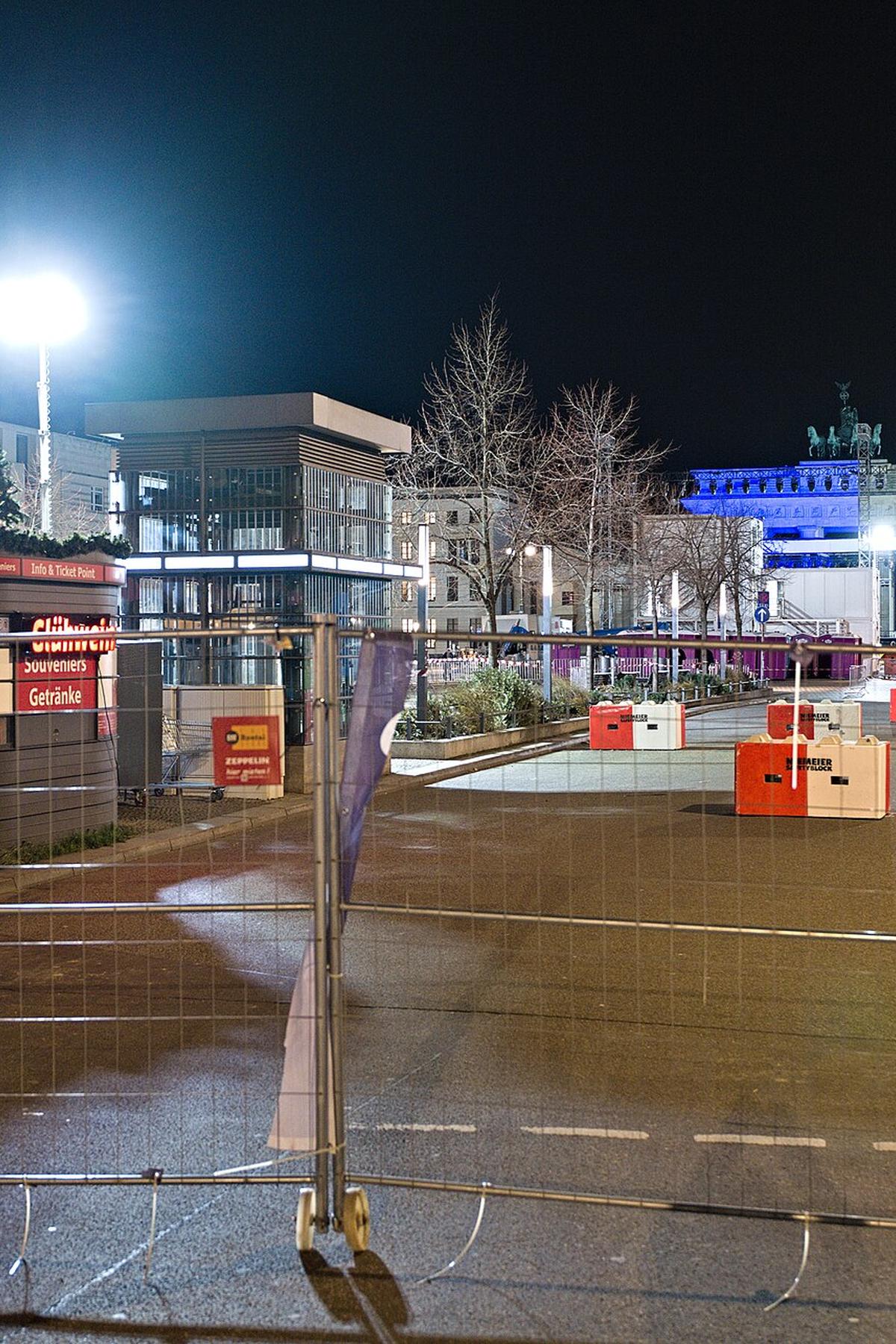

Pariser Platz Was Never a Pretty Old Square
Most visitors expect a historic European plaza that survived the war. It did not. The Battle of Berlin in 1945 destroyed every pre-war structure on Pariser Platz except the Brandenburger Tor. By 1990, after the GDR cleared the rubble, the square was a mined strip of earth inside the death strip. Nothing stood there except the gate. The original Hotel Adlon, opened in 1907, was demolished by the GDR in 1984 after sitting gutted for decades. What you see today was built from scratch after 1993, plot by plot, under rules that forced a stone facade city that never existed before.
From Death Strip to Construction Pit: 1989 to 1993
The Brandenburger Tor reopened on 22 December 1989, 43 days after the Mauerfall. The death strip at Pariser Platz was cleared by 1990. For several years the square was an empty dirt lot, the gate with nothing around it but weeds and a few viewing platforms. Tourists came to see the gap where the Wall had been and found a hole where a city should be.
In 1993 the Berlin Senate adopted a reconstruction plan designed by Hans Stimmann, the Senatsbaudirektion director. Stimmann's rules were specific and strict. Maximum height 22 metres. Maximum eave height 18 metres. Facades had to be natural stone or render in light ochre tones. Windows had to be vertical, at least 60 percent as wide as they were tall. Roofs had to be pitched at a minimum 22 degrees. No plot could have a frontage wider than 30 metres, following the historical parcel boundaries. The goal was not to recreate the 1945 city but to force a coherent European street wall. Curtain walls and glass towers were banned.
By the mid 1990s, cranes filled the square. The reconstruction plan had turned the site into the most controlled building project in Europe.
Hotel Adlon Berlin History: 1907 to 1997
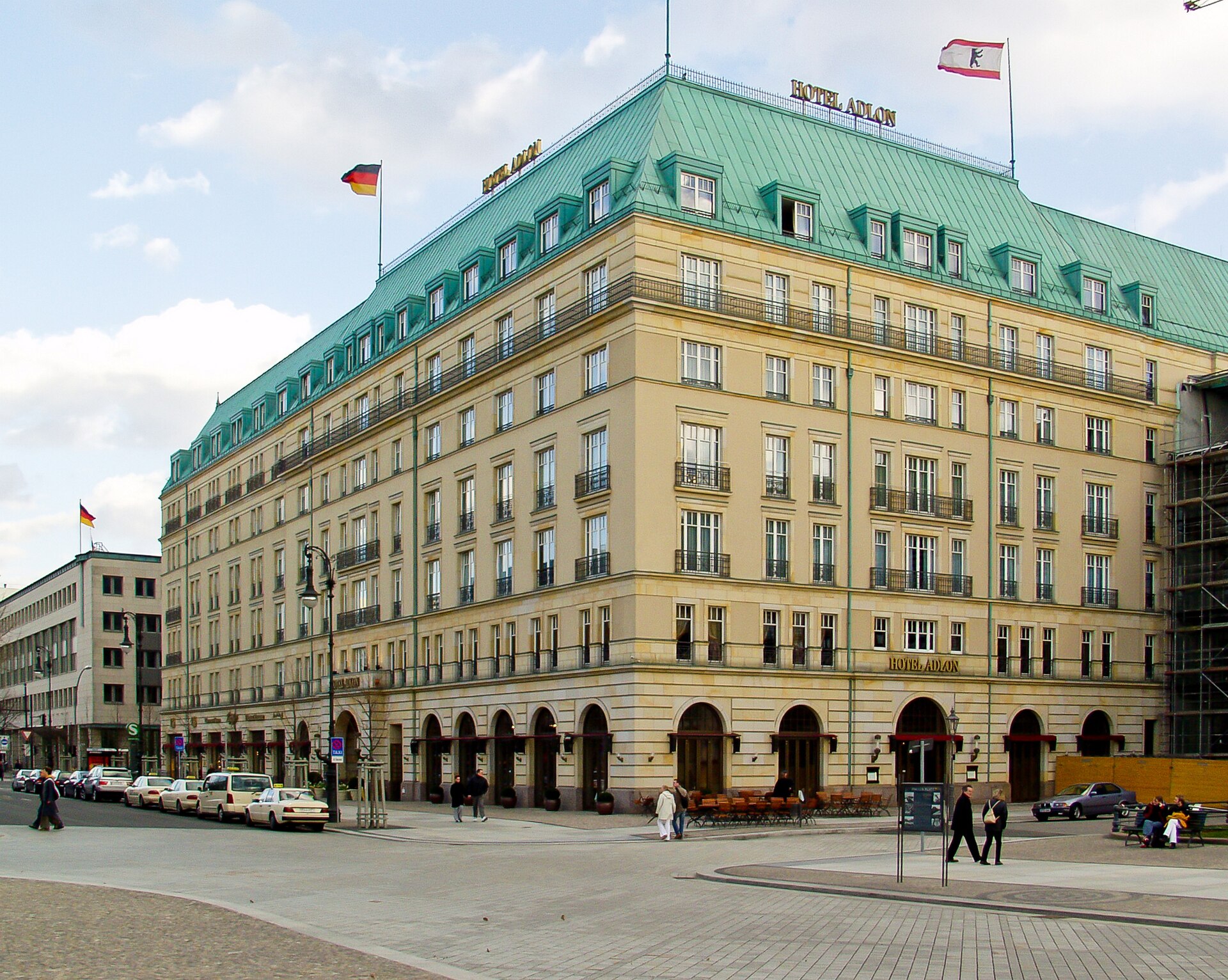
The original Hotel Adlon opened in 1907 on Unter den Linden, directly next to the Brandenburger Tor. It was Berlin's grand hotel. The structure was badly damaged in 1945 but partially repaired, then operated in the GDR era until it fell into disrepair. The GDR demolished it in 1984. A small prefabricated restaurant served as a memorial of sorts until the 1990s.
The Hotel Adlon Kempinski reopened on 23 August 1997. The designer was Patzschke and Partner. The new structure follows the Stimmann rules: 18 metre eave height, stone facades, pitched roof. It occupies the same footprint as the original but is a new construction, not a restoration. The lobby contains a few salvaged pieces from the 1907 property, including a central staircase and some bronze fixtures. The Adlon Kempinski 1997 reopening marked the moment Pariser Platz became a real address again.
Pariser Platz Architecture: What Stands on Each Corner
North Side, From the Gate Eastward
Pariser Platz architecture is a case study in controlled rebuilding. Every structure on the square dates from 1997 or later except the Brandenburger Tor itself, which was restored from 2000 to 2002 at a cost of roughly EUR 6 million. The gate is 26.1 metres tall, 65.5 metres wide, and 11 metres deep. The Quadriga was restored separately from 1990 to 1991.
Haus Liebermann, completed 1998, designed by Josef Paul Kleihues, eave height 18 metres. Next to it is the Academy of Arts, completed 2005, designed by Gunter Behnisch. The Akademie der Kunste is the only structure on the square that rises to the full 22 metre maximum. Its facade is glass and transparent, a deliberate break from the stone mandate. The Behnisch design was controversial because it broke the stone facade mandate, but it was permitted as a cultural institution. The predecessor on this site was demolished in the 1960s.
East Side, Across From the Gate
The DZ Bank property, completed 2000, designed by Frank Gehry. Exterior is limestone at an 18 metre eave. The interior atrium is stainless steel and glass, Gehry's only completed work in Berlin. His signature is invisible from the square; the structure looks like a sober bank from the outside. Inside, the atrium curves like a whale ribcage and is visible only to bank employees and visitors on prebooked tours.
South Side, From the Gate Eastward
Haus Sommer, completed 1998, designed by Josef Paul Kleihues, eave height 18 metres. Next to it is the Eugen Gutmann Haus, completed 1997, designed by gmp, same eave height. The Dresdner Bank property sits behind it. Then the Palais am Pariser Platz, completed 1999, designed by Bernhard Winking, at 18 metres.
West Side, On Both Sides of the Gate
The French Embassy, completed 2002, designed by Christian de Portzamparc, 18 metre eave. On the other side the U.S. Embassy, completed 4 July 2008, designed by Moore Ruble Yudell, also 18 metres. The US Embassy was delayed by security concerns; its construction required a 25 metre setback from the pavement, which broke the Stimmann street wall rule. The compromise was a low wall and planters to maintain the visual line. The Embassy sits on the site of the original 1930s US chancellery.
The DZ Bank Building and Frank Gehry’s Hidden Interior
The DZ Bank property at Pariser Platz 1 is the square's architectural secret. From the outside it is a limestone box that follows every Stimmann rule: 18 metre eave, natural stone, vertical windows, pitched roof. Gehry's signature is invisible from the street. Inside the atrium, he built a stainless steel and glass structure that forms the conference centre. The shape is a whale skeleton. You cannot see it without a scheduled tour. The bank offers free tours on Friday afternoons. Book weeks ahead. Stand at the reception desk and ask; if the tour is full, you get the lobby only. This is the square's most missed attraction. Plan for it first.
Academy of Arts: the One Building That Breaks the Rules
The Akademie der Kunste at Pariser Platz 4 is the only structure on the square that reaches the maximum 22 metre height. Gunter Behnisch designed a glass and transparent facade that directly contradicts the Senatsbaudirektion rules. The property houses exhibition spaces, a lecture hall, and the academy's archive. The glass front allows you to see through to the trees behind it, a deliberate visual break from the stone wall that defines the rest of the square. Completion in 2005 marked the point when the rebuilding rules started to bend for cultural institutions.
The U.S. Embassy Berlin and the 25 Metre Setback
The U.S. Embassy at Pariser Platz 2 was the last major structure to open, on 4 July 2008. Moore Ruble Yudell followed the 18 metre eave height but could not meet the street wall rule. Post 9/11 security requirements forced a 25 metre setback from the pavement. The Embassy sits behind a low wall and planters that maintain the visual line of the square. It occupies the same plot as the original 1930s US chancellery. The delay between the 1993 plan and the 2008 opening was caused by security negotiations, budget disputes, and the need to dig a deeper foundation for blast protection. The Embassy employs about 300 staff. It is not open to the public except for occasional cultural events.
What the Square Feels Like Now: Historic and Entirely New
Pariser Platz is a pedestrian zone, restricted to foot traffic since 2002. The surface is granite setts. The S Bahn Brandenburger Tor station sits directly beneath the square on the U5 and S1 lines. The station entrance is at the north east corner, near the Academy of Arts. The square is a tourist gathering point from 09:00 to 22:00, seven days a week. Crowds are largest from May to September and on weekends.
What makes the square feel strange is the absence of age. Every wall is less than 30 years old. The stone is clean. The windows are new. There are no worn steps, no weathered door frames, no layers of paint. The effect is a square that looks like a film set of a historic city rather than a place that grew naturally. That is the result of the Stimmann rules. They produced a coherent street wall but not an old one. The branding of the square as historic is marketing; it is a reconstruction that began in 1993 and finished in 2008.
The Liebknecht bridge, which carries Unter den Linden across the Spree, is a short walk east. The bridge was a key protest site during the 1919 Spartacist uprising and later a crossing point within East Berlin. It is not on the square but visible from it.
.jpg)
How to See the Square Without the Crowds
Beat the Buses
Arrive at 07:30 on a weekday. The S Bahn Brandenburger Tor station opens at 04:30. Walk from the station exit to the Brandenburger Tor quadriga. The square is empty. The tour buses start arriving at 09:00. By 10:00 the pavement in front of the gate is packed. You have about 90 minutes of quiet light.
Escape Routes
If the square is crowded, walk through into the Tiergarten immediately west of the gate. The paths are wide and lightly used even in peak season. The Soviet War Memorial is a 10 minute walk inside the park.
Wet Weather Plan
If it is raining, the arcades at the DZ Bank ground floor lobby are open to the public. Stand under the stone eaves of the Adlon and read the bronze memorial plaques on the facade. The Eugen de Beauharnais connection is a footnote: his Palais was on the south side until 1945, replaced now by the Palais am Pariser Platz.
The Failure Case: What Goes Wrong Here
The common mistake is assuming Pariser Platz is the historic heart of Berlin. It is not. The square was a cleared field in 1990. Everything you see was built this century. Visitors expecting a medieval square are disappointed. Set the right expectation: Pariser Platz is a monument to the 1990s reconstruction, not to the 19th century.
The second failure case is trying to find the Wall here. Pariser Platz was inside the death strip, but no wall segment remains on the square. The double cobblestone marker line runs north south through the square and is easy to miss. The nearest standing wall is at the Topography of Terror, 15 minutes south by S Bahn.
The third failure case is booking the Adlon for its history. The Adlon Kempinski is a luxury hotel built in 1997. It is comfortable. It is not the original. The history is in the photographs on the wall in the lobby, not in the structure itself.
How to Visit Berlin’s Rebuilt Square in One Morning
Start at 08:00 at the S Bahn Brandenburger Tor station. Exit via the Pariser Platz staircase. Walk to the gate and take photos before the tour buses arrive. Walk the length of the square east to west, then back along the opposite side. Read the plaques on the Adlon facade. Look through the glass of the Academy of Arts. Find the double cobblestone marker line crossing the square north south. By 09:30 you will have seen every structure on the square. Cross into the Tiergarten for the Soviet War Memorial, then walk Unter den Linden east to Museum Island. The total walk is about 25 minutes.
The One Thing That Most Often Goes Wrong
Visitors arrive expecting to find the Berlin Wall here. There is none. Pariser Platz was a cleared death strip, not a walled section. The nearest standing wall segment is at the Topography of Terror on Niederkirchnerstrasse, a 15 minute S Bahn ride south. If you came here for Cold War remains, take the U5 to Potsdamer Platz and walk south. The double cobblestone line through Pariser Platz is the only physical marker. It is easy to step over without noticing. Bring a map of the Wall path or follow the BVG app. Otherwise you will leave the square having missed the one thing that made it empty in 1990.
Read next
-
 East Side Gallery
-
 Checkpoint Charlie
The guardhouse at Checkpoint Charlie is a replica from 2000. Here is what is original Cold War fabric, what is a set, and where the real booth ended up.
Checkpoint Charlie
The guardhouse at Checkpoint Charlie is a replica from 2000. Here is what is original Cold War fabric, what is a set, and where the real booth ended up.
-
 Charlottenburg
-
 Mitte
Mitte
-
 Prenzlauer Berg
-
 Friedrichshain
-
 Neukölln
-
 Kreuzberg
-
 Berlin 1990s Films Run Lola Run Sun Alley and Berlin Babylon What They Captured
Run Lola Run, Sun Alley, and Berlin Babylon each captured a different Berlin of the 1990s — the first a sprint through the post-Wall city, the last a techno-scored documentary of its construction.
Berlin 1990s Films Run Lola Run Sun Alley and Berlin Babylon What They Captured
Run Lola Run, Sun Alley, and Berlin Babylon each captured a different Berlin of the 1990s — the first a sprint through the post-Wall city, the last a techno-scored documentary of its construction.