Ostgut: the Club Before Berghain and Why That Matters to Berlin Techno History
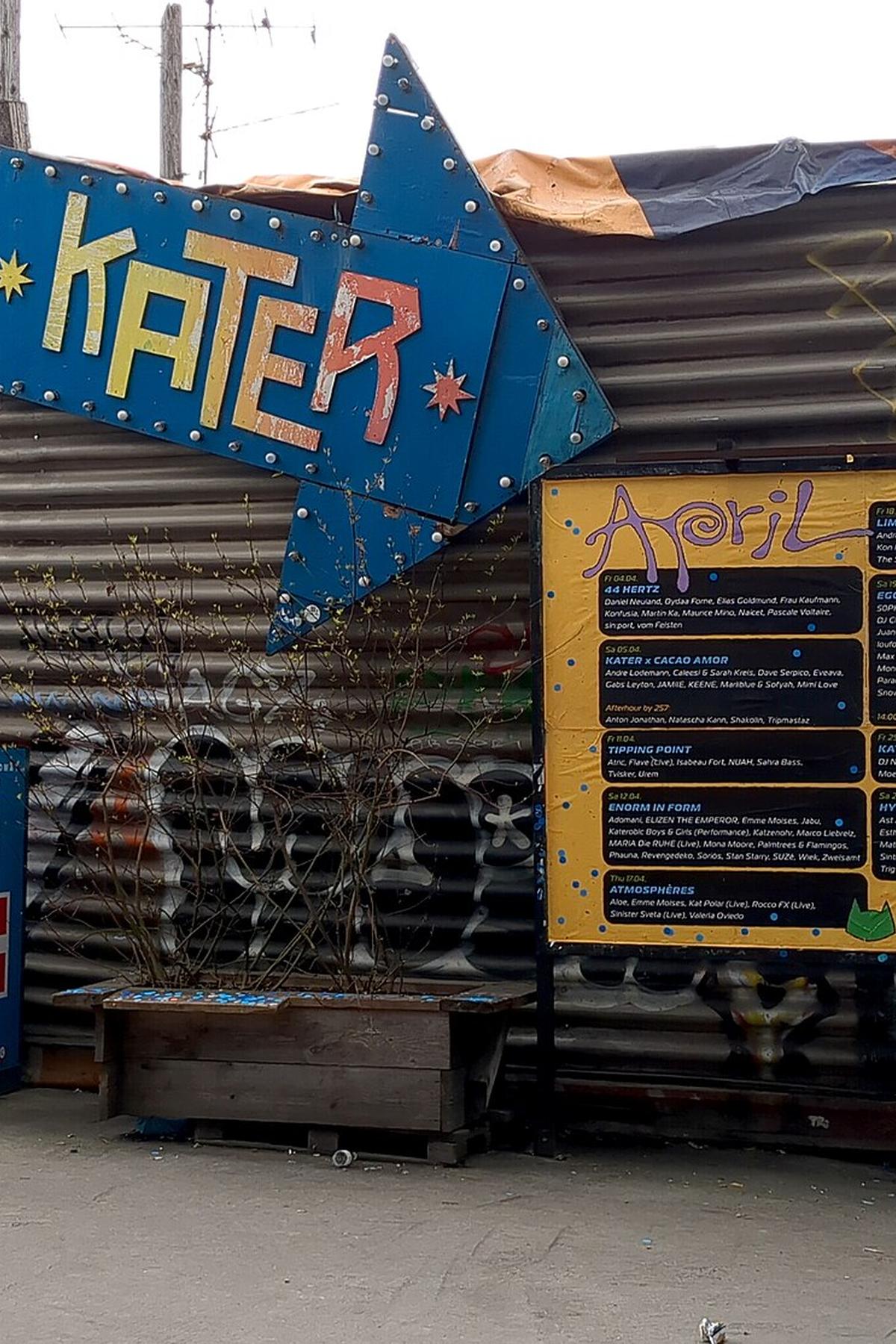
Ostgut: the Club Before Berghain and Why That Matters to Berlin Techno History
In 1998, a gay fetish club opened inside a cavernous Reichsbahn repair hall behind Ostbahnhof in Friedrichshain. It was called Ostgut. Understanding this club is the single most important piece of context for how Berlin turned its industrial wreckage into a global techno capital. Ostgut operated for just five years along Mühlenstraße, on the site where the Uber Arena now stands, before demolition forced its founders to relocate to a disused heating plant at Am Wriezener Bahnhof. That 2004 move created Berghain.
Ostgut Berlin Techno Club: Location, Years, and Founders
The address sat directly behind Ostbahnhof, adjacent to the East Side Gallery. The structure was a former Reichsbahn repair workshop from the RAW-Gelände network, a cluster of railway maintenance sheds that defined Friedrichshain's post-Wall identity as a squatted cultural district.
Ostgut opened in 1998 and closed its original site in 2003. Founders Michael Teufele and Norbert Thormann ran the club through Ostgut GmbH, the same company that would later operate Berghain. Before Ostgut had a permanent home, Teufele and Thormann had already launched the Snax party series in 1994 at rotating venues across Berlin. Snax moved into Ostgut once the Mühlenstraße hall opened and became the club's signature event: a gay fetish party that ran on raw techno and minimal decoration. Ostgut also founded the OstGut Ton record label from inside the club, releasing tracks that defined the post-millennium Berlin sound.
Visiting the Area Now
Bring cash. Many of the bars near the original site still do not accept cards. A beer runs about €4.50 in 2026. The closest U-Bahn is Warschauer Strasse, a ten-minute walk from where the club stood.Berghain Predecessor Ostgut: What Connected the Two Clubs
Ostgut was not just a predecessor in spirit. Berghain is the direct physical and legal successor. When the Mühlenstraße site was marked for demolition to build the O2 World arena (renamed the Uber Arena in 2024), Teufele and Thormann had eighteen months to find a replacement. They purchased the decommissioned Heizkraftwerk Friedrichshain, a heating plant built between 1953 and 1955 by architect Rudolf W. Reichel, deactivated in the 1980s. Located at Am Wriezener Bahnhof 10243, it stood on the edge of a former freight yard once served by the Wriezener Bahnhof station.
The move was not a new start. Ostgut GmbH relocated the entire operation: the door policy, the sound system philosophy, the OstGut Ton label, and the Snax party series. Berghain opened in 2004 with Panorama Bar on the upper floor, directly continuing the programming and aesthetic of the earlier venue. The difference was the building itself. The power plant provided 18-metre ceilings in the main hall, concrete interiors that needed no insulation, and a footprint that allowed the club to host both the dark Berghain room and the brighter Panorama Bar under one roof.
Ostbahnhof Club 1990s: the Context That Made Ostgut Possible
To understand why a repair depot behind a train station became Berlin's most influential club, you need the 1990s geography of the city. The Berlin Wall fell on 9 November 1989. By 1990, the death strip along Mühlenstraße was covered in graffiti by artists from around the world, creating the East Side Gallery. The area east of the station was a wasteland of abandoned railway infrastructure, empty lots, and raw factory space that had no commercial value during reunification.
The RAW-Gelände and Tresor's Blueprint
The Reichsbahn had vacated the RAW-Gelände repair works earlier in the decade. Squatters moved into the massive brick halls in the early 1990s, turning them into artist studios, skateparks, and club spaces. Tresor had opened in 1991 inside the vault of a former Wertheim department store on Leipziger Straße, proving that Berlin would accept techno in unlikely industrial settings. Ostgut took that formula and applied it to a gay fetish context inside a railway hall. The Oberbaumbrücke had reopened in November 1994, reconnecting Friedrichshain to Kreuzberg by U-Bahn, which made the formerly isolated east side accessible to clubgoers from across the city.Ostgut Location Berlin: What Stands There Now
The original address was demolished in 2003. Construction of the O2 World arena began immediately and the venue opened in 2008. In 2024, it was renamed the Uber Arena under a sponsorship deal. The arena sits directly on the site of the repair hall.
There is a small plaque embedded in the pavement near the arena entrance. It mentions that a club called Ostgut stood there. Almost nobody reads it. The crowd arriving for basketball games or concerts has no reason to stop, and the text is in German only, placed at ankle height on the south side of the structure. Locate it by walking from the arena's main entrance east toward the East Side Gallery, keeping to the curb line. The plaque is the only visible remnant of the club that started Berghain.
Walking the East Side Gallery
The East Side Gallery still runs along the same street, 1.3 kilometres of painted Wall segments between Ostbahnhof and Oberbaumbrücke. The original paintings date from 1990. Most have been repainted multiple times due to weather and graffiti. Walk it early on a weekday before 9am to avoid the tour bus crowds.Berghain History Ostgut: the Chain of Events
1998: Ostgut opens. 2003: Demolition order forces closure. 2004: Berghain opens at Am Wriezener Bahnhof. The sequence is straightforward, but the key detail is that the Snax party series and the OstGut Ton label moved with the club. Snax had run since 1994 at rotating locations before finding a home at Ostgut. After Berghain opened, Snax remained on the schedule, continuing the gay fetish party tradition in the new venue. The label signed artists who defined the Berghain sound. Marcel Dettmann's first release came out on OstGut Ton in 2006. The label operated from inside the club, using the same address as the door policy.
Tresor's story ran parallel. Tresor opened its original vault location in 1991 and closed it in 2005, the same year the Wertheim department store vault was demolished. Tresor relocated to a former power plant on Köpenicker Straße in 2007. Both clubs shared the trajectory of demolition, relocation, and adaptive reuse of industrial spaces. But Ostgut's move was faster, completing in one year, and resulted in a single continuous operation rather than a gap.
Ostgut: the Club Before Berghain and Its Practical Legacy for Your Trip
You cannot visit Ostgut. You can visit Berghain, but getting in requires a separate guide. What matters for a trip focused on 1990s Berlin techno history is that the Ostgut site is a single stop on a walking route that contains most of the key landmarks.
Start at Ostbahnhof. Walk south past the Uber Arena to find the plaque. Continue along the East Side Gallery to Oberbaumbrücke. Cross the bridge into Kreuzberg. From there, it is a 25-minute walk or a 10-minute U-Bahn ride to Am Wriezener Bahnhof to see the Berghain building from the outside. The area around the club, the former freight yard, has been turned into a park. Stand on the grass and look at the power plant facade.
What Goes Wrong
The most common failure is arriving at the Uber Arena expecting an information board or a museum exhibit. There is none. The plaque is easy to miss. Locate it by GPS coordinates: 52.5043, 13.4394. If you cannot find it, go to the Ostgut Ton Bandcamp page, where the label still releases records with the original address in the liner notes. Buy a digital release or a vinyl pressing from the label to see the original logo with the railway hall drawn behind it.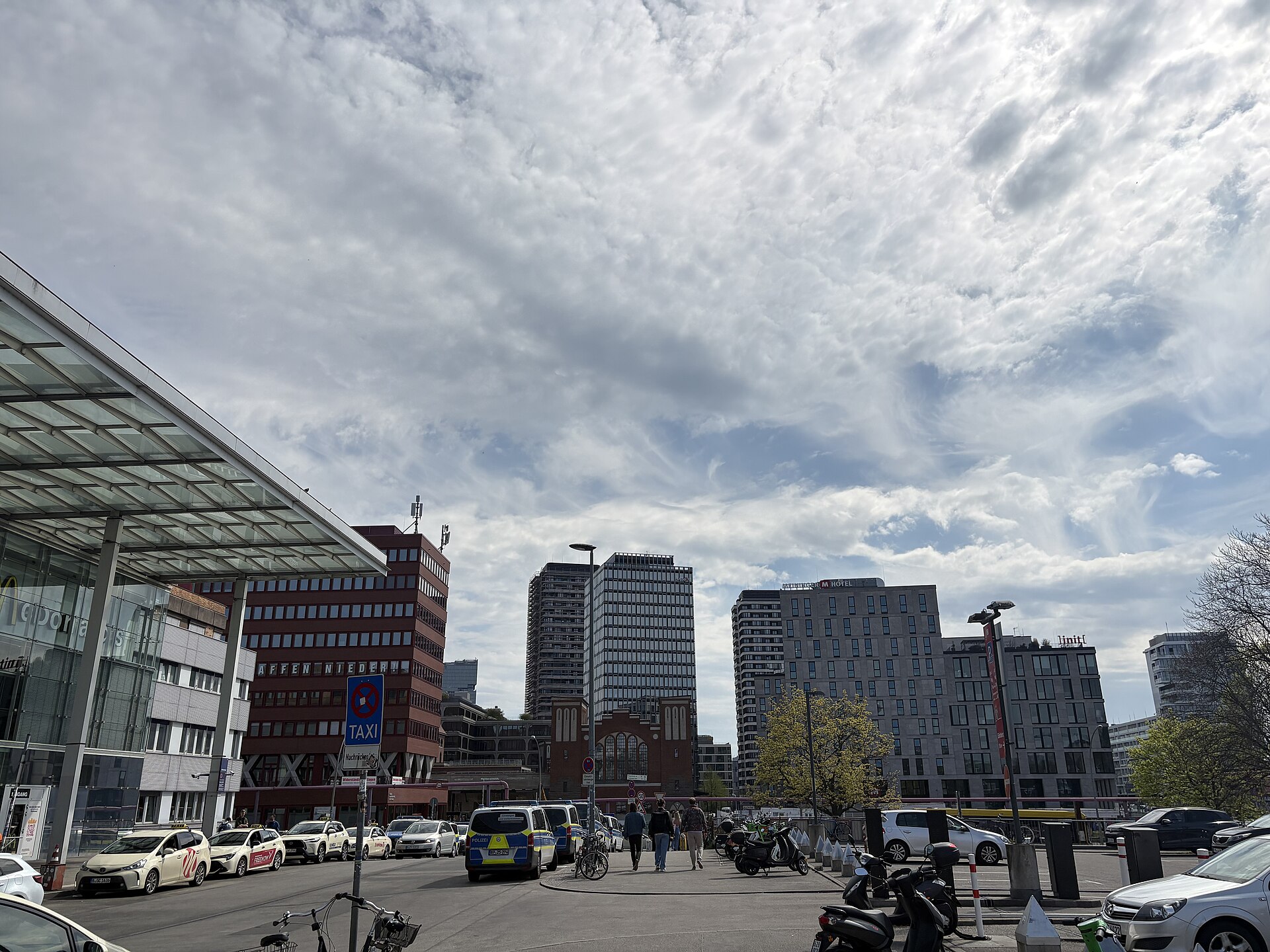


| Event | Year | Location |
|---|---|---|
| Snax party series founded | 1994 | Various Berlin venues |
| Ostgut opens | 1998 | Mühlenstraße, Friedrichshain |
| Ostgut GmbH founded | 1998 | Mühlenstraße |
| Ostgut closes (original site) | 2003 | Mühlenstraße |
| Berghain opens | 2004 | Am Wriezener Bahnhof |
| O2 World arena opens | 2008 | Mühlenstraße (same site) |
| Uber Arena name change | 2024 | Mühlenstraße |
What to Read and Watch Before You Go
You cannot trust most of what is written about Berghain online because the club does not communicate with media. What is reliable for the Ostgut period comes from three sources. First, the OstGut Ton catalog. Buy any record released between 1998 and 2004 and read the back cover. The original address is printed there. Second, visit the Berlin Techno Archive at the Museum of Musical Instruments on Tiergarten. Their temporary exhibition on 1990s club culture includes one of the original Ostgut banners from the railway hall. Open Tuesday through Sunday, 10am to 6pm. Entry is €8. Third, find a copy of the 2006 book "Berlin: The Last Club Culture" by Philipp Misselwitz. It contains the only photographs of Ostgut's interior before demolition. The library at the Berlinische Galerie on Stresemannstraße has a reference copy.
If You Only Have One Morning
Start at Ostbahnhof at 8am. Walk the East Side Gallery to Oberbaumbrücke. Cross into Kreuzberg and take the U1 to Gleisdreieck. Switch to the U2 and ride to Potsdamer Platz. The Sony Center and the site of the former Potsdamer Platz Info Box are there. The red container on stilts that showed the reconstruction plans was removed in 2001, but the construction pit that defined 1990s Berlin is now the corporate square. Walk to the Reichstag, completed with Norman Foster's dome in 1999. That is the entire 1990s transformation in three hours.What the 1990s Club Landscape Looked Like
Ostgut was one club in a network that defined Berlin between 1991 and 2003. Tresor opened in 1991 in the bank vault at Leipziger Straße. WMF Club opened nearby as a house music epicentre. Kunsthaus Tacheles squatted at Oranienburger Straße in 1990 and hosted events until eviction in 2012. The Loveparade drew 1.5 million people to the Tiergarten route in 1999. YAAM started as a beach bar on the Spree. The RAW-Gelände turned into a club compound. None of these venues had liquor licences. They ran on cash, word of mouth, and the tolerance of a city government that had bigger problems than prosecuting after-hours parties.
Ostgut's significance within that landscape is that it was the most deliberately engineered outcome. Teufele and Thormann did not stumble into an empty building. They identified the repair hall, negotiated with the Reichsbahn estate, and built a club with a specific aesthetic: concrete, minimal lighting, no decoration, a Funktion One sound system. When that building was taken, they did the same thing at the power plant. The difference between Ostgut and Tresor is that Ostgut's team chose the second building before the first was demolished. The continuity was intentional.
The Single Most Common Failure on This Route
Visitors spend an hour looking for the Ostgut site and find nothing because they look for a club, a museum, or a sign. The plaque is the only marker. It is small, at ground level, and in German. Skip searching for it if you have less than 15 minutes. Instead, walk the East Side Gallery from Ostbahnhof to Oberbaumbrücke and stop at the point where the Uber Arena's south wall meets the pavement. Stand with your back to the arena. The club was behind you. That orientation is the most practical connection you can make. Type the original address into your notes app. Read it aloud at that spot. Then move on to the Berghain building at Am Wriezener Bahnhof, where the same operation that started on Mühlenstraße is still running.
Read next
-
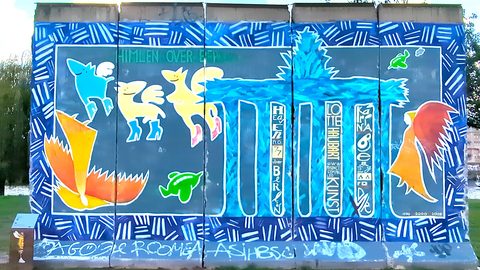
 East Side Gallery
-
 Checkpoint Charlie
The guardhouse at Checkpoint Charlie is a replica from 2000. Here is what is original Cold War fabric, what is a set, and where the real booth ended up.
Checkpoint Charlie
The guardhouse at Checkpoint Charlie is a replica from 2000. Here is what is original Cold War fabric, what is a set, and where the real booth ended up.
-
 Charlottenburg
-
 Mitte
Mitte
-
 Prenzlauer Berg
-
 Friedrichshain
-
 Neukölln
-
 Kreuzberg
-
 Berlin 1990s Films Run Lola Run Sun Alley and Berlin Babylon What They Captured
Run Lola Run, Sun Alley, and Berlin Babylon each captured a different Berlin of the 1990s — the first a sprint through the post-Wall city, the last a techno-scored documentary of its construction.
Berlin 1990s Films Run Lola Run Sun Alley and Berlin Babylon What They Captured
Run Lola Run, Sun Alley, and Berlin Babylon each captured a different Berlin of the 1990s — the first a sprint through the post-Wall city, the last a techno-scored documentary of its construction.