Berlin Lost Places: What Is Left of the 1990s Wasteland Today
Berlin's 1990s wasteland left behind Teufelsberg's listening station dome, the abandoned Spreepark ferris wheel, and Schöneweide industrial ruins. Here is what remains accessible today.
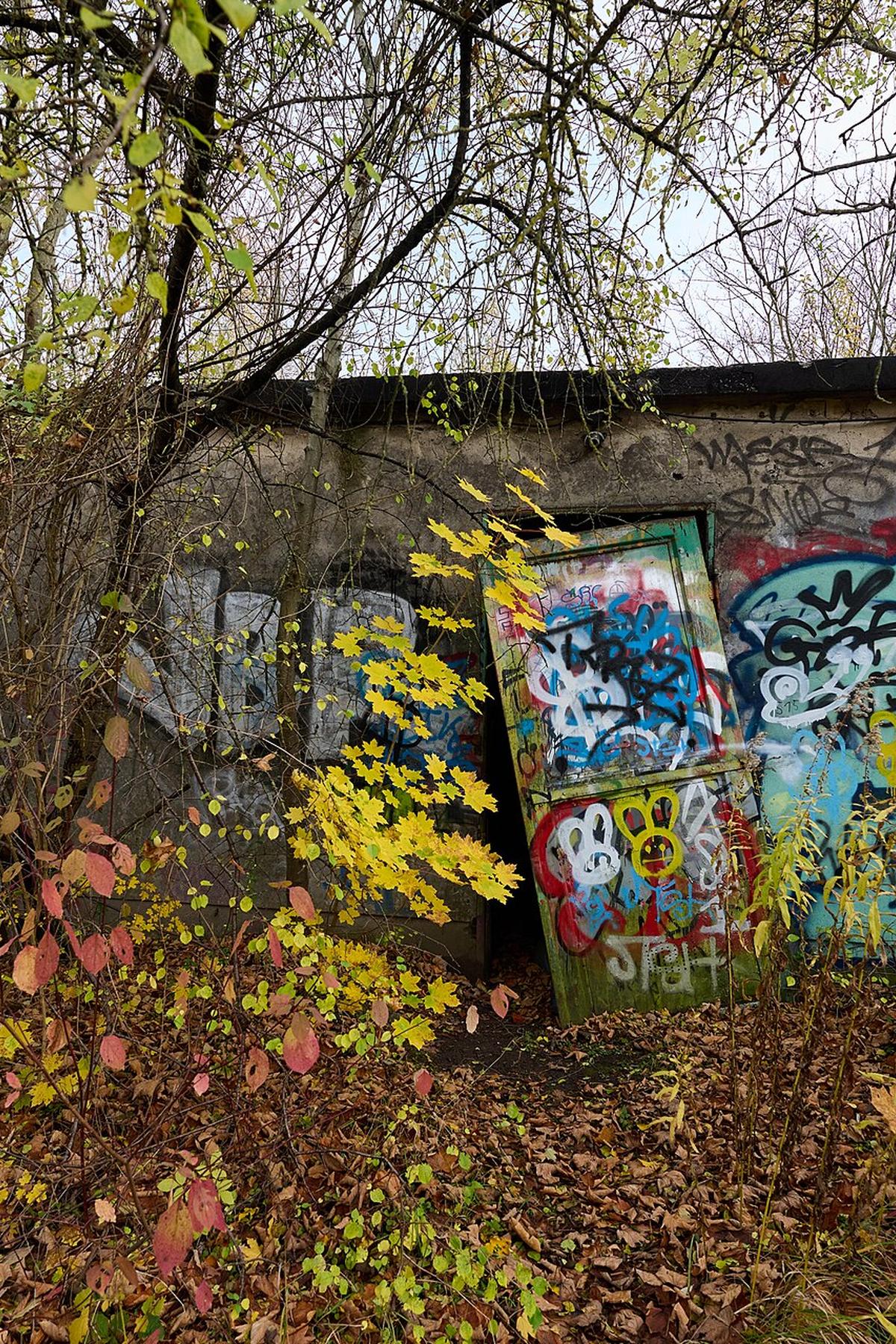

Berlin Lost Places: What is Left of the 1990s Wasteland Today
The Ferris wheel at Spreepark still stands, but it is structurally unsound, illuminated as a landmark, and you cannot walk beneath it without a guide. Most remnants of the 1990s wasteland are not open for you to wander into alone. They are fenced, patrolled, or folded into expensive redevelopment projects. You can still see them, touch some of them, photograph them. Access is conditional, ticketed, and always changing. Here is exactly which sites survive, how to get in legally, and which have already disappeared behind scaffolding or security gates.
Berlin Abandoned Places Guide: What Survives and What Does Not
You need a plan before you go. The abandoned sites are scattered across six districts. They are not clustered in one walkable zone. Spreepark is in Treptow. Teufelsberg sits in the western Grunewald. The industrial ruins of Schöneweide lie southeast of the centre, and the Rüdersdorf cement works is fifty minutes by regional train in Brandenburg. Budget one full day if you want to hit two sites with tours. Budget three days if you also want the Wall trail and the 1990s club legacy. The common mistake is assuming the wasteland is one continuous zone. It is not. You will lose time on transit between them if you do not group them by geography.
Berlin Urban Exploration Sites: Teufelsberg
Getting There and Getting In
Teufelsberg is an artificial hill built between 1950 and 1972 from the rubble of WWII. On top sits the former NSA Field Station, a listening post built 1963-1964 and decommissioned in 1992. It is the most accessible large-scale ruin in the city, but only on a guided tour. Unguided entry is trespass, actively enforced by private security. The operator is Teufelsberg Berlin GmbH, the leaseholder since 2010. Adult tickets in 2024 cost around EUR 10, with reductions available for students and disabled visitors. Check the official website for current pricing before you travel. You reach the site by S-Bahn to Heerstrasse and then a twenty-minute walk uphill through the forest.
What You Will See
The main radome, stripped of its cladding, sits open to the weather. The lower radome retains partial cladding. Graffiti covers entire interior walls, curated in some sections and uncontrolled in others. Photography is permitted. Bring cash. The ticket kiosk does not reliably take cards. If a tour is sold out, you cannot enter. Book online at teufelsberg-berlin.de at least two days ahead in peak season, May through September.
Spreepark Lost Place Berlin: a Park That Closed in 2002
Access and Current State
Spreepark opened as Kulturpark Plänterwald in 1969, operated as an amusement park under the name Spreepark from 1989, and closed fully in 2002. The Land Berlin has owned it since 2014, managed by Grün Berlin GmbH. The core park area is fenced. Unguided entry is not permitted. You must book a guided tour. The adult admission fee in 2024 was around EUR 8. Confirm the current price on the Grün Berlin GmbH website before you travel.
What Remains
The Ferris wheel stands but is structurally unsound, not operational. It is illuminated as a landmark at night, visible from the river side without entering. Other rides have been dismantled or are in advanced decay. The station building and the park railway have been partially restored. A ride-on miniature railway operates seasonally on a limited track section. A planned Kunst- und Kulturpark was announced for a 2026 opening, phased. If that opening has happened by the time you read this, the free-access area may be larger. Check the Grün Berlin GmbH website before you travel. The alternative if tours are sold out is to walk the perimeter along the Spree riverside path in Treptow. You can see the Ferris wheel and some ride skeletons through the fence.
Berlin Post-Industrial Ruins: Schöneweide and the AEG Factory Legacy
The Ruin Bars
Schöneweide is not a single abandoned site. It is a district where the 1990s industrial collapse left entire factory blocks empty. The former AEG factory buildings dominate the area. Some have been repurposed into bars, event spaces, and artist studios. Others remain sealed, with partial roof damage and no public access. The ruin bars are the main reason to go. They operate inside original industrial fabric, serving drinks in rooms where machinery once ran. Cash is mandatory in all of them. No cards accepted.
Street-Level Exploration
The RAW-Gelände in Friedrichshain is a similar model but more developed, with clubs and a skate park. Schöneweide is rougher, quieter, less curated. To see the decay without a tour, walk the area around Schöneweide S-Bahn. The freight yards and the back lots of the AEG site are visible from public streets. Photography is tolerated from the pavement. Do not climb fences. The difference between a photo and a trespassing fine is one step.
Rüdersdorf Cement Works: the Spillover Beyond Berlin
The Rüdersdorf Museumspark is an abandoned cement works fifty minutes by regional train from Berlin. It served as a 1990s rave location before the site was partially secured. Today, the museum park operates with admission fees and guided tours. Unguided entry to the core ruin groups outside ticketed areas is fenced and posted as trespass. Enforcement is inconsistent. The terrain is uneven. Some structures carry active roof collapse risk. If you want pure post-industrial decay without crowds, arrive on a weekday morning. If you cannot get a tour, the exterior of the main kiln buildings is visible from the public road.
Teufelsberg Abandoned Station: Inside the Listening Dome
Teufelsberg was a working listening post, not a transport hub. The phrase 'abandoned station' refers to the NSA field station itself. The main building is a concrete structure with interior rooms full of peeling paint, broken tile, and graffiti. The domes are the visual centrepiece. The largest radome is stripped, showing its frame. The lower one is partially clad. Street art covers walls that once held surveillance equipment. The guided tour lasts roughly ninety minutes and covers the main building and the exterior of the domes. Some interior spaces are locked. You cannot access the roof of the largest dome on any tour. The reduced ticket applies to students and disabled visitors. Bring ID if you intend to use it.
Berlin Abandoned Places Guide: Access Summary Table
The table below compares the five major sites on access, cost, and whether the decay is curated or genuinely abandoned.

| Site | Access Type | 2024 Cost (Adult) | Decay Character |
|---|---|---|---|
| Teufelsberg | Guided tour only | Around EUR 10 | Curated ruin; graffiti managed in sections, uncontrolled in others |
| Spreepark | Guided tour only | Around EUR 8 | Curated ruins; planned redevelopment in progress |
| Schöneweide (AEG factory) | Public streets and ruin bars only | Free | Genuinely abandoned; no official curation |
| Rüdersdorf Museumspark | Guided tour or museum park ticket | Varies by tour | Partially curated; museum park structure |
| Beelitz-Heilstätten | Guided tour or treetop walk ticket | Varies by section | Mixed; treetop walk area curated, surgical section fully abandoned |
Beelitz-Heilstätten: the Sanatorium Outside the City
Beelitz-Heilstätten is fifty kilometres southwest of Berlin, in Brandenburg. The sanatorium complex was built between 1898 and 1930 for tuberculosis patients, later used as a Soviet military hospital until 1995. The main surgical-pneumological section has been abandoned since 1994. Ownership is split across multiple private parcels, so access rules vary by building.
What You Can Visit
The Baum & Zeit treetop walk runs through the men's sanatorium, a partially secured ruin with a walkway installed through the structure. Admission is ticketed. The Alpenhaus is a roofless ruin accessible only on guided tours operated by Beelitz-Heilstätten GmbH. The women's lung sanatorium is fully restricted, with security presence and no public access. The surgery pavilion and kitchen building are derelict with no organized access. Unguided entry to the core ruin groups outside ticketed areas is fenced and posted as trespass. Fines are possible. Enforcement is inconsistent. If you want the most dramatic decay, book the Alpenhaus tour. If you want the least risk, do the treetop walk.
Practical Friction: Cash, Transit, and the Ghost of the Wall
Cash is mandatory in most 1990s-holdover bars, Imbisse, and club-adjacent spots. Cards are not accepted. The Wall sites are geographically disjointed. You cannot walk a continuous route. You will lose time on transit between them. Much of the 1990s infrastructure, including the squats and clubs that defined the decade, is now private or demolished. You are often looking at a plaque or a replacement building. Street art and memorials overlap confusingly. Painting on a Wall remnant reads differently than on a random façade. If you need Wi-Fi, BVG offers free Wi-Fi at U-Bahn stops, but it requires a one-time SMS verification. A local SIM from Aldi Talk, costing roughly EUR 10, is more reliable. Free Wi-Fi is patchy in the former east.
Who Should Explore Berlin’s 1990s Wasteland
This layer of Berlin suits Cold War history completists who want to stand on a listening post that closed in 1992. It suits 1990s techno and club-culture pilgrims tracing the rooms where the scene began. It suits urban-exploration and architecture obsessives who accept that the decay is now ticketed and curated. It suits second-time Berlin visitors digging past the Brandenburg Gate and the Reichstag. It does not suit first-time Germany visitors wanting a fairy-tale old town. Berlin's 1990s layer is broken, sprawling, and emotionally heavy. Skip it if you need a walkable, pretty historic core. The single thing that most often goes wrong: assuming the Wall is a single, visitable monument rather than a dispersed trail of fragments, memorials, and absences that demands a planned route across four districts.
Read next
-
 East Side Gallery
-
 Checkpoint Charlie
The guardhouse at Checkpoint Charlie is a replica from 2000. Here is what is original Cold War fabric, what is a set, and where the real booth ended up.
Checkpoint Charlie
The guardhouse at Checkpoint Charlie is a replica from 2000. Here is what is original Cold War fabric, what is a set, and where the real booth ended up.
-
 Charlottenburg
-
 Mitte
Mitte
-
 Prenzlauer Berg
-
 Friedrichshain
-
 Neukölln
-
 Kreuzberg
-
 Berlin 1990s Films Run Lola Run Sun Alley and Berlin Babylon What They Captured
Run Lola Run, Sun Alley, and Berlin Babylon each captured a different Berlin of the 1990s — the first a sprint through the post-Wall city, the last a techno-scored documentary of its construction.
Berlin 1990s Films Run Lola Run Sun Alley and Berlin Babylon What They Captured
Run Lola Run, Sun Alley, and Berlin Babylon each captured a different Berlin of the 1990s — the first a sprint through the post-Wall city, the last a techno-scored documentary of its construction.